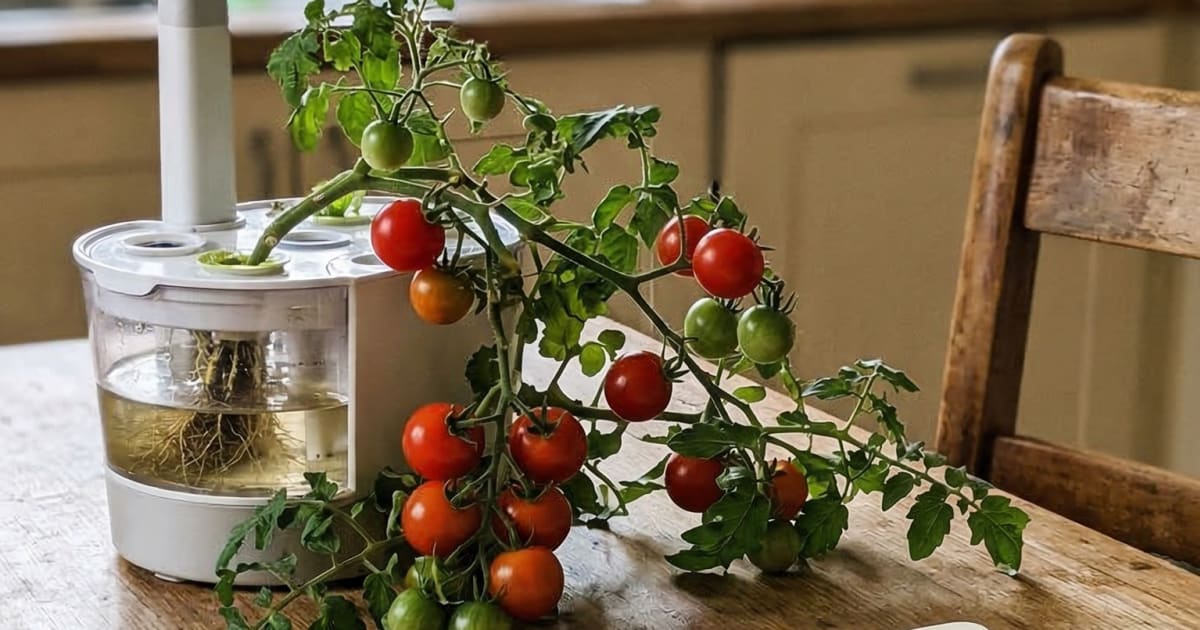
The AeroGarden nutrient pods are roughly $25 for a 3-month supply, which sounds fine until you do the math and realize you’re paying an absurd premium per milliliter compared to basically any hydroponic nutrient solution sold by a company that isn’t trying to lock you into their product line. I switched to third-party nutrients sometime in my second year of growing, mostly out of annoyance, and I haven’t looked back.
Quick Answer: Yes, you can use cheaper third-party nutrients in your AeroGarden. Get an A&B two-part formula (the $11 option with 1,100+ reviews is the one I’d start with), dose at 5ml of each per liter of water, and you’ll get the same or better results at a fraction of the cost. The only thing you lose is the convenience of a single bottle.
 Hydroponics Nutrients (800ml Total), Plant Food A & B for Hydroponic Growing Systems and Indoor Plants, Growing System Accessories for Vegetables Fruits Flowers Thrive
800ml two-part nutrient solution for hydroponic systems, supports vegetables, flowers, and herbs indoors
~$9.99
Hydroponics Nutrients (800ml Total), Plant Food A & B for Hydroponic Growing Systems and Indoor Plants, Growing System Accessories for Vegetables Fruits Flowers Thrive
800ml two-part nutrient solution for hydroponic systems, supports vegetables, flowers, and herbs indoors
~$9.99
 Ambgrow 800ml Hydroponics Nutrients Fit for AeroGarden Hydroponic Indoor Garden, Hydroponics Supplies A&B Plant Foods hydroponic Nutrient Solution for Vegetables Fruits Flowers Thrive
800ml dual-part (A&B) nutrient formula with 8-pack supply, compatible with all hydroponic systems for herbs, vegetables,
~$13.99
Ambgrow 800ml Hydroponics Nutrients Fit for AeroGarden Hydroponic Indoor Garden, Hydroponics Supplies A&B Plant Foods hydroponic Nutrient Solution for Vegetables Fruits Flowers Thrive
800ml dual-part (A&B) nutrient formula with 8-pack supply, compatible with all hydroponic systems for herbs, vegetables,
~$13.99
 Hydroponics Nutrients for Aerogarden(800ml in Total), Plant Food A & B Hydroponics Supplies, Indoor Plant Fertilizer for Hydroponics Growing System, Hydroponic Solution for Vegetables Thrive
800ml two-part hydroponic nutrient system compatible with AeroGarden and other indoor hydroponic systems, designed for o
~$10.99
Hydroponics Nutrients for Aerogarden(800ml in Total), Plant Food A & B Hydroponics Supplies, Indoor Plant Fertilizer for Hydroponics Growing System, Hydroponic Solution for Vegetables Thrive
800ml two-part hydroponic nutrient system compatible with AeroGarden and other indoor hydroponic systems, designed for o
~$10.99
 Hapxalie Hydroponic Nutrients, Comprehensive Nutrient Solution, Hydroponic Fertilizer, Hydroponics Solution, Universal Compatibility, User-Friendly 1000ml Liquid, Indoor/Outdoor Use, Green
1000ml two-part nutrient solution at 5ml A and 5ml B per liter, suitable for all hydroponic systems and potted plants
~$14.99
Hapxalie Hydroponic Nutrients, Comprehensive Nutrient Solution, Hydroponic Fertilizer, Hydroponics Solution, Universal Compatibility, User-Friendly 1000ml Liquid, Indoor/Outdoor Use, Green
1000ml two-part nutrient solution at 5ml A and 5ml B per liter, suitable for all hydroponic systems and potted plants
~$14.99
There are a few things worth knowing before you dump your AeroGarden brand bottles and grab whatever’s cheapest on Amazon, though. The nutrient market for AeroGarden-compatible A&B solutions has exploded in the last couple of years, and there’s real variation in quality, dosing instructions, and how well they work for different plants. What follows is what I’d actually tell a friend who was standing in front of their AeroGarden wondering why they’re spending so much on a product that could easily be swapped out.
Why the A&B format matters
AeroGarden’s own liquid nutrients are a single-bottle solution. Almost every alternative on the market uses A&B format, which means two separate bottles that you mix together in your reservoir. This isn’t a gimmick, it’s actually how professional hydroponic nutrients work, because certain minerals can’t coexist in concentrated form without binding together and becoming unavailable to your plants. You mix them in the reservoir and that problem goes away. So if you’re switching from AeroGarden brand, you’re also switching formats. That’s fine, but it does mean you need to measure.
More on that in the dosing section.
The 4 alternatives worth buying
Option 1: The one I’d actually buy first
The B0C38RY6JP buy on Amazon nutrient set runs about $11 and has over 1,100 reviews at 4.7 stars, which is a pretty hard number to argue with at that price point. You get 800ml total in two bottles (A and B), plus six extra single-use nutrient packs. The extra packs are useful when you’re doing a small top-off and don’t want to measure out a full dose from the bottles.
Dosing is 5ml of A and 5ml of B per liter of water. That’s the standard. Write it on a piece of tape and stick it somewhere near your setup, because you’ll forget it at least once.
I’d buy this one first because the review count gives me actual confidence it’s not just some dropshipped formula that’ll burn your basil. It’s the one I’d hand to someone who’s never used third-party hydroponic nutrients before.
🥇 Top Pick
Hydroponics Nutrients for Aerogarden(800ml in Total), Plant Food A & B Hydroponics Supplies, Indoor Plant Fertilizer for Hydroponics Growing System, Hydroponic Solution for Vegetables Thrive
800ml two-part hydroponic nutrient system compatible with AeroGarden and other indoor hydroponic systems, designed for o
Check Price on AmazonOption 2: Same idea, slightly more expensive
Ambgrow check current price is basically the same format, 800ml total A&B in two bottles, same six-pack of extras, for about $14. About 234 reviews at 4.5 stars. It works. I don’t have a strong reason to choose it over the $11 option unless the other one’s out of stock, but it’s a legitimate product and some people specifically look for the Ambgrow name because they’ve seen it recommended on the AeroGarden subreddit.
The extra $3 doesn’t buy you much that I can identify, but it’s not a bad product.
Ambgrow 800ml Hydroponics Nutrients Fit for AeroGarden Hydroponic Indoor Garden, Hydroponics Supplies A&B Plant Foods hydroponic Nutrient Solution for Vegetables Fruits Flowers Thrive
800ml dual-part (A&B) nutrient formula with 8-pack supply, compatible with all hydroponic systems for herbs, vegetables,
Check Price on AmazonOption 3: More liquid for a bit more money
The Hapxalie see on Amazon comes in 1000ml total and runs about $15. Same A&B system, same 5ml-plus-5ml dosing per liter. At 62 reviews and 4.6 stars it’s the newest of the bunch, which makes me slightly less confident recommending it as a first buy, not because anything looks wrong with it, but because 62 reviews is a small sample.
If you’re running a larger system or just doing more frequent reservoir changes, the extra volume is a reasonable reason to pay the extra dollar or two.
Hapxalie Hydroponic Nutrients, Comprehensive Nutrient Solution, Hydroponic Fertilizer, Hydroponics Solution, Universal Compatibility, User-Friendly 1000ml Liquid, Indoor/Outdoor Use, Green
1000ml two-part nutrient solution at 5ml A and 5ml B per liter, suitable for all hydroponic systems and potted plants
Check Price on AmazonOption 4: Also on the list
The “Hydroponics Nutrients” A&B set available on Amazon rounds out the four. It’s 800ml total, A&B format, and the product page lists it as compatible with AeroGarden and similar hydroponic systems. Price and review count weren’t available to me at time of writing, which is why I’m putting it fourth rather than leading with it. Worth a look, especially if the others are out of stock.
Hydroponics Nutrients (800ml Total), Plant Food A & B for Hydroponic Growing Systems and Indoor Plants, Growing System Accessories for Vegetables Fruits Flowers Thrive
800ml two-part nutrient solution for hydroponic systems, supports vegetables, flowers, and herbs indoors
Check Price on AmazonHow to actually dose these
This is the part that most blog posts skip, which is why the same questions come up over and over on Reddit.
The standard ratio for all of these products is 5ml A and 5ml B per liter of water. That’s it. Use the measuring cup that comes with the bottles, measuring by eye into a reservoir is exactly how you end up with nutrient burn or pale, sad plants that you can’t diagnose.
For AeroGarden reservoirs specifically: the Bounty holds about 1.3 liters at full capacity, so I use about 6.5ml of A and 6.5ml B. The Harvest is smaller, closer to 0.7 liters, so I drop down to 3.5ml each. I’m rounding slightly, but it’s close enough that I haven’t had problems.
One thing that tripped me up early on: pH. Third-party nutrients are described as “pH-balanced,” which is true, but that just means they’re not wildly acidic or alkaline out of the bottle. Your tap water’s pH still matters. AeroGarden’s target range is 5.5 to 6.5. If you’re using well water or your tap is particularly hard, it’s worth picking up a basic pH testing kit. I went several months without checking pH and couldn’t figure out why my tomatoes looked fine but weren’t setting fruit. Could’ve been the pH. Could’ve been something else. I’m still not entirely sure.
Herbs vs. fruiting plants, does it matter?
Sort of. All four of these alternatives are general-purpose formulas, so they’re not specifically tuned for nitrogen-hungry leafy herbs versus potassium-hungry fruiting plants the way something like the General Hydroponics three-part system would be. For the average AeroGarden user growing basil, lettuce, and maybe some cherry tomatoes, the general-purpose formula works fine. I’ve grown both with the $11 option and the results were good.
If you’re running something more specific, trying to push a heavy fruiting plant like bell peppers through a full grow cycle, you might eventually want to look at a formula with a higher potassium ratio during the fruiting stage. But that’s a separate conversation, and for most people starting out, the A&B alternatives here are more than adequate. The tip burn I used to get on lettuce actually got better after switching to a third-party nutrient at a slightly lower dose than the AeroGarden default, though I wrote more about what’s actually going on with that in my lettuce guide .
What not to use
A few things people try that don’t work well:
Regular garden fertilizer is not a substitute. Standard NPK fertilizers like Miracle-Gro are formulated for soil, which has a whole ecosystem of microbes and minerals that hydroponics doesn’t replicate. You’ll get growth, but you’ll also likely get nutrient imbalances that are hard to diagnose and not worth the trouble.
Organic liquid fertilizers are a murkier situation. Fish emulsion, worm casting tea, and similar options can work in some hydroponic setups, but they tend to clog pumps and breed bacteria in recirculating systems. A countertop AeroGarden unit is not a good test bed for organic hydroponic solutions unless you’re ready to clean the pump very frequently.
Bloom boosters and “enhancer” products that are meant to be added on top of a complete nutrient solution, I’d skip these in a small countertop system. The reservoir is tiny, and the margin for getting the concentration wrong is narrow. More is not better here.
One practical note: 800ml of nutrients, dosed at 5ml A and 5ml B per top-off, goes further than you’d think. Depending on how often you’re doing full reservoir changes versus just topping up with water, a two-bottle set can last a couple of months easily. The AeroGarden app recommends adding nutrients every time the light reminds you, but for established plants in a stable system, I usually test the water first and skip the dose if things look healthy. Your plants will tell you if they’re hungry, lighter colored new leaves are usually the first sign. If things go further south than just pale leaves, check my AeroGarden troubleshooting guide for the full diagnostic rundown.
The short version: get the $11 option with the 1,100+ reviews, use 5ml of each per liter, and stop paying AeroGarden’s markup.
Frequently Asked Questions
Are third-party nutrients safe to use in an AeroGarden?
Yes. The A&B format nutrients listed here are standard hydroponic solutions that work in any recirculating water system, AeroGarden included. The plants don’t care about the brand on the bottle. Just follow the dosing instructions and you won’t have issues.
How often should I add nutrients to my AeroGarden?
The AeroGarden app suggests every two weeks, which is a reasonable starting point. I check the water color and plant health before dosing though. If the plants look healthy and the water level hasn’t dropped much, I’ll skip a dose. Lighter colored new leaves are your first sign they’re hungry.
Can I mix different brands of A&B nutrients together?
Don’t mix Part A from one brand with Part B from another. The ratios are calibrated within each product’s own formula. Mixing across brands can throw off the mineral balance and cause lockout or deficiencies that are annoying to diagnose.
Do I need to check pH when using third-party nutrients?
It’s worth checking, especially if your tap water is hard or you’re on well water. The target range for AeroGarden systems is 5.5 to 6.5. A basic pH test kit costs a few dollars and takes 30 seconds to use. I went months without checking and had unexplained issues that might have been pH-related.
This article is part of my Hydroponic Nutrients Guide , a complete resource for countertop hydroponic growing.