
Some links in this post are affiliate links. I get a small cut if you buy, but it doesn’t cost you anything extra.
Most people running a countertop hydroponic garden pay somewhere between $1.55 and $2.67 per pod for OEM pre-seeded kits. That’s what AeroGarden charges when you buy the ready-to-go herb sets. Most people don’t think twice about it until they’ve cycled through two or three rounds and done the math.
On a 6-pod system running four grow cycles a year, you’re looking at $37 to $64 annually just in growing media and seeds. The main hydroponic grow sponges alternatives rockwool horticubes and other media worth knowing about, third-party peat sponges, oasis horticubes, and clay pebbles, these are the options that actually get used in real setups. Switch to the cheapest option that still works well, and you can get that number under $5. That’s not a typo.
And while I’m on the subject of AeroGarden pricing: their blank “Grow Anything” pod kits cost the same per pod as the pre-seeded kits. You pay for an empty sponge at the same price as one with seeds already in it. That one irritates me every time I look at it.
Quick Answer: Third-party peat sponges (~15-20¢ each) work fine for herbs and lettuce. Rockwool (~11¢ each from the Jowlawn 200-plug sheet) is better for fruiting plants like tomatoes and peppers. Oasis horticubes (~5¢) are the cheapest option that actually works and suit high-volume growers. OEM pods are only worth paying for if you care about AeroGarden’s germination warranty. Clay pebbles aren’t for germination, they’re for large seeds and transplants.
 GARDENCUBE 166pcs Hydroponic Pods Kit: Compatible ...
166-piece pod kit with grow sponges, nutrients, and accessories for hydroponic systems, ideal for growing herbs and vegetables indoors.
~$15.98
GARDENCUBE 166pcs Hydroponic Pods Kit: Compatible ...
166-piece pod kit with grow sponges, nutrients, and accessories for hydroponic systems, ideal for growing herbs and vegetables indoors.
~$15.98
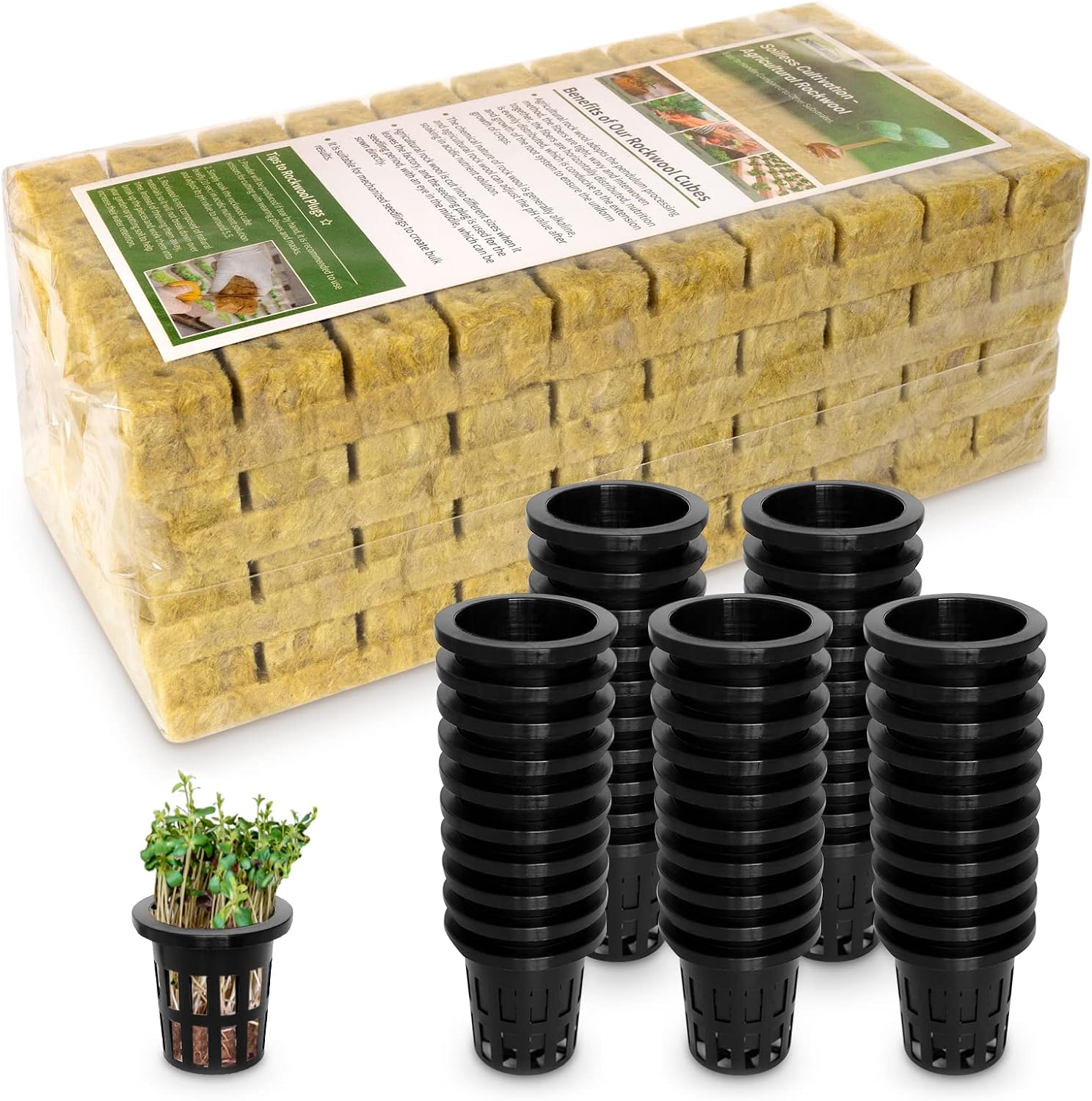 Jowlawn 1" Rockwool Cubes for Hydroponics 200 Plugs ...
200 rockwool starter cubes with 96% porosity for seed germination and plant propagation in hydroponic systems
~$21.99
Jowlawn 1" Rockwool Cubes for Hydroponics 200 Plugs ...
200 rockwool starter cubes with 96% porosity for seed germination and plant propagation in hydroponic systems
~$21.99
 Haligo 150pcs Seed Pod Kit for Hydroponics, Grow ...
150-piece seed pod kit with 100 peat sponges and labels for hydroponic systems, suitable for herbs, vegetables, and flowers
~$15.95
Haligo 150pcs Seed Pod Kit for Hydroponics, Grow ...
150-piece seed pod kit with 100 peat sponges and labels for hydroponic systems, suitable for herbs, vegetables, and flowers
~$15.95
 121 Pack Seed Starter Pods Kit for AeroGarden, Including ...
121-piece seed starter kit with 50 biochar sponge pods for hydroponic systems, ideal for germinating vegetables, herbs, and ornamental plants
~$14.99
121 Pack Seed Starter Pods Kit for AeroGarden, Including ...
121-piece seed starter kit with 50 biochar sponge pods for hydroponic systems, ideal for germinating vegetables, herbs, and ornamental plants
~$14.99
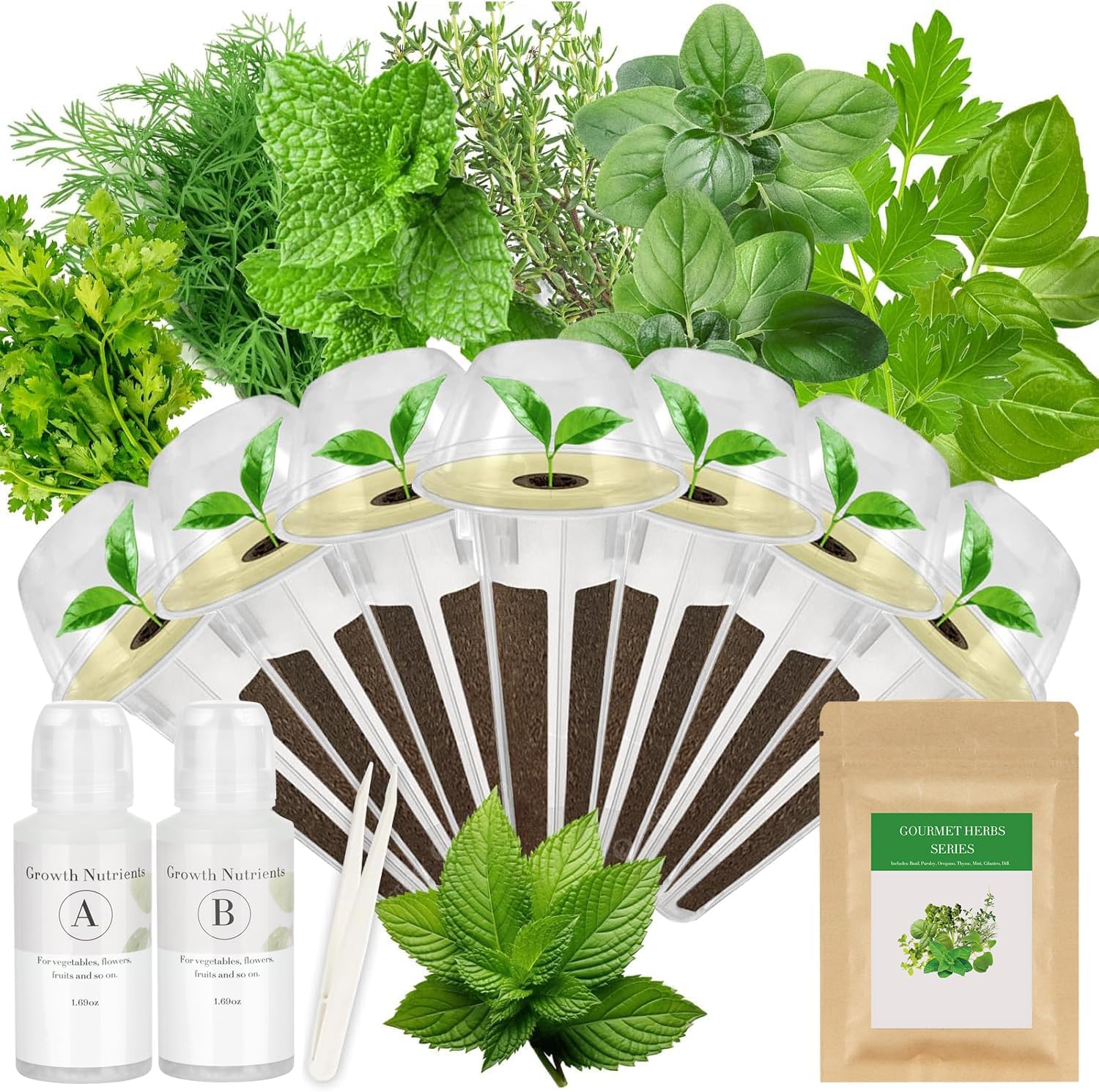 Gourmet Herbs Seed Pod Kit for AeroGarden, iDoo ...
Replacement seed pod kit with 7 herb varieties and growing supplies, compatible with AeroGarden and similar hydroponic systems
~$19.99
Gourmet Herbs Seed Pod Kit for AeroGarden, iDoo ...
Replacement seed pod kit with 7 herb varieties and growing supplies, compatible with AeroGarden and similar hydroponic systems
~$19.99
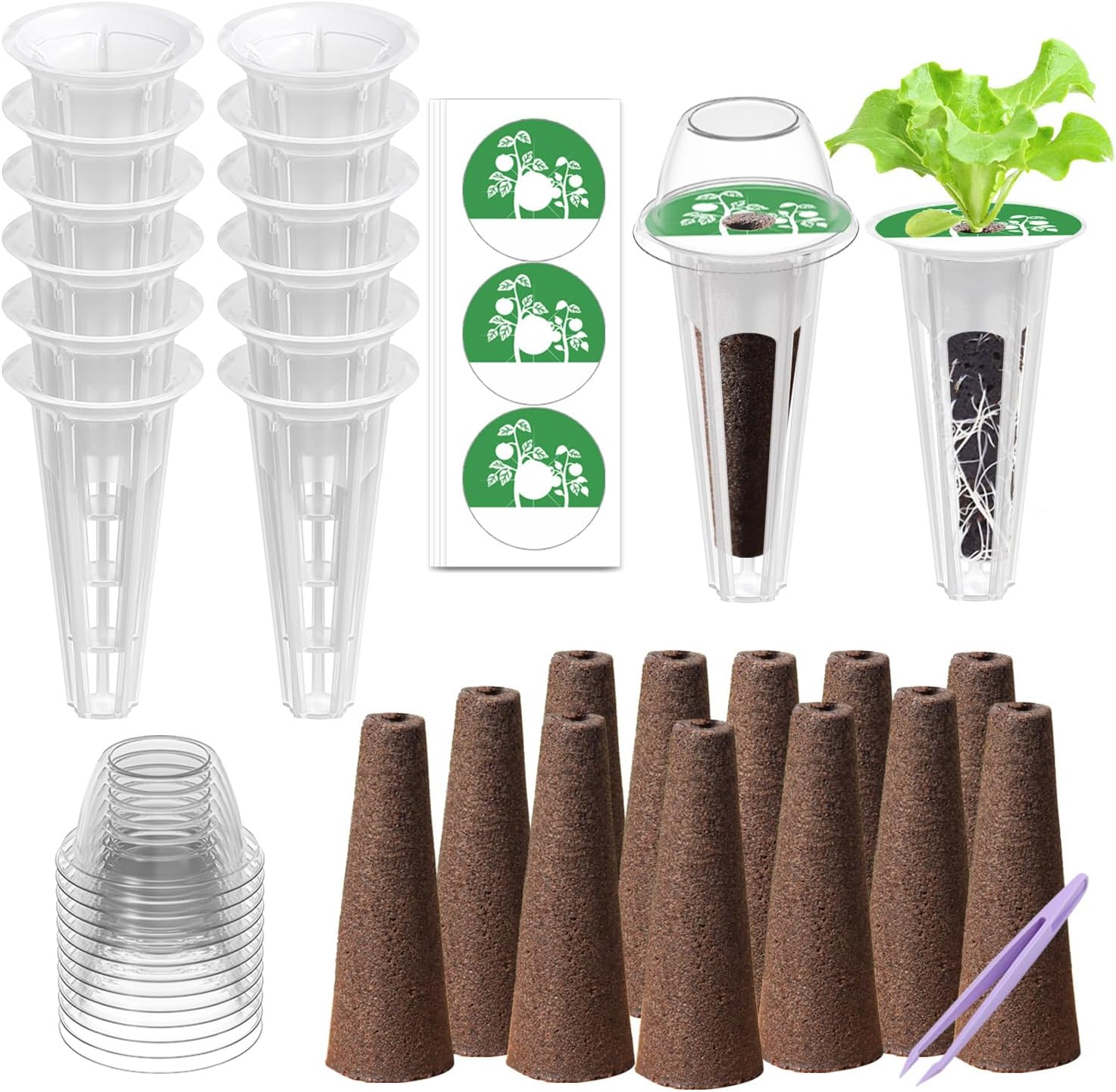 Seed Pod Kit Compatible with Aero Garden and All Brands
12-pod hydroponic kit with peat sponges and baskets compatible with AeroGarden, ideal for seed germination and growing herbs indoors
~$8.99
Seed Pod Kit Compatible with Aero Garden and All Brands
12-pod hydroponic kit with peat sponges and baskets compatible with AeroGarden, ideal for seed germination and growing herbs indoors
~$8.99
 Ziliny 200 Pcs Grow Sponges Pods Kit, Includes 100 ...
Kit of 100 peat sponges and baskets, compact 1.5-inch size, suitable for starting seeds of various plants indoors or outdoors
~$25.99
Ziliny 200 Pcs Grow Sponges Pods Kit, Includes 100 ...
Kit of 100 peat sponges and baskets, compact 1.5-inch size, suitable for starting seeds of various plants indoors or outdoors
~$25.99
 URUQ 140Pcs Hydroponic Pods Supplies: Compatible ...
140-piece pod kit with growing sponges, baskets, and domes for indoor hydroponic systems, compatible with multiple brands
~$12.69
URUQ 140Pcs Hydroponic Pods Supplies: Compatible ...
140-piece pod kit with growing sponges, baskets, and domes for indoor hydroponic systems, compatible with multiple brands
~$12.69
The Cost Breakdown Nobody Actually Shows You
Here’s what you’re paying per unit of growing media, and what you give up at each price point:
| Media | Cost Per Unit | Fits AeroGarden | Fits iDOO | Fits LetPot | Main Advantage | Main Drawback |
|---|---|---|---|---|---|---|
| AeroGarden OEM sponge | ~40¢ | Yes | Sometimes | Sometimes | Consistent size, germination warranty | Expensive, proprietary |
| Third-party peat sponge | 15-20¢ | Usually | Check sizing | Check sizing | Cheap, familiar format | Mold risk, size varies by brand |
| Rockwool cube (1") | ~11¢ | Yes (with stacking trick) | Yes | Yes | Excellent root development | Needs pH soak, requires trimming |
| Oasis horticubes | ~5¢ | Yes | Yes | Yes | Cheapest, pre-punched holes, sterile | Slightly crumbly, less widely sold |
| Clay pebbles | Varies (~$20/8 lb bag) | Yes (no basket liner needed) | Yes | Yes | Great for large seeds and transplants | Won’t work for germinating tiny seeds |
On a 6-pod system running four cycles per year, switching from OEM sponges (40¢) to horticubes (5¢) saves around $8.40 per year in media alone, not counting what you save by buying seeds separately. Factor in that you were also paying $1.15-$2.27 per pod for seeds you could source yourself for pennies each, and the annual savings get close to $90. That’s the number worth sitting with.
OEM AeroGarden Sponges: When They’re Actually Worth It
The official sponge is sphagnum peat with the right shape, the right porosity, and the right dimensions for AeroGarden baskets. It fits. It works. You’re paying a premium for consistency and the certainty that nothing weird is in the substrate.
There’s one argument for paying OEM that nobody talks about enough: AeroGarden’s germination warranty. When you use official pre-seeded pods and something fails to sprout, they’ll replace it. That warranty disappears the moment you go third-party. For a beginner who’s just getting started and doesn’t want to troubleshoot germination failures, that replacement promise has real value.
But once you’ve run a few cycles and understand what healthy germination looks like, the warranty becomes less relevant. You can diagnose a failed pod pretty quickly. At that point, you’re just paying 40 cents for something you can replace with something that costs 5 cents.
🌱 Best for Beginners
Gourmet Herbs Seed Pod Kit for AeroGarden, iDoo ...
Replacement seed pod kit with 7 herb varieties and growing supplies, compatible with AeroGarden and similar hydroponic systems
Check Price on AmazonThird-Party Peat Sponges: Good, With One Catch
Third-party peat sponges work. That’s the short version. The longer version is that shape and density vary more than you’d expect across Amazon brands, and some of them arrive a bit denser and more compressed than the OEM sponge. Usually this isn’t a problem, but it can slow germination for very tiny seeds.
Park Seed’s Bio-Dome 60-cell sponges are the name that keeps coming up when people ask for alternatives. They’re a reliable fit and the closest thing to a consensus pick in this niche.
The catch nobody mentions in any product listing: mold. Third-party peat sponges can harbor mold spores, and under grow lights with constant moisture, that can become a real problem fast. The fix: soak the sponges in dilute bleach (just a few drops in a cup of water) before first use, or microwave them while wet for one minute. Either method kills whatever’s lurking. Do it every time with a new brand, not just if you’ve had a problem before.
The Haligo 150-piece kit buy on Amazon is one of the more widely-reviewed options on Amazon, with 3,080 ratings and a 4.4-star average. It fits AeroGarden well and germination is consistent for herbs and lettuce. Some batches do get complaints about germination failures, which is exactly why I’d do the mold-prevention soak regardless. The Ziliny 200-piece kit check current price (100 sponges + 100 baskets) gets similar marks, though the most common complaint involves fungal growth showing up around day 12. That’s the mold risk in real time, not a one-off.
One thing worth flagging: if you’re buying third-party pods that include fertilizer, treat the nutrients with some skepticism. Random brands with A+B nutrients bundled in are a wildcard. Better to use your own nutrients and buy the sponges alone, or get a kit like the GARDENCUBE 166-piece see on Amazon where the nutrient formula is at least described in the listing.
Rockwool: Cheapest Media That Actually Grows Roots
Rockwool is basalt and chalk spun into fibers and pressed into cubes. It’s got up to 96% porosity, holds moisture well without staying waterlogged, and produces root systems that are noticeably better than what you see from peat sponges. The only controlled head-to-head test I’ve found on video showed rockwool producing a noticeably better root system on radishes at 14 days compared to peat sponges. Radishes in particular show the difference clearly, with robust root systems at 14 days that are hard to match with peat.
The Jowlawn 200-plug sheet check price on Amazon runs about $21.99 on Amazon, which works out to roughly 11 cents per cube. That’s the cheapest growing media that handles fruiting plants well.
Two things you need to know before buying:
First, rockwool’s natural pH is around 8.0. That’s too alkaline for hydroponic growing. You have to soak new rockwool in pH-adjusted water (target 5.5-5.8) for at least an hour before use, ideally overnight. My tap water sits at 8.7, so this step is non-negotiable for me anyway. Don’t squeeze the cubes after soaking, it damages the fiber structure.
Second, the standard 1-inch rockwool cube is shorter than an AeroGarden basket. If you drop one in and walk away, it won’t make proper contact with the water level. The fix is a two-piece stack: drop a small scrap piece of rockwool into the base of the basket first, then set the main cube on top. It’s a simple fix that I’ve never seen mentioned in any blog post or product listing. Now you’ve seen it.
Dry rockwool also releases fine fibers that are irritating to skin, eyes, and lungs. Handle it wet. Gloves are worth it.
The Jowlawn sheet gets 4.4 stars from 181 reviews. Most growers report high germination rates and good cloning success. There are some complaints about inconsistent batches, including reports where clones failed entirely with zero root development. That kind of variance is real with rockwool. It doesn’t happen often, but quality control across batches isn’t perfect. For a countertop herb garden, the stakes are low enough that this is an acceptable risk. For a dedicated pepper grow where you’re investing weeks into a single plant, it’s worth knowing about.
For peppers and tomatoes specifically, I’d reach for rockwool over peat sponges every time. The root development advantage is documented and it matters for fruiting plants. I covered the nutrient side of that in my hydroponic nutrients article , but the media contributes too.
Oasis Horticubes: 5 Cents Each, and They’re Fine
Horticubes are a floral foam-adjacent product that’s been used in commercial propagation for years. They’re sterile, pre-punched with seed holes, and at roughly 5 cents each they’re the cheapest growing media option that actually works for germination.
The texture is slightly crumbly compared to peat sponges or rockwool, which makes them a bit messier to handle. They also have low density, which means they don’t hold quite as much weight as a peat sponge would. For herbs and lettuce, this doesn’t matter. For heavier transplants, rockwool holds up better.
So for anyone running a high-volume setup or doing a lot of cycles per year, horticubes make the most economic sense. They fit 1-inch net cups without modification, and they’re available in sheets from hydroponic suppliers if you know where to look. And if you’ve been on the fence about switching away from peat sponges purely because of cost, horticubes are the simplest reason to make the move.
Clay Pebbles: Not What You Think
Clay pebbles don’t replace sponges for germination. They’re a different tool.
The use case is large seeds: chives, peas, green beans, anything that won’t fit into the small hole on a sponge without getting damaged or just falling through. Fill the basket with clay pebbles, drop the seed in, done. No sponge needed. An 8-pound bag runs about $20 and lasts a long time.
The other use case is transplanting seedlings that started somewhere else. If a seedling has already developed a root system, you can nestle it into clay pebbles in the basket and it’ll adapt. This is actually how some people handle starting seeds in a separate germination tray and then moving them to the hydroponic system once they’ve sprouted. And if you’re already managing light schedules and water levels carefully, combining clay pebbles with a strong transplant routine gives you more flexibility than any sponge-based approach.
For anything you’re starting from a tiny seed directly in the pod system, basil, lettuce, cilantro, tomatoes, clay pebbles won’t work. Too much air gap, not enough moisture contact.
Which Media for Which Plant
This is the thing no other article puts in one place:
Herbs and leafy greens (basil, cilantro, dill, lettuce, spinach): peat sponge or horticubes. Either works well. Horticubes if you’re buying in bulk and want the lowest cost. Peat sponge if you want something familiar and widely available.
Fruiting plants (tomatoes, peppers, strawberries): rockwool. The root development advantage is real for plants that need to establish a strong system before flowering. I write about the pepper side of this in my AeroGarden pepper grow post if you want the full picture.
Large-seeded plants (chives, peas, green beans): clay pebbles. No sponge.
Transplants from another medium: rockwool or clay pebbles. You can also find more on managing plant transitions in my guide to why AeroGarden plants keep dying .
Does This Work in iDOO and LetPot Too?
Yes, but check your basket size before ordering.
AeroGarden baskets are approximately 1.75 inches in diameter. Most of the third-party sponges and rockwool cubes sized for AeroGarden fit that. iDOO uses larger proprietary cone-shaped pods, not round baskets, so standard 1-inch sponges sit loosely and may not make proper contact with the nutrient solution. Some iDOO users cut a second piece to fill the gap, which is the same logic as the rockwool stacking trick above.
LetPot sizing varies by model. The LetPot Max and Senior use pods that are closer to the AeroGarden diameter, but the Mini uses something slightly different. Check the listing dimensions against your basket before buying 200 of anything.
The URUQ 140-piece kit available on Amazon and the DRYADES 12-pod kit buy on Amazon both advertise compatibility with “most hydroponic systems,” which is marketing-speak for “probably AeroGarden and maybe others.” Both products get consistent positive reviews for AeroGarden fit. For iDOO, results are mixed enough that I’d buy one pack to test before committing to 100 units.
Where to Buy Seeds Separately
This matters more than most guides acknowledge. Pre-seeded third-party pod kits often include full-size seed varieties, not dwarf or compact types. The growing media works fine. The plant outgrows the machine in six weeks and causes problems.
Seed source matters as much as media choice. Park Seed, Baker Creek, and Etsy specialty seed shops are worth knowing. For compact tomatoes specifically, Micro Tom is the variety the countertop hydroponic community keeps coming back to. It stays small, fruits reliably, and doesn’t fight you for clearance. Standard cherry tomato varieties from a random Amazon pod kit will outgrow an AeroGarden Harvest before they’re done fruiting.
This article is part of my Hydroponic Seeds & Pods: Complete Guide , a complete resource for countertop hydroponic growing.
Frequently Asked Questions
What can I use instead of AeroGarden sponges?
Third-party peat sponges, rockwool cubes, or oasis horticubes all work. Third-party peat sponges are the closest substitute and easiest to find. Rockwool is better for fruiting plants. Horticubes are cheapest per unit and sterile from the start. Just check that whatever you’re buying fits the basket diameter for your specific machine.
What seed pods are compatible with AeroGarden?
AeroGarden baskets are approximately 1.75 inches in diameter and accept round sponge-style pods. Most third-party brands advertise compatibility, but “compatible” can mean anything from a perfect fit to “it technically sits inside the basket.” Haligo, URUQ, and DRYADES get the most consistent positive reviews for actual fit. Always soak third-party sponges before first use to check expansion dimensions.
Can you make your own AeroGarden seed pods?
Yes, and it’s not complicated. You need a grow basket (reuse the plastic ones from your OEM pods or buy in bulk for around 15 cents each), a growing medium (sponge, rockwool, or horticube), your own seeds, and a pod label to block light from reaching the water. The full DIY approach brings cost down to around 11 cents per pod once you add up the parts. That’s compared to $1.55-$2.67 for OEM pre-seeded kits.
Are third-party AeroGarden pods as good as official ones?
For the growing media itself, yes, often with no meaningful difference in germination rate for common herbs and lettuce. The risk is mold (sanitize before use) and inconsistent sizing (check reviews before buying a new brand). You also lose AeroGarden’s germination warranty. The seed quality in pre-seeded third-party kits is more variable than the media quality, and some kits include non-compact varieties that outgrow the machine.
Do AeroGarden pod alternatives work in iDOO and LetPot systems?
Mostly, with caveats. iDOO uses cone-shaped pods rather than round baskets, so standard 1-inch round sponges don’t fill the space cleanly. Some users cut a filler piece to solve this. LetPot sizing varies by model. If you’re running an iDOO 12-pod like I am, I’d test one pack of any new sponge brand before buying in quantity, the fit matters more for germination than most people assume.