
Seven to ten days. That’s the whole harvest cycle for most microgreens, start to cut. Nothing else you can grow on a kitchen counter comes close, not lettuce, not herbs, not the cherry tomatoes I keep attempting and regretting. Growing microgreens hydroponically at home is the single best return-on-effort crop for countertop hydroponic growing, and the reasons stack up fast: no nutrients needed, no waiting months for a first harvest, minimal equipment, and the flavor difference between day-8 microgreens and a grocery store clam shell is significant enough that it’s changed how I cook.
So if you’ve been putting this off because it seemed fussy or complicated, stop waiting.
Quick Answer: Growing microgreens hydroponically at home is easy and fast, most varieties are ready to cut in 7 - 10 days. pH your water to around 6.0, use a bamboo or hemp mat as your grow medium, sow seeds at roughly 2 tbsp per tray (1/4 cup for radish), keep them in darkness 4 - 5 days, then move them under light. Do NOT add nutrients to the water. That single mistake causes almost every smell complaint I’ve seen, and it’s completely unnecessary, microgreens feed off the seed itself for the entire harvest window.
 Hydroponic Sectional Microgreens Growing Kit
Sectional kit grows up to 8 microgreens crops simultaneously with included supplies and seeds, ideal for fresh herbs and greens on kitchen countertops.
~$88.29
Hydroponic Sectional Microgreens Growing Kit
Sectional kit grows up to 8 microgreens crops simultaneously with included supplies and seeds, ideal for fresh herbs and greens on kitchen countertops.
~$88.29
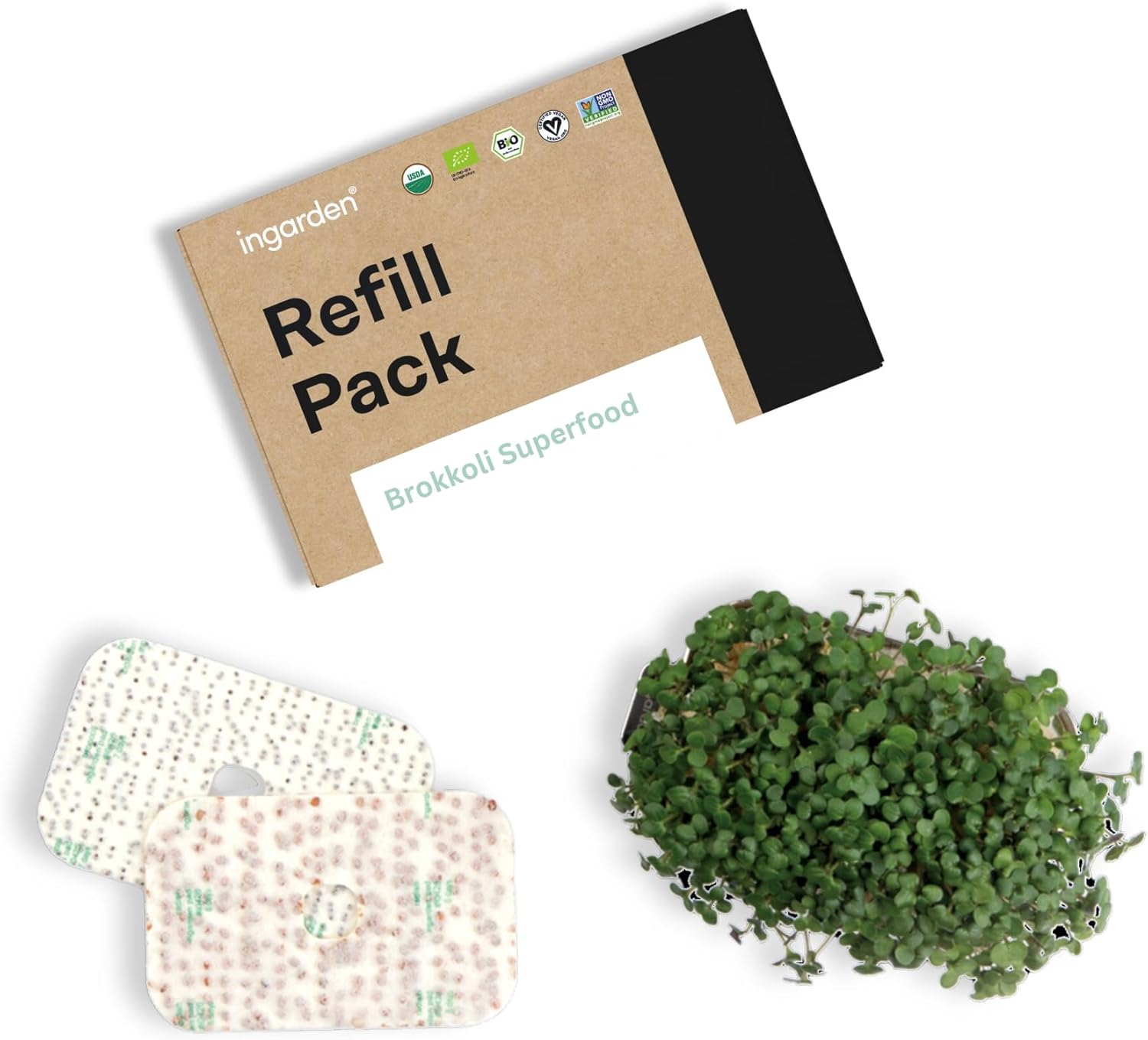 ingarden Microgreen Superfood Broccoli Seed Pads
Six pre-seeded broccoli pads for hydroponic indoor growing, ready to harvest in 7-9 days with no soil or sunlight needed.
ingarden Microgreen Superfood Broccoli Seed Pads
Six pre-seeded broccoli pads for hydroponic indoor growing, ready to harvest in 7-9 days with no soil or sunlight needed.
 Microgreen Seeds Variety Pack – 10 Heirloom Types for ...
10-variety heirloom microgreen seed pack for 7-14 day indoor harvests, includes broccoli, pea, sunflower, radish, kale, arugula, beet, cabbage, buckwheat, and alfalfa
~$19.99
Microgreen Seeds Variety Pack – 10 Heirloom Types for ...
10-variety heirloom microgreen seed pack for 7-14 day indoor harvests, includes broccoli, pea, sunflower, radish, kale, arugula, beet, cabbage, buckwheat, and alfalfa
~$19.99
 ingarden Microgreen Superfood Mix Seed Pads
Six pre-seeded microgreen pads for hydroponic growing system, produces kale, broccoli, and arugula in 7 days without soil or sunlight.
ingarden Microgreen Superfood Mix Seed Pads
Six pre-seeded microgreen pads for hydroponic growing system, produces kale, broccoli, and arugula in 7 days without soil or sunlight.
 Trellis + Co. Stainless Steel Hydroponic Microgreens ...
Two stainless steel hydroponic trays with mesh screens for growing microgreens, wheatgrass, or cat grass on countertops without soil
~$53.89
Trellis + Co. Stainless Steel Hydroponic Microgreens ...
Two stainless steel hydroponic trays with mesh screens for growing microgreens, wheatgrass, or cat grass on countertops without soil
~$53.89
Why Microgreens Beat Everything Else for Beginners
Most countertop crops demand patience. Basil takes three weeks before you can harvest a meaningful pinch. Lettuce is four to six weeks before it’s worth cutting. Strawberries… well, I’ve written about that disappointment twice now.
Microgreens skip the wait. You’re harvesting at the cotyledon stage, which means the plant only needs to get its first leaves open, not mature, not flowering, just barely started. That’s why the timeline is so short. And that’s also why nutrients are unnecessary. The seed itself contains everything the plant needs for that first phase. Anything you add to the water is feeding bacteria, not your plants.
That last part is the single thing I’d want every hydroponic pod garden owner to know before they start. When you’ve been running an AeroGarden or iDOO for months, adding nutrients at every fill is automatic. It’s built into the routine. For microgreens, break that habit completely. The plants get all the nutrition they need from their seed. It’s not until they develop true leaves that fertilizer matters, and at that point they’re not microgreens anymore.
Two Ways to Set This Up
Standalone tray setup. This is the budget route, and it works well. A basic setup is a shallow tray, a grow mat or coco coir, seeds, and either a grow light or a sunny windowsill. The Hydroponic Sectional Microgreens Growing Kit buy on Amazon is one of the more sensible options here, it’s a purpose-built tray with dividers so you can stagger plantings. Total cost for a tray setup including seeds lands around $20 if you’re buying cheap seeds in bulk, maybe $30 if you want a nicer tray. Check current price on Amazon if you’re building from scratch.
For a more polished kitchen counter option, the Trellis + Co. Stainless Steel Hydroponic Microgreens tray check current price has a following among people who care about aesthetics. My partner has strong opinions about hydroponics gear cluttering the counter, and a stainless tray is about as close to kitchen-appropriate as this category gets. See it on Amazon if that matters to you.
Using your existing AeroGarden. This is the one nobody writes about, and it’s worth knowing. AeroGarden sells a microgreens tray accessory that fits Harvest and Bounty models. You slot it in, run the garden on Flower mode (which runs about 15.5 hours of light), and use the reservoir as your water source. No separate tray, no extra grow light. If you already own a Harvest or Bounty and want to try microgreens without buying more gear, this is the logical path.
One thing to know: even in this setup, skip the liquid nutrients. The reservoir is right there, the dispenser is right there, and everything in you will want to add a cap. Don’t.
Grow Media, What I’d Actually Use
There are about eleven grow media options floating around the internet. Most of that content is written for commercial 1020 tray setups, not someone with a tray on a kitchen counter and a small bag of seeds.
Here’s where I’ve landed after reading through a lot of grower feedback. Bamboo mat is my first choice for low maintenance. It’s clean, you cut it from a roll, it holds moisture evenly, and cleanup is easy. Bamboo is clean, easy to cut, and holds moisture evenly. After trying Biostrate (too thin, uneven moisture) and paper towel (too fussy), it’s what I keep coming back to.
Coco coir mixed with a bit of peat is what commercial growers land on after trying everything else. Better mold control, more forgiving moisture management, and you can compost it after harvest. The compressed coir blocks are also space-saving in a small apartment, they expand when wet. If you’re doing this more than once a month, coir is worth the small extra setup.
Hemp mat is reliable when you can find it. The problem is availability, it’s not always easy to source locally. Jute is compostable and biodegradable, but germination is inconsistent due to uneven water retention. I wouldn’t start with it.
Paper towel works in a pinch. If you’re doing it, use 2-ply unbleached food-safe only. Bleached or recycled paper towels can introduce chemicals into food crops, not worth the risk for something you’re eating in a week.
If you’re dealing with hard or high-pH tap water, I covered that in detail in my tap water guide for hydroponic growers .
Best Starter Varieties
Broccoli, radish, arugula, and mustard. Those four will give you reliable germination, fast growth, and strong flavor. Broccoli and arugula are mild enough for sandwiches and salads. Radish and mustard have a kick to them that works well as a garnish.
A good seed variety pack like this one see on Amazon gives you enough variety to figure out what you actually use before buying in bulk. Grab it on Amazon if you want to experiment before committing to a single type.
A few crops that technically work better in soil: peas, sunflowers, buckwheat. They’re not impossible hydroponically but they’re fussier and the results are less consistent. I wouldn’t start there.
One thing that throws new growers off: radish and broccoli microgreens smell earthy and a little spicy during the grow. That’s normal. That’s brassicas. It’s not failure, it’s just what they smell like. Don’t pull them early because of it.
Step by Step
Start with your water. pH it to 6.0, with a range of 5.5 - 6.5 acceptable. My tap water runs 8.7, so this step is non-negotiable for me. Filtered water with chlorine removed is the right call here; chlorine can stress germination.
Wet your grow mat thoroughly. With jute especially, you need to press and rub the mat to get absorption, just pouring water on top doesn’t work. With bamboo or hemp, it’s more forgiving.
Seed density matters more than most guides admit. Small seeds, arugula, broccoli, mizuna, use about 2 tablespoons per tray, up to 3 for a denser crop. Radish seeds are bigger and you want more coverage: about 1/4 cup per tray. Even distribution is worth the extra minute.
Cover with a blackout dome or an upturned tray. Leave it in the dark for 4 - 5 days until cotyledons start emerging, then keep it dark one more day, that extra day forces the stems to stretch toward light and gives you a stronger crop. After that, move to your grow light or under the AeroGarden lamp.
Bottom-water only once uncovered. Pour water into the tray below the mat or into the reservoir, not on top of the seedlings. Wet foliage early on is how you invite mold.
The Smell Problem, and How to Not Have It
If your microgreens smell bad, the most likely cause is nutrients in the water. Second most likely is letting water sit too long without changing it.
The fix is simple. No nutrients, ever, for the full harvest window. Change the water every 3 - 4 days. Harvest before day 14 - 17, flavor and texture degrade after that anyway, so there’s no reason to push it.
Radish and broccoli will always smell a bit earthy and sharp. That’s just brassica biology. But actual foul, rotting smell comes from bacterial growth, and bacterial growth is almost always connected to nutrient-rich water sitting in a shallow warm tray. Remove the nutrients, keep the water fresh, and you won’t have the smell problem.
And honestly, the number of people who add nutrients anyway after reading a warning like this one is frustrating. It’s not complicated. The seed has what it needs. Adding liquid fertilizer to a microgreens tray is one of those mistakes where the fix is doing less, and people still do it because the bottle is sitting right there.
Do Microgreens Regrow?
Most don’t. Radish, broccoli, and mustard are one-cut crops. Once you harvest, the mat is done. Compost it, reseed, restart.
Green onion microgreens are the exception. They regrow reliably from the base, similar to how grocery store scallions regrow in a glass of water. If you want a variety with multiple harvests, green onion is the one to grow.
Peas sometimes give a second cut. It’s inconsistent. I wouldn’t count on it.
ingarden, Worth Mentioning Separately
The ingarden system uses pre-seeded pads where seeds are fixed to the mat so they won’t dislodge when watering. The ingarden broccoli seed pads and the ingarden mix seed pads available on Amazon are both set up for 12-hour on/off light cycles with the ingarden device. If you want something that requires even less thought than a tray and mat setup, that’s the appeal. The tradeoff is the per-pad cost, which is noticeably higher than buying bulk seeds, and you’re locked into whatever varieties ingarden sells, which is a real constraint if you want to experiment with radish, mustard, or anything outside their lineup.
🌱 Best for Beginners
Hydroponic Sectional Microgreens Growing Kit
Sectional kit grows up to 8 microgreens crops simultaneously with included supplies and seeds, ideal for fresh herbs and greens on kitchen countertops.
Check Price on AmazonThis article is part of my Growing Herbs Hydroponically: Complete Guide , a complete resource for countertop hydroponic growing.
Frequently Asked Questions
Can microgreens be grown hydroponically?
Yes, and for most varieties it’s actually easier than growing in soil. The harvest is cleaner, roots don’t drag soil up with the plant, so you don’t need to wash them before eating. Almost all common microgreen varieties grow extremely well hydroponically, with a few exceptions like peas and sunflowers that prefer soil.
Do microgreens regrow after being cut?
Most don’t. Radish, broccoli, and mustard are single-harvest crops, once you cut them at the base, that’s it. Green onion microgreens are a reliable exception and will regrow from the base for at least one more cut. Peas sometimes give a second harvest but it’s inconsistent enough that I wouldn’t plan around it.
Why do my hydroponic microgreens smell bad?
Almost always nutrients in the water, old water that hasn’t been changed, or both. Microgreens don’t need any added nutrients during their 7 - 14 day grow cycle, they feed off the seed itself. Nutrients in the water create conditions for bacterial and fungal growth, which causes the smell. Change water every 3 - 4 days and skip nutrients entirely.
Do microgreens need nutrients in hydroponic water?
No. This is the most common mistake people with AeroGarden or iDOO systems make, the reflex to add nutrients is strong when you’ve been running a pod garden for months. For microgreens, don’t add anything to the water. The seed contains enough stored energy to get the plant through the cotyledon stage, which is all a microgreen ever reaches.
What grow mat is best for hydroponic microgreens?
Bamboo mat for simple countertop growing, it’s easy to cut, holds moisture well, and cleanup is simple. Coco coir mixed with peat is better if you’re growing frequently and want more mold resistance and reusability. Hemp mat works well but can be harder to find. Paper towel is a last resort, use unbleached, food-safe only, and expect to manage moisture carefully.
How long do microgreens take to grow hydroponically?
Most varieties are ready to harvest in 7 - 10 days. Some fast growers like radish can be ready closer to day 7. The outer limit is day 14 - 17, after that, flavor degrades and texture gets tough. So if you want a continuous supply, start a new tray every 5 days.
Can I grow microgreens in my AeroGarden?
Yes, if you have a Harvest or Bounty model. AeroGarden sells a microgreens tray accessory that fits those two lines and runs on Flower mode. It’s a good option if you already own one of those systems and don’t want to buy separate equipment. Just skip the liquid nutrients in the reservoir, the AeroGarden’s dispenser will make you want to add them, but for microgreens it causes more harm than good. You can read more about the Harvest vs Bounty differences in this breakdown if you’re not sure which model you have.
The stagger approach is worth trying: seed one half of the tray, then seed the other half 4 - 5 days later. You end up with a rolling harvest instead of everything coming ready at once and then nothing for a week.