
AeroGarden’s liquid plant food has one feature nobody talks about: it has a pH buffer built in. That means you pour it in, and the reservoir stays in the right range without you checking anything. It’s not the most complete nutrient formula out there, a Reddit commenter noted that AeroGarden gets around the one-bottle problem by leaving out most of the micronutrients, and choosing plant strains that can tolerate that gap. But for a small countertop system with a 1-liter reservoir and no test equipment, the buffer is useful.
When you switch to an aerogarden liquid plant food alternative, that buffer mostly goes away. And that’s fine, as long as you know it going in. But nobody mentions this when they’re recommending MaxiGro in the comments, and it’s the kind of thing that bites you six weeks later when your basil starts yellowing.
Quick Answer: For AeroGarden and iDOO owners who want a liquid drop-in replacement, Dyna-Gro Foliage-Pro is the closest match, liquid, one-part, pH-buffered, and more complete than OEM food at a similar price point. For budget-focused growers who don’t mind measuring a powder, MaxiGro works out to roughly $0.05 - 0.10 per gallon versus the ~$0.21/gallon you’re paying for official AeroGarden nutrients. Both work. The choice is really about how much effort you want to put in.
 FoxFarm Hydro Liquid Trio Pack - Big Bloom, Grow ...
Three-part hydroponic nutrient system for seedling through flowering stages, suitable for houseplants and vegetables in ~$44.99
FoxFarm Hydro Liquid Trio Pack - Big Bloom, Grow ...
Three-part hydroponic nutrient system for seedling through flowering stages, suitable for houseplants and vegetables in ~$44.99
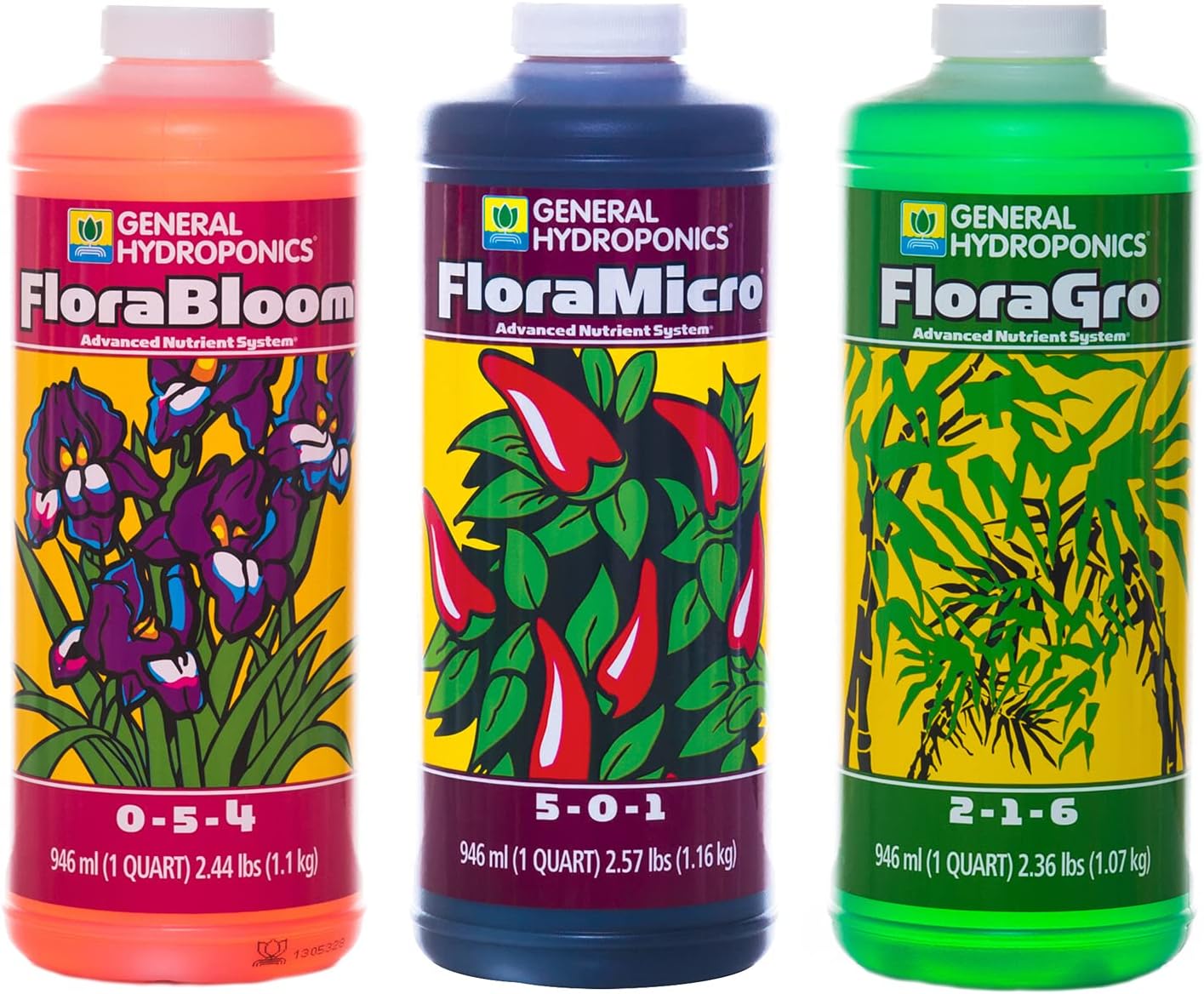 General Hydroponics Flora Series: FloraMicro, FloraBloom, ...
Three-part nutrient system with macro and micronutrients for hydroponic plants at every growth stage, ideal for customiz
~$32.86
General Hydroponics Flora Series: FloraMicro, FloraBloom, ...
Three-part nutrient system with macro and micronutrients for hydroponic plants at every growth stage, ideal for customiz
~$32.86
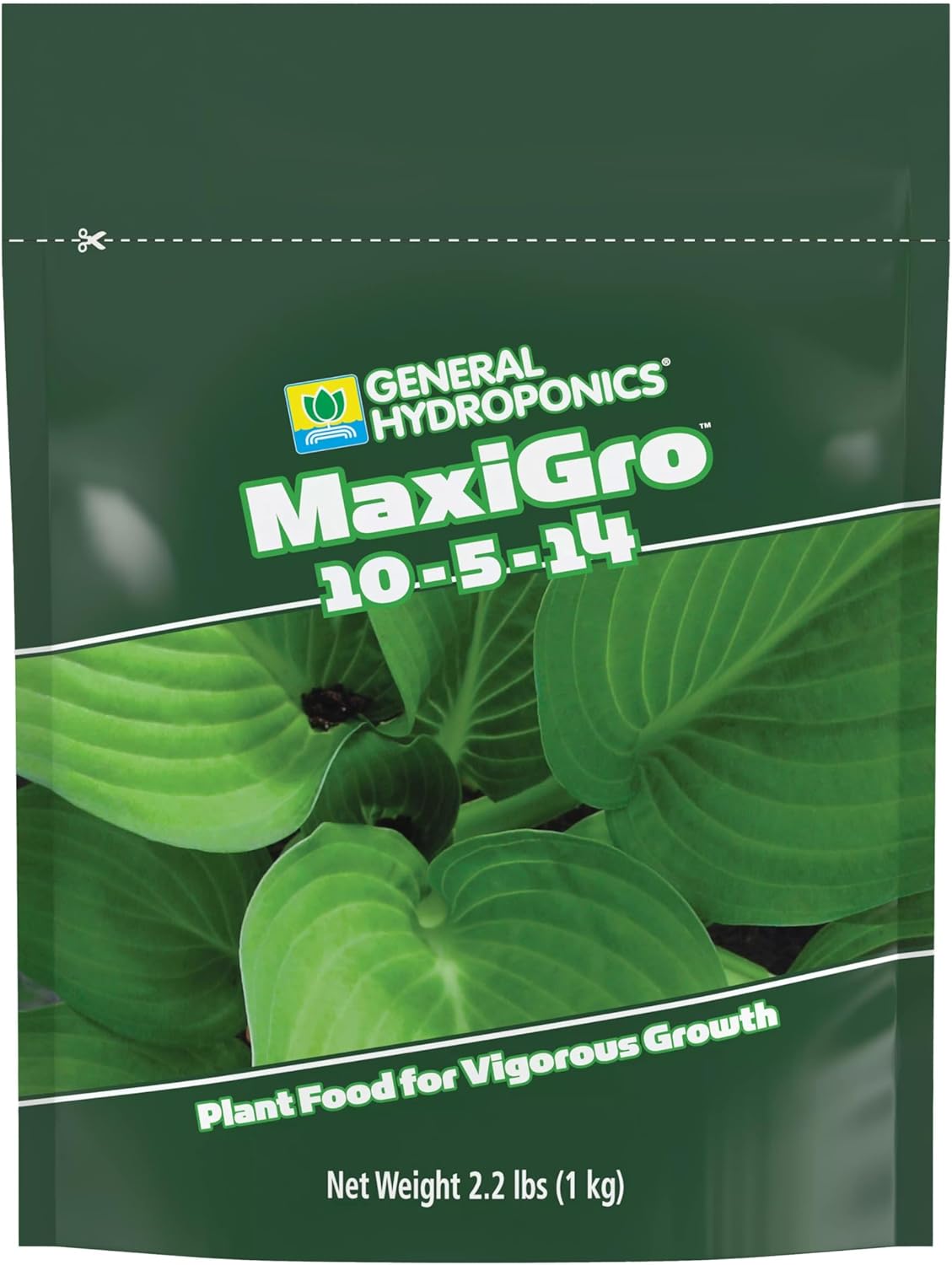 General Hydroponics MaxiGro Plant Food for Vigorous ...
Water-soluble nutrient formula with calcium and magnesium, designed for vegetative stage growth in hydroponic systems fo
~$15.99
General Hydroponics MaxiGro Plant Food for Vigorous ...
Water-soluble nutrient formula with calcium and magnesium, designed for vegetative stage growth in hydroponic systems fo
~$15.99
 General Hydroponics GLCMBX0008 Maxigro, Maxibloom ...
Two-part nutrient system with growth and flowering formulas plus finishing additive for hydroponic crop production.
~$56.12
General Hydroponics GLCMBX0008 Maxigro, Maxibloom ...
Two-part nutrient system with growth and flowering formulas plus finishing additive for hydroponic crop production.
~$56.12
 Dyna-Gro Foliage-Pro Nutrient, 1 Qt (DYFOL032)
1-quart high-nitrogen liquid nutrient (9-3-6) formulated for foliage plants and low-light environments
~$22.11
Dyna-Gro Foliage-Pro Nutrient, 1 Qt (DYFOL032)
1-quart high-nitrogen liquid nutrient (9-3-6) formulated for foliage plants and low-light environments
~$22.11
The Two Camps
Every nutrient conversation in r/aerogarden splits pretty cleanly into two groups. One group wants to pour something in and walk away. The other wants to spend as little money as possible and doesn’t mind a few extra steps. There’s no wrong answer, but mixing up the two approaches is where people get into trouble.
One post summed up the first camp better than I could: “I don’t want to dissolve a dry plant food in water. I don’t want to own three different types of plant foods. I don’t want to buy any equipment besides the plant food.” That’s not laziness, that’s a completely reasonable preference for a kitchen countertop setup.
If that’s you, skip to the liquid section below.
If you’re more interested in the cost savings and don’t mind measuring a teaspoon of powder, the mix-your-own section has you covered.
Liquid Drop-In Options
Dyna-Gro Foliage-Pro buy on Amazon is what I’d recommend for most people making this switch. It’s 9-3-6, formulated specifically for leafy greens and herbs in vegetative growth, which covers 90% of what countertop pod gardeners are actually growing. It’s a one-part liquid with a pH buffer built into the formula, same concept as AeroGarden’s own food, and with a more complete micronutrient profile. One caveat worth knowing: Foliage-Pro’s buffer is weaker than AeroGarden’s OEM formula in practice. If your tap water is very high (mine runs at 8.7), even Foliage-Pro may need a small pH adjustment. It’s not a full like-for-like swap on the buffer, it’s just closer than anything else in the liquid, one-bottle category. The price per gallon works out to a bit more than AeroGarden nutrients in some cases, but you’re getting better coverage of the micros. Check the current price on Amazon before you commit.
The official AeroGarden nutrients are still an option, and this is worth saying clearly: AeroGarden relaunched in Spring 2025 under Scotts Miracle-Gro, and the nutrients are back in stock on Amazon and aerogarden.com. The math on them is ~$26-27 for a liter bottle, dosed at 8ml per gallon, which works out to about $0.21 per gallon. That’s not cheap, but it’s also not as outrageous as some posts make it sound. And the zero-hassle formula does have real value. If you’ve already got a bottle and it’s working, there’s no urgent reason to switch.
Then there’s the General Hydroponics Flora Series check current price . It comes up constantly in this conversation, and it works well, but there are a few things to know. First, it’s a 3-bottle system (FloraMicro, FloraGro, FloraBloom), which immediately disqualifies it for anyone in the pour-and-done camp. Second, Scotts Miracle-Gro owns General Hydroponics, so if you’re switching from AeroGarden nutrients specifically to leave the Scotts ecosystem, you’re not actually leaving it. A Reddit user pointed this out and I think it’s worth knowing before you spend the money. Third, and this comes up in Amazon reviews: users have reported incomplete orders and poor seller support. Buy direct from a reputable Amazon listing, not a third-party reseller. If you’re fine with the 3-bottle system and the lack of a pH buffer, it’s available on Amazon see on Amazon with over 6,000 reviews and a solid track record when you get the right seller.
Two other liquid options that don’t get much coverage: TPS and HiThrive, both available on Amazon. Reddit users flag them as liquid AeroGarden equivalents, and from what I’ve seen in reviews, they fit the one-bottle, pour-it-in use case. I haven’t used either myself, but they’re worth looking at if Dyna-Gro is out of stock.
Mix-Your-Own Options
MaxiGro check price on Amazon is the most upvoted budget recommendation in r/aerogarden, and the numbers back it up. At roughly $0.05 - 0.10 per gallon, it’s 2 - 4x cheaper than OEM AeroGarden nutrients. Not the 10x cheaper some posts claim, but real savings, especially if you’re running more than one system. A YouTube creator who tested it across herbs, leafy greens, and cherry tomatoes on multiple pod systems (AeroGarden, iDOO, LetPot) reported that cilantro grown with MaxiGro tasted noticeably better than the same plants grown with AeroGarden nutrients. Cherry tomato results were close to identical.
The dosing: half a teaspoon per liter. The method that works best is dissolving it in about 100ml of water first, shaking it, then topping up to a full liter in the reservoir. That same Reddit thread had someone using MaxiBloom alongside MaxiGro for fruiting plants, worth knowing if you’re getting into tomatoes or strawberries. (I’m currently on strawberry attempt two in my iDOO. Still not sure MaxiGro is what would fix my flavor problem, I think that’s more about light intensity and temperature swings.)
MaxiGro has no pH buffer. My tap water runs at 8.7, which I found out the hard way after six months of yellowing basil. If you’re on high-pH tap water, you’ll want to at least test once and see where you’re starting from. A basic pH meter is under $15, I wrote more about the water quality issue here .
And that’s what irritates me about how MaxiGro gets recommended online: people drop the “half tsp per liter” advice without ever mentioning pH, and then new growers wonder why their plants look terrible on week four. It’s not the nutrient. It’s the water. So if you’re switching to any powder nutrient and your tap water is above 7.5, get the meter first. The advice is incomplete without that detail, and it costs beginners weeks of bad growth that had nothing to do with their technique.
Masterblend 3-part is the other budget option, and it goes deeper into DIY territory. There’s a complete recipe in teaspoon measurements from a Reddit thread that I’ll just copy here because it’s useful:
For one gallon of solution: half tsp MasterBlend 4-18-38 (dissolve this first), quarter tsp Epsom salt (second), half tsp calcium nitrate (always add last). Grocery store Epsom salts work fine, no need to order anything special online.
One user reported their cherry tomatoes improved to “outstanding” with this formula. The ordering matters because calcium nitrate and the other components react if you add them together undiluted. It’s not complicated, but it is more steps than MaxiGro. If you’re comfortable measuring three things and adding them in order, you’ll save even more.
Real Cost Comparison
| Option | Form | Effort | pH Buffer | Cost/Gallon |
|---|---|---|---|---|
| AeroGarden OEM | Liquid | Pour and done | Yes | ~$0.21 |
| Dyna-Gro Foliage-Pro | Liquid | Pour and done | Yes (weaker) | ~$0.25 - 0.30 |
| GH Flora Series | Liquid (3 parts) | Mix 3 bottles | No | ~$0.10 - 0.15 |
| MaxiGro | Powder | Measure + dissolve | No | ~$0.05 - 0.10 |
| Masterblend 3-part | Powder (3 parts) | Measure 3 + dissolve | No | ~$0.04 - 0.08 |
Dyna-Gro costs a bit more per gallon than OEM in some configurations, but you’re getting a more complete formula. MaxiGro and Masterblend win on price but require you to manage pH yourself if your water needs it.
I wrote more about the full ongoing cost of running these systems, nutrients included, in the real cost of owning a countertop hydroponic garden .
This article is part of my Hydroponic Nutrients Guide , a complete resource for countertop hydroponic growing.
Frequently Asked Questions
What plant food can I use in my AeroGarden?
Any hydroponic nutrient formulated for soil-free growing will work. Dyna-Gro Foliage-Pro is the easiest swap if you want to stay at one bottle with no pH meter (though growers with very hard water may still need to check). MaxiGro works well for herbs and leafy greens at half a teaspoon per liter. The GH Flora Series is a solid 3-part option, but users have reported incomplete orders and poor seller support, so buy direct from a reputable Amazon listing, not a third-party reseller. Avoid organic nutrients in small closed reservoirs, Reddit consensus is that organics behave unpredictably in systems without enough water volume to buffer them.
Can I make my own hydroponic nutrient solution?
Yes. The simplest DIY route is Masterblend 4-18-38 with Epsom salt and calcium nitrate. The recipe for one gallon: half tsp Masterblend dissolved first, quarter tsp Epsom salt, then half tsp calcium nitrate added last. Grocery store Epsom salts are fine. You’ll want a basic pH meter to verify your solution is in the 5.5 - 6.5 range, since none of the powders include a buffer.
What are the ingredients in AeroGarden liquid plant food?
AeroGarden hasn’t published a full breakdown, but based on Reddit analysis (and a commenter who’s done more digging than I have), the formula is intentionally missing most micronutrients, calcium, iron, zinc, magnesium, because keeping those stable in a single-bottle liquid is hard to do. The trade-off is that it has a pH buffer and requires zero equipment. For most herbs and lettuces it works fine. For heavy-feeding plants or longer grows, the missing micros eventually show.
Can I make my own liquid plant food?
You can dilute powder nutrients into a concentrated liquid yourself, but it’s not worth the effort for most countertop growers. The simpler path is Dyna-Gro (already liquid, already buffered) or MaxiGro dissolved per-use. True liquid concentrates you mix yourself require careful storage and usually separate calcium components to prevent precipitation.
Do I need a pH meter if I switch from AeroGarden nutrients?
It depends on what you switch to. Dyna-Gro Foliage-Pro has a pH buffer, so you can skip the meter in most cases, but if your tap water is on the high end (mine is 8.7), even Foliage-Pro may not fully compensate. MaxiGro, Masterblend, and the GH Flora Series have no buffer, whether that matters depends on your tap water. If your tap water is closer to neutral, you might be fine without checking. But a $12 pH meter removes all the guesswork, and it’s a one-time purchase.
Can I use AeroGarden nutrients in an iDOO or LetPot system?
Yes. Any hydroponic nutrient works across countertop pod systems regardless of brand. The iDOO ships with a two-part A/B formula, once that runs out, you can use anything on this list. MaxiGro in particular has been tested across iDOO, LetPot, and AeroGarden systems by at least one creator with consistent results. Same dosing applies: half a teaspoon per liter, dissolved in a little water first. I’ve written more about how the iDOO and AeroGarden compare overall in this piece .