
Some links in this post are affiliate links. I get a small cut if you buy, but it doesn’t cost you anything extra.
I measured a $30 Amazon grow light with a lux meter app and it put out 300 lux. My north-facing window, on a cloudy day in January, measured around 1,000 lux. The grow light was worse than a window. If you’re trying to find a decent grow light for indoor herb garden setups, that’s the thing nobody tells you upfront.
This wasn’t some obscure brand either. It was one of those clip-on “burple” desk lamps that’s always the first result when you search for herb grow lights on Amazon, with thousands of five-star reviews. And it was functionally useless for growing basil.
So this article isn’t a generic roundup of the five prettiest grow lights. It’s about figuring out whether a grow light is actually doing anything, and then picking one that will.
Quick Answer: Most cheap Amazon clip-on grow lights (under $30) deliver 300-500 lux at plant level, which is less than a cloudy window and nowhere near the 5,000-10,000 lux herbs need. For a real herb shelf, the Barrina T5 strips buy on Amazon (around $35-40) are the best value option. For a countertop hydroponic supplement, the GooingTop clip-on check current price at ~$21 is the practical pick. For a windowsill winter boost, the LED Plant Grow Lights Strips see on Amazon handle the job without much fuss.
 Grow1 Single Outlet Mechanical Timer 24 Hour ...
Single-outlet 24-hour mechanical timer with 15-minute increments, designed for automated control of grow lights, fans, a
~$13.98
Grow1 Single Outlet Mechanical Timer 24 Hour ...
Single-outlet 24-hour mechanical timer with 15-minute increments, designed for automated control of grow lights, fans, a
~$13.98
 Barrina T5 Grow Lights for Indoor Plants, Full Spectrum ...
Eight 2-foot full-spectrum LED strips at 80W each with daisy-chain capability, ideal for seedling to flowering stages ac
~$50.99
Barrina T5 Grow Lights for Indoor Plants, Full Spectrum ...
Eight 2-foot full-spectrum LED strips at 80W each with daisy-chain capability, ideal for seedling to flowering stages ac
~$50.99
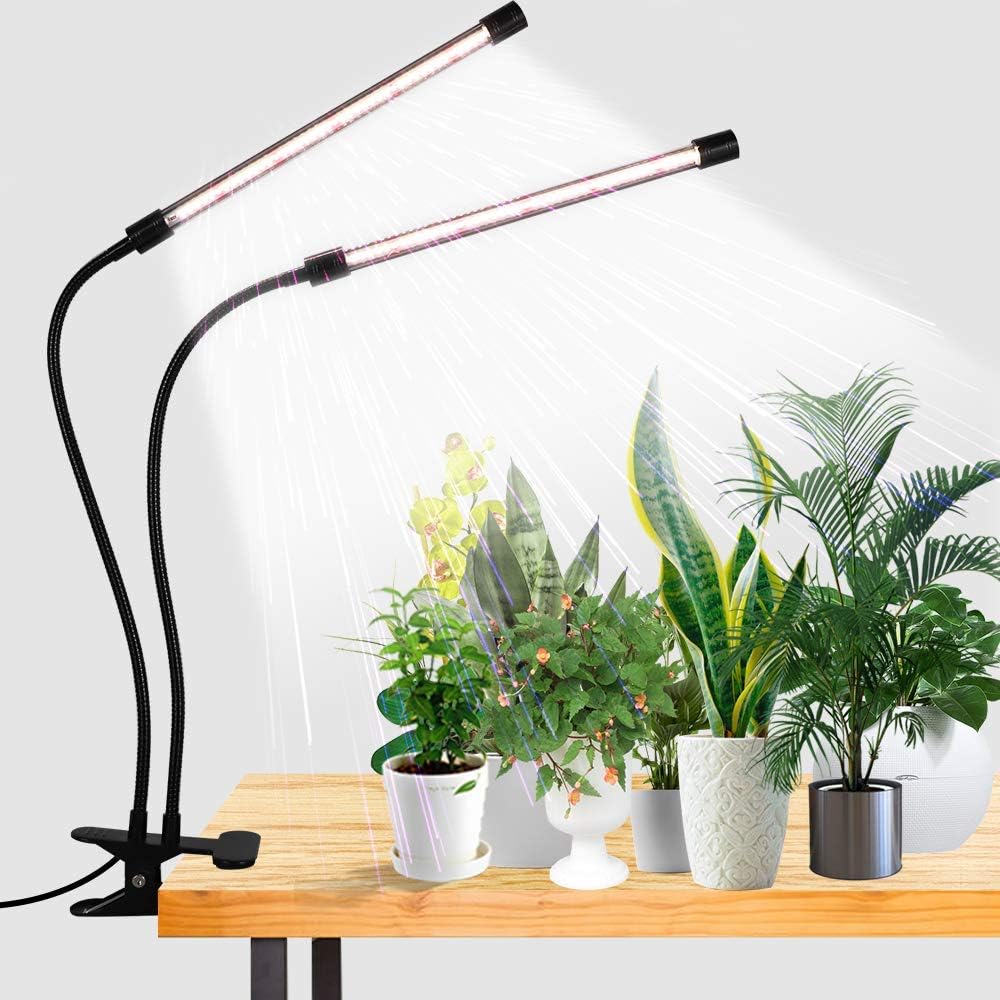 GooingTop LED Grow Light,6000K Full Spectrum Clip ...
10W LED clip light with 6000K full spectrum and 3 timer options, ideal for seedlings and small indoor plants.
~$20.79
GooingTop LED Grow Light,6000K Full Spectrum Clip ...
10W LED clip light with 6000K full spectrum and 3 timer options, ideal for seedlings and small indoor plants.
~$20.79
 Modern Sprout Smart Growbar V2 LED Grow Light
Full-spectrum LED grow light with app control and programmable schedules, ideal for supplementing natural light for herb
~$99
Modern Sprout Smart Growbar V2 LED Grow Light
Full-spectrum LED grow light with app control and programmable schedules, ideal for supplementing natural light for herb
~$99
 LED Plant Grow Lights Strips for Indoor ...
Six-bar LED strips with full spectrum and 4 brightness levels, ideal for seedlings and herbs in shelving systems
~$45.99
LED Plant Grow Lights Strips for Indoor ...
Six-bar LED strips with full spectrum and 4 brightness levels, ideal for seedlings and herbs in shelving systems
~$45.99
How to Know If Your Grow Light Is Actually Working
Download Lux Light Meter on your phone (free, iOS and Android). Open it, point it at your plant canopy from about an inch above the leaves, and check the number.
Here’s what those numbers mean for herbs:
- Under 1,000 lux: you’re in shade territory. Ferns might survive. Basil won’t thrive.
- 1,000-3,000 lux: low light. Your herbs will stay alive but grow slowly and get leggy.
- 5,000-10,000 lux: this is the range herbs actually want. Basil, cilantro, dill, they’re happy here.
- Above 20,000 lux: flowering plants territory. You don’t need this for a kitchen herb shelf.
The reason cheap clip-on lights fail isn’t just that they’re underpowered. It’s the inverse square law. Double the distance between your light and your plant, and you lose 75% of the light intensity. A clip-on light clamped to a shelf eight inches above your basil is not the same as one positioned two inches above it. Most people set these lights at a comfortable height, not an effective one.
A good rule of thumb from r/gardening: 20 watts per square foot for herbs you want to actually harvest, not just keep alive.
Use Case 1: Standalone Herb Shelf (No Natural Light)
This is the hardest case. You’ve got a shelf somewhere with no window nearby, and you want to grow herbs there year-round.
Cheap clip-on lights won’t cut it. The Reddit consensus in r/IndoorGarden and r/gardening is pretty consistent: T5 or T8 strip lights mounted to the underside of a shelf are the move here. They spread light evenly, they’re cheap per watt, and they last.
The Barrina T5 strips check price on Amazon come up constantly in r/IndoorGarden threads. One user described being happy with the build quality, the daisy-chaining capability, and the light output shortly after install. They’re not beautiful, but they’re functional and reasonably priced at around $35-40 for a set. The connectors between units are short, which can be awkward depending on your shelf setup, and some units reportedly emit a pink hue rather than white. Worth knowing.
On the premium end: the Soltech Solutions Aspect runs about $200, puts out 40W, and Food & Wine named it their best overall grow light. It’s elegant for a grow light. No dimmer switch though, which I find annoying, and $200 is a lot when T5 strips do the same job for a fraction of the cost. My instinct is always toward the ugly-but-functional option.
Whatever you pick for a standalone shelf, pair it with a timer outlet. The Grow1 mechanical timer available on Amazon is the one I’d grab. Set it for 14-16 hours for basil and cilantro. More on that in the FAQ.
Use Case 2: Countertop Hydroponic Supplement
This is the use case nobody writes about, and it’s actually pretty common if you own an AeroGarden or iDOO.
The problem: your AeroGarden Harvest has a 20W light arm positioned directly over the pods. If you’ve got taller herbs, the outer pods sometimes get shaded. Or you’ve got a second small pot sitting next to the unit on the counter that isn’t getting anything. Or, like me with the iDOO, you’re running strawberries and the plant is climbing sideways and the built-in light doesn’t track it. (I wrote more about that whole situation in my iDOO vs AeroGarden comparison if you want the longer version.)
For this situation, you want something adjustable and low-profile. The GooingTop clip-on buy on Amazon at around $21 is a reasonable option here. It’s 10W, has a 6000K spectrum with 74 white and 10 red LEDs, and comes with an auto-timer (4, 8, or 12 hour cycles). The gooseneck arms are flexible enough to point at a specific area, and it clips to a shelf edge or the side of a unit. Adjustable brightness in five levels.
The complaints worth knowing: the clamp doesn’t open wide enough for some shelf edges, and the arms aren’t quite as flexible as you’d want for awkward angles. It’s a $21 light so build expectations accordingly. But for a supplemental role, getting an underlit corner from 800 lux to 4,000 lux, it works.
Use Case 3: Windowsill Winter Boost
March is actually the worst month for this. The days are getting longer but a windowsill in early spring is still getting maybe 2,000-4,000 lux on a good day, and herbs that got accustomed to full-spectrum LED light through the winter will visibly sulk when you move them to a cold glass ledge.
For a windowsill boost, you don’t need a lot of hardware. The LED Plant Grow Lights Strips check current price are a simple option for under-cabinet or shelf-edge mounting if you want something unobtrusive. For a dedicated herb pot on a sill, even the GooingTop clip-on mentioned above works fine in this role.
The GE LED Grow Light Bulb ($18) is another option if you already have a lamp fixture nearby. It’s 9W, full spectrum, runs cool, and Food & Wine noted only a slight high-pitched hum in a quiet room. If you’ve got an old desk lamp sitting around, this is the cheapest possible upgrade.
This article is part of my Grow Lights for Indoor Hydroponics , a complete resource for countertop hydroponic growing.
Frequently Asked Questions
What kind of grow light for indoor herbs?
For an herb shelf with little to no natural light, T5 or T8 strip lights are the best value, with the Barrina T5 being the Reddit favourite at around $35-40. For a small countertop supplement or windowsill boost, a clip-on like the GooingTop does the job for around $21. Avoid cheap “burple” desk lamps under $25, they typically deliver under 500 lux at plant level, which is less than a window.
What are common mistakes growing indoor herbs?
The biggest one is not verifying the light is actually reaching the plants at useful intensity. People buy a grow light, set it up at a comfortable height, and assume it’s working. Download a lux meter app and actually check. The second mistake is using a 12-hour timer cycle for basil and cilantro when they want 14-16 hours. And the third is not using a timer at all, which means inconsistent photoperiods that stress the plants.
How much light do herbs need to grow indoors?
Basil, cilantro, dill, and most common kitchen herbs need roughly 5,000-10,000 lux for healthy growth. At the low end, they’ll survive but grow slowly and go leggy. Below 3,000 lux, you’re not really growing herbs so much as keeping them from dying immediately.
How do I know if my grow light is actually working?
Download a free lux meter app (Lux Light Meter is a good one for both iOS and Android), point it at your plant canopy from about an inch above the leaves, and read the number. If you’re under 3,000 lux, the light isn’t doing enough. If you’re above 6,000, you’re in good territory for herbs. This takes thirty seconds and is more useful than any spec sheet.
How many hours a day should a grow light be on for herbs?
Most grow lights and hydroponic systems default to 12 hours. That’s fine for lettuce. For basil and cilantro specifically, they’re long-day plants and do noticeably better at 14-16 hours. If your light has a built-in timer that maxes at 12 hours, pair it with a separate mechanical timer outlet to override it. It’s a small adjustment that makes a difference, and it costs about $8.
Two dead clip-on lights in year two of this hobby taught me most of what’s in this article. Both were under $25 and both had goosenecks that drooped within weeks. I wrote more about that in The Cheap Clip-On Grow Lights Keep Breaking, Here’s What I Use Instead . The short version: spend at least $30, or buy strip lights and skip the clip-on format entirely. And if you’re already measuring lux and adjusting timer settings, you’re ahead of where I was two years into this.