
Two things nobody warns you about before you set up a countertop hydroponic garden in your apartment: the grow light will probably wake you up on night one, and the manual is useless for telling you when to actually plug the thing in. The actual growing part, seeds, nutrients, watching stuff sprout, that’s manageable. But fitting a bright, humming, water-filled appliance into a space where you also sleep, cook, and try to relax? That’s where people bail. So if you’re looking for hydroponic garden apartment tips that go beyond “pick a sunny spot,” this is the stuff I wish someone had told me three years ago.
Quick Answer: Set your light schedule before you plant anything, plug non-app systems in at the start of your day, or use an app-based system like the LetPot to set exact on/off hours. Put the garden in a spare room or office if you have one; if you don’t, a bamboo window shade (~$20) draped over the unit blocks enough light for sleep while letting air through. Top off water every 1-3 days, add nutrients every two weeks, and do a full water swap every 2-4 weeks. The rest is details, and I cover all of them below.
| Product | Price | Rating | Key Feature | |
|---|---|---|---|---|
 LETPOT Classic Hydroponics Growing LETPOT Classic Hydroponics Growing | ~$59.99 | 4.5★ (246) | Patented full-spectrum LED mimics natural sunlight to accelerate plant growth 3 | Check Price |
 Click & Grow Indoor Herb Garden Kit Click & Grow Indoor Herb Garden Kit | ~$112.7 | 4.6★ (2,354) | energy-efficient LED grow lights ensure your plants thrive no matter the weather | Check Price |
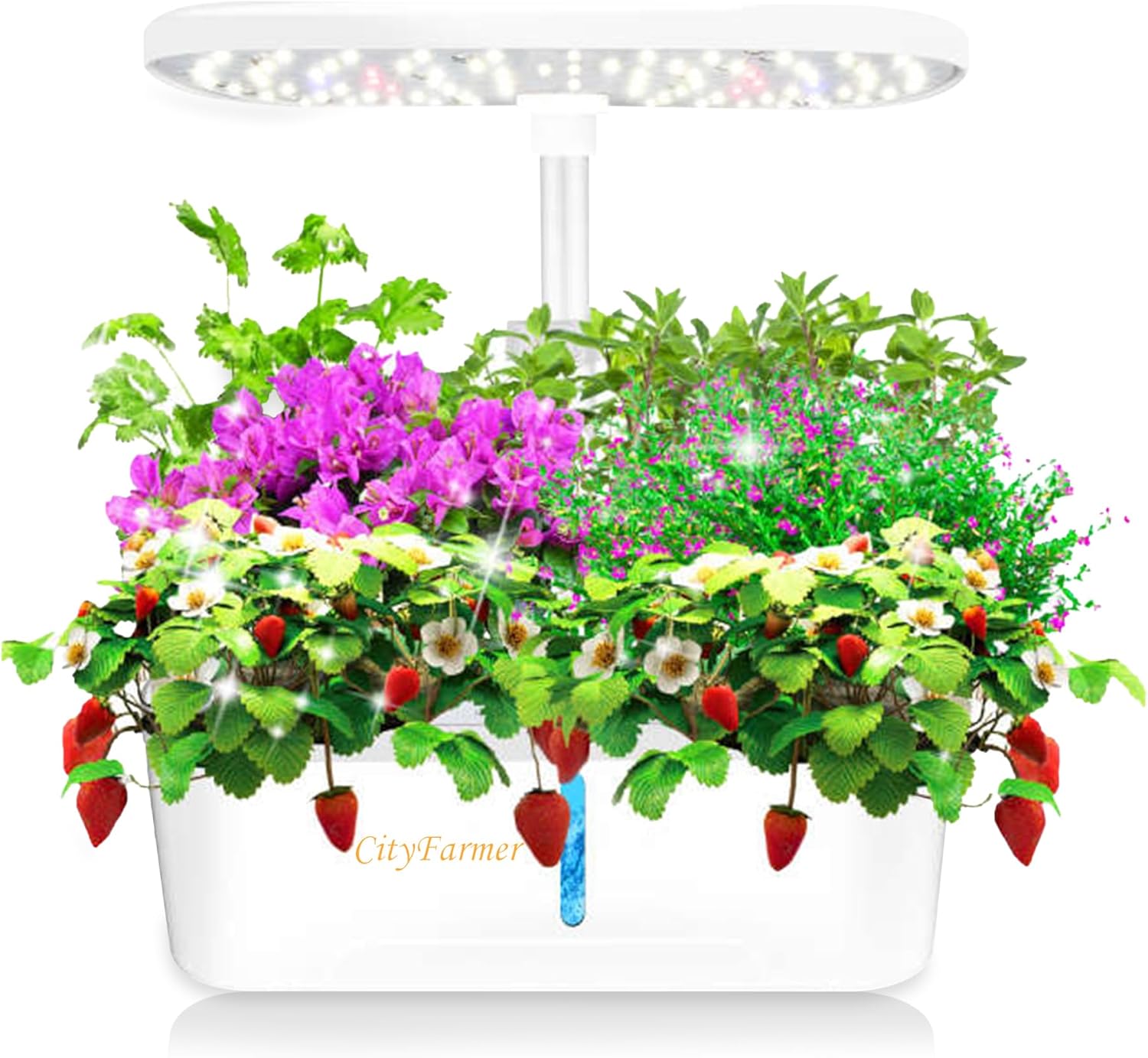 Cityfarmer Indoor Hydroponics Growing Cityfarmer Indoor Hydroponics Growing | ~$49 | 4.7★ (20) | hydroponics growing system boasts the latest SMD LED technology with a full-spec | Check Price |
 Sonicgrace Indoor Hydroponic Growing Sonicgrace Indoor Hydroponic Growing | ~$34.99 | 4.4★ (24) | Full Spectrum LED Grow Light. Designed to mimic natural sunlight, the indoor her | Check Price |
Set the Light Schedule First
This is the single most important thing and nobody puts it first. Grow lights on countertop systems run about 16 hours on, 8 hours off. That’s a long window of very bright light in a small space. And here’s what trips people up: most cheaper systems don’t let you pick when those 16 hours happen. They start a countdown timer the moment you plug them in.
So if you get home from work at 6pm, excitedly unbox everything, plug it in, and drop your seeds in, congratulations, your lights are now on until 10am the next morning, blasting through your entire sleeping window and probably annoying whoever else lives with you.
The fix is simple but you have to think about it in advance. If your system doesn’t have an app (most under $80 don’t), plug it in at the time you want the lights to turn on. For me that’s around 7am. Lights run until 11pm. Done. But if you accidentally unplug it, or a pet knocks the cord, or you lose power, the whole schedule resets and you’re setting an alarm to replug at the right time.
App-connected systems like the LetPot LPH-SE Classic buy on Amazon solve this entirely. You set exact on/off hours in the app and it holds the schedule through power interruptions. If I’d known this when I started, it would’ve saved me a month of waking up at 3am to a wall of purple light because I’d plugged the unit in after dinner. I wrote more about the LetPot in my JustSmart GS1 Max vs LetPot LPH-SE comparison if you want the deeper breakdown.
Fair warning on the LetPot, though: it has a real learning curve. The customer reviews back this up, people report moldy sponges in their first couple of rounds, low sprout rates, and scummy water if they don’t stay on top of reservoir cleaning. I had similar issues until I stopped pre-soaking the grow sponges and let the system do its thing. If you’ve never done hydroponics, expect a frustrating first month before it clicks. That’s the honest trade-off for a $60 system with app scheduling.
Where to Put It, Room by Room
I’ve tried three different rooms in my apartment. Here’s what I’ve learned, and what I’ve picked up from way too many Reddit threads about this exact problem.
Office or spare room is the best option if you have one. Mine lives on a shelf in what’s technically a home office, and some nights the light is so bright I don’t even turn on the room light. Close the door at night and you’re set. One thing I didn’t expect: if you have windows facing a neighbor’s unit, the grow light shining out at 6am can be a problem. I angle mine away from the window now.
Kitchen counter is the most practical spot for grabbing herbs while you cook, and I get the appeal, I harvest basil and cilantro right into whatever I’m making. But the light bleeds into every connected room in an open-plan apartment. If your kitchen and living room are one space, you’re going to need a light-blocking solution (more on that below).
Bedroom is possible. One person on Reddit runs four systems in their bedroom with a bamboo shade draped over all of them and says they sleep fine, even finds the pump noise soothing. I’m not that person. My partner would leave me.
Bathroom. I keep thinking about trying this, and I keep not doing it because the humidity from showers seems like it’d invite problems. Maybe I’ll test it this year and report back, but I’m not recommending it yet.
Light-Blocking Solutions (The Cover-Ventilation-Algae Triangle)
Any cover you put over your hydroponic garden has to satisfy three constraints at once: it needs to block enough light so you can function in the room, it has to allow airflow so your plants don’t cook, and it can’t let light leak down into the water reservoir, because that’s how you get algae. Most DIY solutions handle one or two of these and completely miss the third.
Here’s what works, sorted by cost:
Free: cardboard tri-fold presentation board. The kind you’d use for a science fair. Stand it around three sides of the unit. Blocks the sideways glare, doesn’t touch the plants, and air flows over the top. It looks terrible. I used one for two months and it did the job.
$2-10: Mylar blankets or foil tape on the hood. You can get a 10-pack of Mylar space blankets for about $10 on Amazon. Tape sheets around the hood to reflect light downward instead of sideways. This cuts maybe 90% of the glare. But check that you’re not creating a light path straight into the reservoir, that’s where algae starts.
~$20: bamboo window shade. This is the one I’d recommend for most people. Drape it over the whole unit. The weave lets air pass through while diffusing the light enough that it’s not blinding. Someone on the AeroGarden subreddit has been doing this with four units in a bedroom for months with good results. It also doesn’t look like you’re running a grow operation, which matters if you ever have guests.
And the thing nobody warns you about: if your cover lets even a little light reach the water, you’ll get algae in the reservoir within a week or two. This means light-blocking stickers on any exposed pod holes (some systems include these), and dark or opaque reservoir walls. If your system has clear tubing, swap it for black tubing. It’s like $8 on Amazon and it matters.
Pump Noise
Most countertop systems have a small water pump that cycles on and off. The honest answer is that it’s a low hum, not a loud noise. I sleep through mine when it’s in the next room.
But if noise matters to you, and in a studio apartment where everything is in one room, it might, the Click & Grow Smart Garden 3 check current price is the quietest option I’m aware of. It uses a self-watering system rather than an active pump, so there’s no motor sound at all. For a bedroom or a desk right next to where you work, that’s a real selling point.
The trade-off is that it’s a 3-pod system, so you’re growing basil, maybe some lettuce, and that’s about it per round. The pods are also proprietary and cost more per unit than generic sponges. For about $113 it’s a lot per pod.
The Sonicgrace see on Amazon claims under 20 dB, which would make it very quiet for a pump system. It’s only about $35, which makes it a reasonable starter if you’re testing whether you can live with a hydro garden in a small space before committing to something bigger. So if you want to dip a toe in without spending much, that’s the one I’d point you toward.
Water, Nutrients, and the Maintenance Cadence
This part sounds like a lot but it’s really not. Here’s the rhythm I’ve settled into, and it lines up with what most experienced growers do:
Top off the water every 1-3 days. When plants are small, you might go three or four days. Once you’ve got big basil or tomato plants drinking hard, it’s daily. I just check the water level window every morning while I’m making coffee. Takes five seconds.
Add nutrients every two weeks. Most systems come with a small bottle of plant food. Follow the dose on the label, or honestly, go lighter than the label says. I’ve had yellowing leaves from too-strong nutrient doses more than once.
Full reservoir swap every 2-4 weeks. You can’t just top off forever because nutrient salts build up and the pH drifts. Dump it all, rinse the tank, refill with fresh water and nutrients. I aim for every three weeks but sometimes stretch it. I think my longest gap was maybe five weeks last winter, and the basil was telling me about it, leaves got pale and crispy at the tips. Write the date on a piece of tape on the tank. That’s the whole system.
City water tip: if you’re on municipal water (most apartment dwellers are), letting it sit out for 24 hours doesn’t fully remove chloramine, which is what most cities use now instead of plain chlorine. A Camco TastePURE RV inline filter runs about $15-20 and threads right onto your faucet. I started using one after reading about it from an experienced grower who runs multiple systems, and my plants looked noticeably better within a couple weeks. I go deeper on this in my tap water guide .
Budget, ROI, and What’s Actually Worth Spending
A pack of fresh basil at the grocery store runs about $3. Your countertop system costs $35-150 depending on what you get. You’ll spend another $10-15 on nutrients every few months, and maybe $15-20 for a water filter if you’re on city water. Electricity for the grow light is negligible, a 24W LED running 16 hours a day costs less than $2/month.
The math works out if you grow herbs you’d otherwise buy weekly. It doesn’t work out if you’re growing novelty stuff you wouldn’t eat anyway. I break down the full cost picture in my real cost of running a hydroponic garden post.
For apartment dwellers specifically, here’s what I’d recommend:
The LetPot LPH-SE Classic (about $60, [check current price](check price on Amazon )) is the best value if you want app-based light scheduling and a 12-pod capacity. The 5.5L reservoir means fewer refills. Just be prepared for that learning curve I mentioned.
The Click & Grow Smart Garden 3 (about $113, [see on Amazon](available on Amazon )) is for people who want silence and simplicity above all else. Three pods, proprietary refills, higher cost per grow, but it’s fuss-free.
The Cityfarmer (buy on Amazon ) has a 4.7-star rating from only 20 reviews, so take that with a grain of salt, but for a compact counter footprint, it’s worth a look. It claims 5x growth acceleration and runs 18 days between waterings on a 4L tank, which sounds ambitious. One reviewer noted the lights are extremely bright, so the same light-blocking advice above applies double here.
And the Sonicgrace (about $35, [grab it on Amazon](check current price )) is the cheapest way to find out whether you’ll actually stick with this hobby before spending more.
The point is having fresh herbs on demand without a grocery run. And if you’ve got zero outdoor space and you want to grow something, that’s reason enough on its own. Block the light on day one, set the schedule to match your hours, and the rest you’ll figure out as you go. What I’m testing now is whether a second unit in the bathroom actually causes the mold problems I assumed it would, or if that’s just apartment mythology. I’ll report back.
Frequently Asked Questions
Can I run a countertop hydroponic garden in a studio apartment?
Yes, and plenty of people do. The main issue is light bleed, not space. A studio means your sleeping area, kitchen, and living space are all in one room, so a 16-hour grow light with no cover is going to be a problem. The bamboo shade solution I mentioned above is what most studio growers land on. The Click & Grow Smart Garden 3 is also worth considering here since it has no pump noise and a smaller footprint, which matters when every square foot counts.
Do hydroponic gardens work without a window?
They do. That’s kind of the whole point. The grow light replaces sunlight, so placement is about electricity access and light management, not window proximity. So don’t put it next to a window thinking it needs the light. It doesn’t. Put it where the glow won’t bother you at night.
How loud is a countertop hydroponic garden pump?
Most are a low, constant hum, somewhere between a white noise machine and a fish tank filter. I sleep through mine from the next room without issue. But in a studio where the unit is two feet from your pillow, it might bother you. The Sonicgrace claims under 20 dB. The Click & Grow has no pump at all. Those are your two options if noise is a dealbreaker.
What do I do if my grow light is too bright at night?
You cover it. A bamboo window shade draped over the unit is the easiest fix. Cardboard works too and costs nothing. The one thing to watch: make sure whatever you use doesn’t trap air around the plants or direct light down into the water reservoir. Trapped heat hurts the plants, and light hitting the water grows algae fast. And if your pod holes don’t have light-blocking stickers, get some, or cut squares of black electrical tape. That’s where most algae problems start.
Is it worth buying an app-connected system just for light scheduling?
For apartment living, yes. The LetPot LPH-SE Classic runs about $60 and holds its schedule through power interruptions. If you’re in a place where you can’t just close a door on the light, being able to set exact on/off hours matters a lot. The alternative is being disciplined about what time you plug the unit in every single time, including after every outage. That gets old.