
Some links in this post are affiliate links. I get a small cut if you buy, but it doesn’t cost you anything extra.
My first plant death wasn’t dramatic. No pests, no obvious rot, no yellowing spiral I could track. The basil just stopped growing, then went limp, then died. Took me two weeks to figure out the pump had clogged with root tendrils and the water had stopped circulating entirely. If you’re trying to figure out how to maintain a countertop hydroponic garden , that pump check you’ve never thought about is probably the first thing worth knowing. The whole time I was checking pH, adjusting nutrients, moving the light, and the actual problem was a pump I’d never once looked at.
That’s the thing about countertop hydroponic maintenance. The manuals cover the obvious stuff. They don’t cover the things that actually kill plants. So this guide is built around the real failure points, not the ones that make it into the quick-start leaflet.
Quick Answer: Countertop pod gardens (AeroGarden, iDOO, LetPot) need a daily 30-second water level check, a full reservoir change every 2 weeks with plain-water top-offs in between, and a pump inspection every 2-3 months. The single most common mistake is adding nutrients every time you top off, that concentrates salts and burns roots. Top off with plain water only, then do a full change on schedule.
The Top-Off vs Full Change Distinction Nobody Explains
This one concept prevents most of the nutrient problems people post about. Plants drink water faster than they drink nutrients. So as your reservoir drops, the nutrient concentration goes up. By the time you’re adding another liter to bring the level back, you might be pouring liquid into a solution that’s already two or three times stronger than it should be.
The fix: top off with plain water. No nutrients. Just fill it back up to the line.
Then, every two weeks, do a full drain and refill with fresh nutrient solution at the correct dose. That resets everything.
I’ve seen growers change water every 7-11 days with full nutrient doses each time, then wonder why their plants look scorched at the leaf edges. Salt creep. Crispy tips aren’t always a deficiency, sometimes they’re the opposite. And with a 1-gallon reservoir, the concentration swings faster than most nutrient guides account for, because those guides are written for 5-gallon DWC buckets, not the 4-8L systems that AeroGarden and iDOO actually ship.
If you want the longer breakdown on nutrient management, I wrote about four different formulas I tested and how concentration affects each one differently.
The Daily Glance (30 Seconds, That’s It)
Once your system is running, the daily check is fast. Two things:
Water level. Is it at or near the minimum line? Top off with plain water if yes. Don’t wait until it’s bone dry, some roots will air-prune, which isn’t fatal, but it stresses the plant.
Light. Is it on? Sounds stupid, but grow light timers can glitch, especially cheap ones. A missed day of light on seedlings matters more than people think.
That’s it. You don’t need to test pH every day. You don’t need to check EC daily. For herbs and greens on AeroGarden’s liquid nutrients, the pH buffer in the formula handles most of the drift. (Third-party nutrients are a different story, they don’t buffer, and pH will creep up faster. I track this in detail in my pH meter article .)
One thing worth doing weekly: look at the pod holes you’re not using. Any light hitting the water surface is an open invitation for algae. Cover empty holes with the plastic plugs that came with your system, or cut circles of foil if you’ve lost them. I covered this more in my algae prevention article , but the short version is: algae needs two things, nutrients and light, and your reservoir has plenty of nutrients already.
The Every-2-Weeks Full Change
This is the actual maintenance session. Plan for 10-15 minutes.
Drain the reservoir. On the AeroGarden Harvest, there’s a drain plug. On iDOO, you’re probably tilting it or using a turkey baster. Not elegant, but fine.
While it’s draining, rinse the inside of the reservoir with clean water. You’re looking for salt deposits (white crusty residue on the walls) and any sliminess that signals early bacterial buildup. A soft cloth or paper towel handles both. Don’t use soap, residue will harm roots.
Check the water level marker line while you’re in there. Overfilling is an actual problem. I know it feels like you’re giving plants a head start before a trip, but roots on most countertop systems need some air gap to oxygenate. Fill above the line and you’ll see root rot faster than you’d expect.
Refill with fresh nutrient solution at the dosage your nutrients call for. For AeroGarden’s liquid formula, follow the app reminder. For third-party nutrients, I use a TDS or EC pen to verify concentration rather than guessing. More on that here .
pH check is worth doing at the refill, not every day. Target 5.8-6.3 for most herbs and greens in a pod system. That’s a slightly tighter range than large-system guides recommend, because small reservoirs drift faster.
The Pump Check (Every 2-3 Months)
This is the one nobody does until something goes wrong.
Lift the grow tray and look at the pump underneath. Roots will reach the pump. In a healthy system, this actually happens faster than you’d think, some plants start sending roots toward the pump within 6-8 weeks. Most of the time it’s fine. But when root tendrils get into the pump nozzle, circulation drops. Quietly. You won’t hear it fail. You’ll just notice plants looking increasingly sad with no obvious cause.
I’ve found my pump clogged once after a long basil run. The nozzle had a clump of fine roots threaded into it. I pulled them out, rinsed the nozzle, and circulation came back immediately. The plants perked up within two days. I’d been blaming light schedule for the slow growth. Nope.
Now I keep a spare PIAOLGYI replacement pump nozzle buy on Amazon on hand. Not because the original fails constantly, but because the day mine fails I will want a replacement immediately, not in three days shipping time. It fits the AeroGarden Harvest directly. If you’re on a Bounty or want a 3-pack to have backups, the Bamokee check current price tends to cover more models and gives you options.
🏆 Best Value Overall 20 Pack Filter Sponges Foam Replacement for Aerogarden Harvest ...
20-pack foam filter sponges for Aerogarden systems, replace every 12 months to prevent pump clogs and maintain water circulation.
Check Price on Amazon
20 Pack Filter Sponges Foam Replacement for Aerogarden Harvest ...
20-pack foam filter sponges for Aerogarden systems, replace every 12 months to prevent pump clogs and maintain water circulation.
Check Price on AmazonThe filter sponge on the pump matters too. It’s the small foam piece that sits against the pump intake and catches root debris before it gets pulled in. I replace mine every grow cycle, which works out to roughly every 3-4 months. The TRENBIEN 20 Pack Filter Sponges see on Amazon are $6.99 for 20, which is basically free insurance. Made of 40PPI polyester fiber, rated up to 12 months, and they fit AeroGarden Harvest, Bounty, and Farm models without modification. The originals that ship with AeroGarden systems aren’t dramatically better, they’re just priced like they are. And honestly, the fact that AeroGarden charges what they do for replacement sponges when a $6.99 third-party pack does the same job is one of those small irritations that never stops being annoying.
 PIAOLGYI Replacement Pump Nozzle for AeroGarden Harvest ...
Two replacement pump nozzles for AeroGarden Harvest systems, designed to restore water circulation in aeroponic gardens when original nozzles fail.
~$12.99
20 Pack Filter Sponges Foam Replacement for Aerogarden Harvest ...
20-pack foam filter sponges for Aerogarden systems, replace every 12 months to prevent pump clogs and maintain water circulation.
PIAOLGYI Replacement Pump Nozzle for AeroGarden Harvest ...
Two replacement pump nozzles for AeroGarden Harvest systems, designed to restore water circulation in aeroponic gardens when original nozzles fail.
~$12.99
20 Pack Filter Sponges Foam Replacement for Aerogarden Harvest ...
20-pack foam filter sponges for Aerogarden systems, replace every 12 months to prevent pump clogs and maintain water circulation.
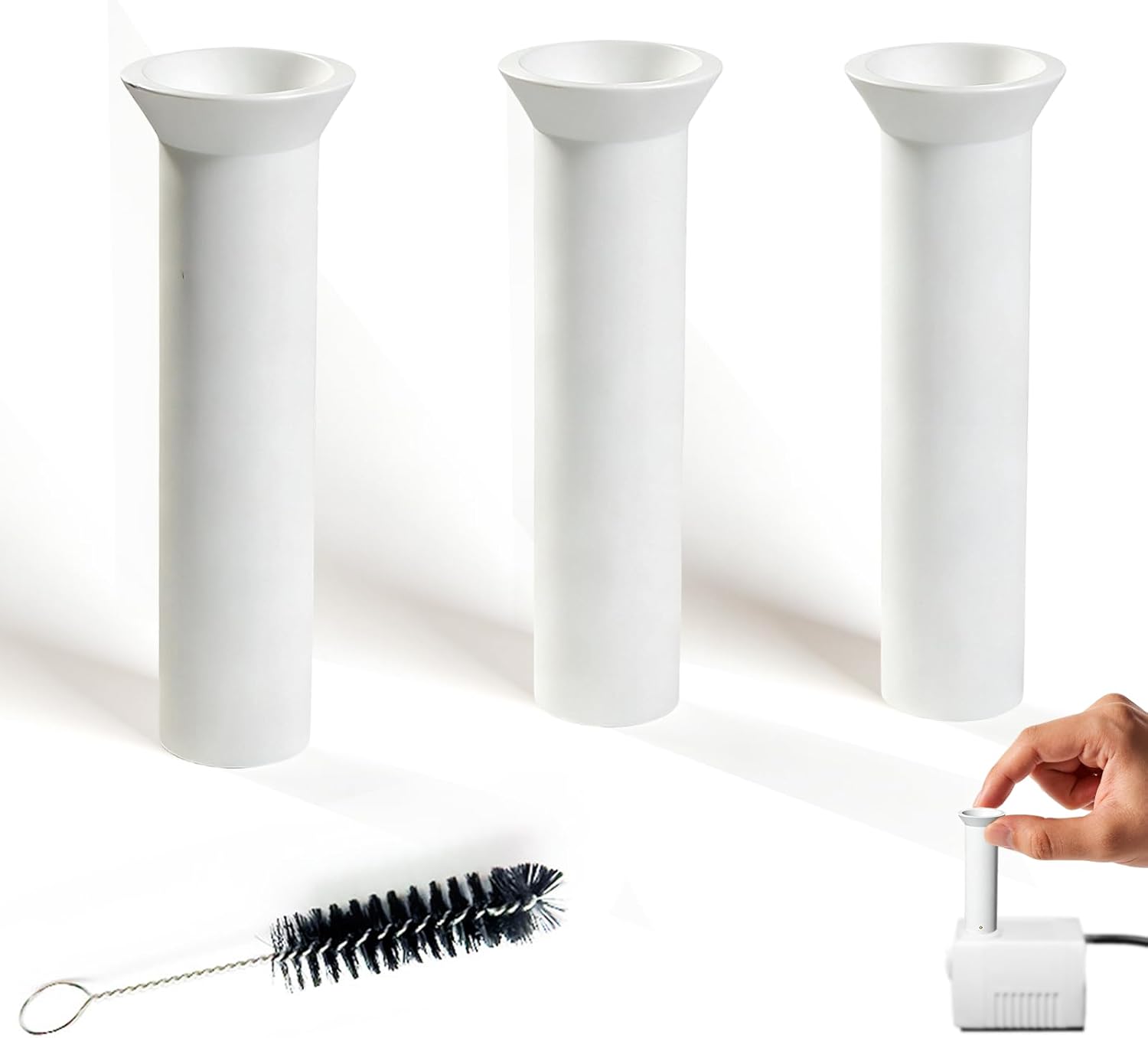 Bamokee 3-Pack Replacement Pump Nozzle ... - Amazon.com
3-pack replacement pump nozzles for AeroGarden Harvest systems, restores water circulation in hydroponic gardens
~$13.99
Bamokee 3-Pack Replacement Pump Nozzle ... - Amazon.com
3-pack replacement pump nozzles for AeroGarden Harvest systems, restores water circulation in hydroponic gardens
~$13.99
 Aerogarden Replacement Pump Compatible with Harvest Bounty ...
Replacement pump with 80 GPH flow rate and 23-inch lift height for AeroGarden Harvest, Bounty, and Farm models
Aerogarden Replacement Pump Compatible with Harvest Bounty ...
Replacement pump with 80 GPH flow rate and 23-inch lift height for AeroGarden Harvest, Bounty, and Farm models
The whole pump inspection takes maybe 5 minutes once you’ve done it once. The tray lifts out, you look at the pump, you check the nozzle for root intrusion, you swap the filter sponge if it’s visibly gunked up or it’s been more than 3 months. That’s it.
Plant Grouping and the Shading Problem
This one’s specific to multi-pod systems and almost nothing covers it. Fast growers eat the light.
Lettuce bolts toward the light bar and will shadow everything at the same height within 3-4 weeks. Basil does the same thing. If you’ve got a 9 or 12-pod system and you’re mixing fast growers with slow ones, group similar-sized plants together and put the fast ones at the ends rather than the center. It helps, though it doesn’t fully solve it.
More honest advice: don’t plant all the pods. Running 6 plants in a 9-pod system gives each plant more light and airspace. Filling every pod because the system has the capacity is how you end up with one giant basil and six stunted neighbors. I made exactly this mistake in my first grow.
Going Away for 5+ Days
No competitor guide covers this, which is baffling because it comes up constantly.
Do not overfill the reservoir before you leave. I know it’s tempting. Overfilling pushes water into contact with the bottom of the pods and cuts off root oxygenation. I’ve seen plants come back from a lot of things. Root rot after an overfill is not one of them.
What actually works: do a full water change the day before you leave. Fresh nutrients, correct level. Set your light timer to a slightly shorter schedule than normal, herbs handle 14 hours better than 16 over a longer stretch anyway. Remove anything that’s already ripe or close to it. Harvesting before you leave extends the useful life of the remaining plants.
For trips of 5-7 days, a well-maintained AeroGarden Harvest should be fine without anyone checking in. The 0.7-gallon reservoir at normal evaporation rates won’t hit critical low in that window. A week or longer and you want someone to do a plain-water top-off around day 5.
What you cannot do: fill it to the brim, set the lights to max hours, and hope for the best. That’s how you come home to root rot and an algae bloom simultaneously.
If you have a Bounty ($229.95) with WiFi, the app will push you a low-water notification. But the $50 premium over the Bounty Basic ($179.95) isn’t worth it for this feature alone, the WiFi also has a history of connectivity issues on older models that I wouldn’t want to count on while I’m away.
Maintenance Schedule at a Glance
| Frequency | Task |
|---|---|
| Daily | Check water level; top off with plain water if low. Confirm lights are on. |
| Weekly | Check empty pod holes; cover any that are open. Look for early algae (green tint in water). |
| Every 2 weeks | Full reservoir drain and refill with fresh nutrient solution. Rinse reservoir walls. Check pH at refill. |
| Every 2-3 months | Lift grow tray and inspect pump. Clear any root intrusion from the nozzle. Swap filter sponge if gunked or overdue. |
| Every 4-6 months (end of grow cycle) | Full deep clean: drain completely, wipe reservoir with diluted H2O2 or dilute bleach solution, rinse thoroughly, air dry before refilling. Check all connections and lid fit. |
This article is part of my Hydroponic Troubleshooting Guide , a complete resource for countertop hydroponic growing.
Frequently Asked Questions
How do I clean my AeroGarden every month?
Monthly is more than most herb setups need, but if you want to do it: drain the reservoir, wipe the interior with a cloth dampened with diluted hydrogen peroxide (about 3ml of 3% H2O2 per liter of water), rinse thoroughly, and refill with fresh nutrient solution. Don’t let bleach or soap residue get near the roots. The pump filter sponge is worth swapping at this point too.
How to take care of hydroponic plants for beginners?
Start with herbs or lettuce, not tomatoes. Follow the water level indicator, not a schedule, top off with plain water when it drops, do a full change every two weeks. Don’t add nutrients every time you refill. That’s 80% of what you need to know for the first month.
Is tap water ok in hydroponics?
Mostly yes, with one caveat: alkalinity. Tap water with high pH (mine is 8.7) will cause nutrient lockout over time, particularly noticeable with yellowing leaves that don’t respond to additional nutrients. If you’re using AeroGarden’s liquid nutrients, the pH buffer in the formula helps. So if you’ve switched to third-party nutrients, you’ll want to check and adjust pH at each full change. I wrote a longer take on this in my tap water article .
How often should I change the water in my countertop hydroponic garden?
Full change every two weeks is the standard for most pod systems. Some growers stretch to three weeks with EC monitoring, but in a 1-gallon reservoir, salt buildup happens faster than most people expect. Between changes, top off with plain water only.
Do I need to change the water or just top it off?
Both, at different times. Top-off (plain water only) handles day-to-day level maintenance. Full change happens every two weeks to reset nutrient concentration and clear any buildup. Doing only top-offs without full changes is how salt concentrations creep up and burn leaf edges. Doing full changes every few days is unnecessarily disruptive.
How do I stop algae from growing in my hydroponic garden?
Block all light from reaching the reservoir water. Cover empty pod holes with plugs or foil. Make sure the lid sits flush. Even a gap the size of a pencil eraser is enough to seed a bloom under a bright grow light. If you’re already dealing with algae, my algae article has the treatment steps including H2O2 dosing.
What happens if I miss a water change in my AeroGarden?
Usually not much, for one missed cycle. Plants may show minor stress (slightly slower growth, minor leaf curl) if the EC is running high. Do the change when you remember, top off in the meantime with plain water, and don’t add a double nutrient dose to “make up for it.” That’s worse than missing the change. Missing two or three cycles in a row is where you start seeing real problems: salt deposits on roots, persistently low pH, reduced growth.