
Spinach is good for you. Vitamin K, iron, folate, real protein for a leafy green. Worth growing. The problem is that almost every guide on growing spinach in AeroGarden makes it sound like a minor challenge when it’s actually one of the harder things you can attempt, and the failure modes are specific and fixable, but only if you know what you’re looking at.
I failed three times before I finally figured out what was going wrong. The short version: I was solving the wrong problem every single time. And honestly, the fact that none of the official documentation tells you any of this is annoying. AeroGarden’s own setup guide doesn’t mention EC levels, doesn’t mention the pump heating problem, doesn’t mention any of it.
Quick Answer: Spinach can grow in an AeroGarden, but it fails at a much higher rate than herbs or lettuce because of three specific problems: germination failure from warm temperatures, nutrient starvation from inadequate EC dosing, and bolting triggered by the default light schedule. Cold-stratify seeds at 42°F for at least two weeks, boost nutrients until your EC meter reads 1.8-2.3 (AeroGarden’s default dose only reaches about 0.7), and drop your light cycle to 12 hours. Without all three adjustments, most grows fail. Use Space or Seaside spinach varieties, not standard heirloom types.
 Herblink 8-Pod Spinach Seed Pod Kit for Aerogarden, Includes ...
8-pod spinach seed kit with grow sponges and nutrients, designed for universal hydroponic systems and indoor gardens.
~$16.99
Herblink 8-Pod Spinach Seed Pod Kit for Aerogarden, Includes ...
8-pod spinach seed kit with grow sponges and nutrients, designed for universal hydroponic systems and indoor gardens.
~$16.99
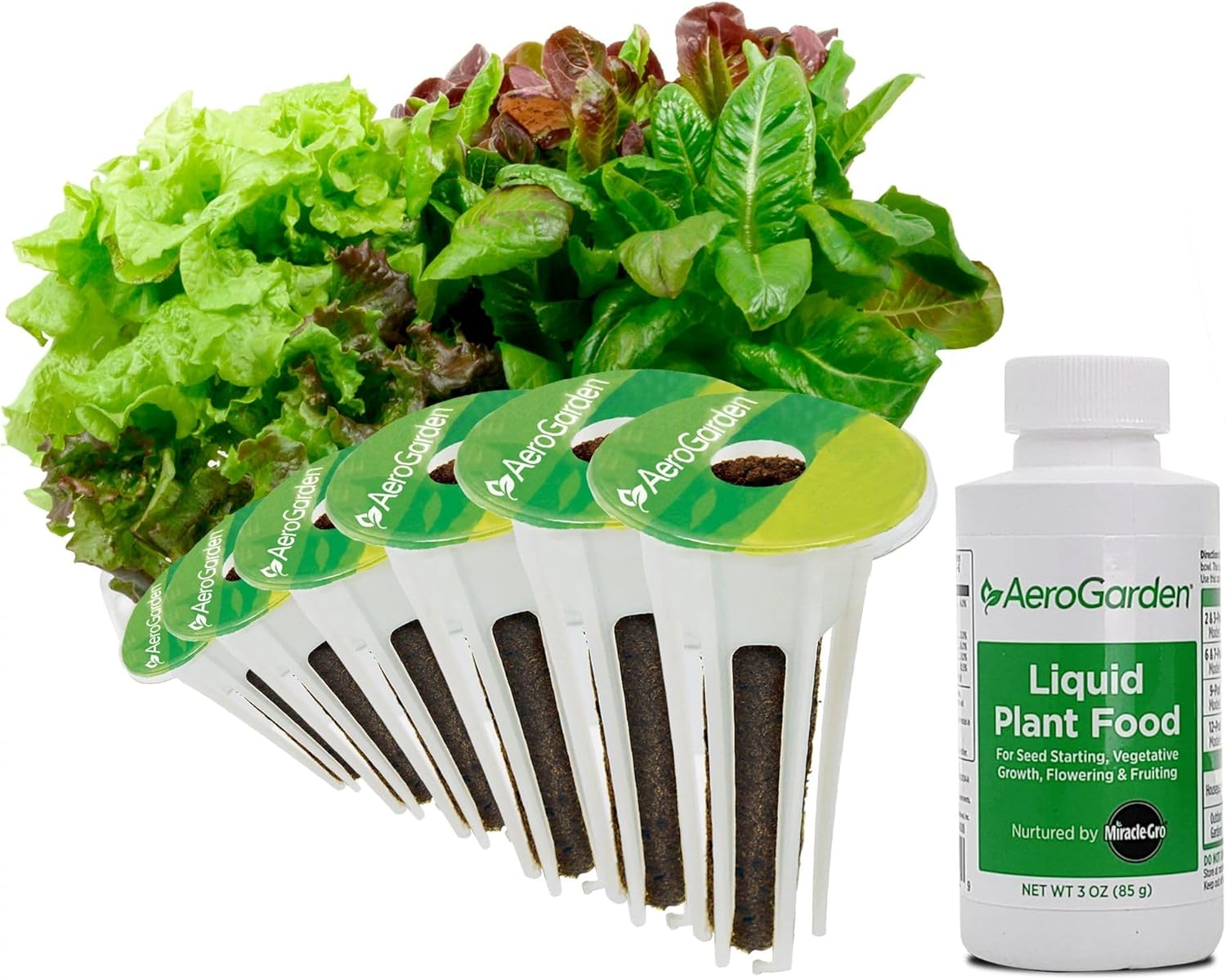 AeroGarden Heirloom Salad Greens Mix Seed pod Kit with ...
Pre-seeded pod kit grows six salad green varieties indoors, ideal for fresh harvest within weeks using any AeroGarden system.
~$17.49
AeroGarden Heirloom Salad Greens Mix Seed pod Kit with ...
Pre-seeded pod kit grows six salad green varieties indoors, ideal for fresh harvest within weeks using any AeroGarden system.
~$17.49
 Salad Greens Seed Pod Kit for AeroGarden Hydroponics ...
7-pod seed kit containing salad greens and vegetables, compatible with multiple hydroponic systems, ideal for continuous home salad growing
~$19.99
Salad Greens Seed Pod Kit for AeroGarden Hydroponics ...
7-pod seed kit containing salad greens and vegetables, compatible with multiple hydroponic systems, ideal for continuous home salad growing
~$19.99
 Salad Greens Seed Pod Kit for AeroGarden, iDoo with Red ...
6-variety salad greens seed pod kit with 7 grow sponges and nutrients, compatible with AeroGarden and iDoo systems for home hydroponic gardens
~$16.13
Salad Greens Seed Pod Kit for AeroGarden, iDoo with Red ...
6-variety salad greens seed pod kit with 7 grow sponges and nutrients, compatible with AeroGarden and iDoo systems for home hydroponic gardens
~$16.13
The EC Problem Nobody Talks About
That changed everything for me, and I don’t see it in any other guide: AeroGarden’s default nutrient dosing produces an EC of roughly 0.7 in the reservoir. Spinach needs EC 1.8-2.3.
That’s not a small gap. That’s less than half of the minimum spinach needs to actually grow. I finally measured this directly with an EC pen and it explained everything. My plants were coming in stunted and yellow even when they did germinate. I had been blaming bad seeds, bad germination technique, bad pods. The seeds were fine. The plant just wasn’t being fed.
The fix is simple: add extra nutrients. About 1ml raises EC by roughly 0.1, so 3-4ml of additional liquid nutrient gets you into the 2.1-2.3 range. Check with a meter rather than guessing. And if you’re running spinach alongside lettuce, know that lettuce EC tops out at about 1.8 and spinach starts there, so they can’t share a reservoir at optimal levels. You end up starving one or stressing the other. Celery is actually a better companion for spinach because its EC range (1.8-2.4) overlaps almost perfectly.
If you’re also spending more than you want on AeroGarden’s branded nutrients, I went through cheaper alternatives in a separate post that might be worth reading before you stock up.
The Three Failure Modes (And What Actually Fixes Them)
Failure Mode 1: Germination
Spinach won’t germinate above 75°F. That sentence should be required reading before anyone starts a grow. I’ve seen growers get zero percent germination running through a summer at 83°F room temp, then hit 80% success the following fall when the room dropped to 73°F. That’s not bad luck. That’s temperature.
The fridge trick works, and the mechanism matters. Cold stratification at around 42°F for at least two weeks suppresses the bolting hormones that spinach would otherwise activate as an emergency response. It tells the plant that winter happened, that conditions are safe, and that it’s okay to sprout. Three weeks is the minimum that works consistently. I’ve heard of people forgetting about their seeds for over a month and they all came up fine. I’ve started doing three weeks minimum, and my last germination rate was far better than anything I got in the first couple of tries.
Three to four seeds per pod is the right count. Don’t plant one and hope.
Failure Mode 2: Nutrition
Covered above, but worth saying plainly again: check your EC. Buy a meter. My tap water is already at pH 8.7 so I have to adjust every fill anyway, and the EC check takes thirty seconds. Without it you’re guessing, and with spinach you can’t afford to guess.
Failure Mode 3: Bolting
Standard spinach varieties start bolting when the light cycle hits 13 hours. AeroGarden’s default schedule for greens runs 14-17 hours depending on the model. That’s why spinach bolts in AeroGarden setups so often, and why most growers can’t figure out why: everything looks right until suddenly the leaves go arrow-shaped and bitter and it’s over.
There’s also a heat problem you probably don’t know about. AeroGarden’s submersible pump adds heat to the reservoir, because it’s underwater, the energy it draws converts directly to warmth in the nutrient solution. In a 68°F room, the water can easily reach 72-74°F. Spinach bolts when root zone temperature exceeds 70°F. So even if your room is cool, the pump itself can be pushing you over the threshold.
Fixes: drop the light cycle to 12 hours, and use white-spectrum light rather than the blue/red mix some AeroGarden modes use. For temperature, some growers add ice cubes to the reservoir once a day. It sounds fussy, because it is.
Variety Selection Actually Matters
Normal heirloom spinach grows 14-16 inches tall. AeroGarden’s lamp clearance on most Harvest models is around 12 inches. So standard varieties will outgrow the light arm before you’ve gotten a real harvest. Space Spinach and Seaside are the varieties worth seeking out. Both are slow-bolt F1 hybrids that grow wide rather than tall, and they don’t trigger the FLOWERING LOCUS T gene until 14-15 hours of light rather than 12-13 for standard varieties. That extra buffer makes a difference when you’re trying to run a 12-hour cycle and the ambient conditions aren’t perfect.
The Herblink 8-Pod Spinach Seed Pod Kit buy on Amazon is one of the more practical starting points I’ve found, though be aware you’ll need to assemble the growth medium yourself, and the seeds come in a single mixed packet rather than pre-sorted by variety. If you want to know exactly what’s in each pod, that’s a real limitation. Buy on Amazon and cold-stratify the seeds for two to three weeks before you do anything else with them.
⭐ My Pick
Herblink 8-Pod Spinach Seed Pod Kit for Aerogarden, Includes ...
8-pod spinach seed kit with grow sponges and nutrients, designed for universal hydroponic systems and indoor gardens.
Check Price on AmazonShould You Even Bother?
Honest answer: maybe not.
AeroGarden’s own tech support has said they haven’t been able to perfect spinach growing. I’ve seen growers try ten different methods. Two worked. Neither was repeatable. That’s not a vote of confidence.
Spinach is a cool-weather crop that wants temperatures, light cycles, and EC levels that a countertop system isn’t designed to deliver without workarounds. Every other crop I’ve grown in my AeroGarden Harvest and iDOO 12-pod has been more forgiving. Basil, cilantro, lettuce, even the strawberries (which have their own problems) don’t require this level of intervention just to germinate.
If you want fresh greens without the fight, the AeroGarden Heirloom Salad Greens Mix check current price is what I’d grow instead for the nutritional hit. It’s not spinach, but I keep going back to it, though fair warning, a chunk of buyers report that AeroGarden’s pod replacement guarantee is harder to actually collect on than the packaging implies. Check current price on Amazon.
For genuine spinach alternatives that grow easily and taste similar in cooked dishes: tatsoi is the one I’ve heard the most good things about. Easy germination, no cold stratification, tolerates the AeroGarden’s light schedule without bolting. That same grower switched to tatsoi permanently and never looked back. Baby bok choy is in the same category. New Zealand spinach is technically a different plant family entirely but eats like spinach and is much more heat tolerant.
For salad mixes that include greens with similar nutritional profiles, the Salad Greens Seed Pod Kit for AeroGarden see on Amazon and the Salad Greens Seed Pod Kit with Red varieties check price on Amazon are both worth a look. They’re beginner-friendly in a way that straight spinach never quite is. See them on Amazon.
This article is part of my Growing Herbs Hydroponically: Complete Guide , a complete resource for countertop hydroponic growing.
Frequently Asked Questions
Can I plant spinach in an AeroGarden?
Yes, but it’s one of the harder crops to succeed with. The main obstacles are germination temperature (must stay under 75°F), nutrient levels (AeroGarden’s default dose is far too low), and light schedule (12 hours maximum to avoid bolting). Get all three right and it’s possible. Miss one and you’ll probably fail.
Does spinach grow well hydroponically?
It can, but the honest community consensus is mixed. It’s an intermediate-difficulty crop at best. Experienced hydro growers frequently say it bolts too quickly to be worth the effort unless you’re using slow-bolt varieties and managing temperatures tightly. It’s not like lettuce, which is forgiving in hydroponic systems.
How many spinach seeds per AeroGarden pod?
Three to four per pod. Spinach germination rates are lower than most crops even under good conditions, so putting multiple seeds per pod gives you a better chance of at least one taking. Thin to the strongest plant once you see sprouts, or let two grow together if they’re not crowding.
Why does my AeroGarden spinach keep bolting?
Two likely causes. First, the light schedule: anything over 13 hours will bolt standard varieties, and AeroGarden defaults run 14-17 hours depending on model. Drop it to 12 hours. Second, reservoir temperature: AeroGarden’s submersible pump adds heat to the water, which can push a 68°F room’s reservoir to 72-74°F, above the 70°F bolting threshold. Switch to Space or Seaside varieties, which can tolerate 14-15 hours before bolting hormones kick in.
What spinach variety works best in an AeroGarden?
Space Spinach and Seaside are the two worth using. Both are slow-bolt F1 hybrids that grow wide rather than tall, which matters because standard spinach varieties reach 14-16 inches and AeroGarden’s lamp clearance is roughly 12 inches. Heirloom varieties are harder to justify unless you’re running a system with more headroom.
Can I grow spinach year-round indoors with a countertop garden?
In practice, no, unless you keep your home cool year-round. Germination fails above 75°F, and root zone temperatures above 70°F trigger bolting. Summer growing in most apartments is very difficult. Fall through early spring, when rooms are cooler, gives you much better odds.
What can I grow instead of spinach in my AeroGarden?
Tatsoi is the substitute I’d try first based on what I’ve read from people who’ve been through this. Baby bok choy is similar. New Zealand spinach tolerates heat much better than true spinach and works in warmer conditions. For nutritional density closer to what spinach offers, an heirloom salad greens mix covers a lot of the same vitamins without the germination fight. I’d check how lettuce grows in AeroGarden before committing to spinach, because lettuce is easier and gives you fresh greens in about the same timeframe.
One more thing worth saying plainly: if you’ve failed at spinach in your AeroGarden, it almost wasn’t your fault. The default setup isn’t configured for it. The light schedule is too long, the nutrient dose is too low, and the pump heating problem is a hardware reality that no guide warned you about. But the fixes are real and they work. And they require adjustments the out-of-box experience doesn’t prompt you to make.