
Some links in this post are affiliate links. I get a small cut if you buy, but it doesn’t cost you anything extra.
The tomato flowers kept dropping. That was my whole problem, and no supplemental grow light for countertop hydroponic garden setups was going to help until I figured out why they were dropping. Healthy-looking plant, decent root system, flowers appearing right on schedule, and then nothing. They’d yellow and fall off before setting any fruit. I spent two weeks convinced it was a nutrient issue before I started measuring light instead.
Turns out the AeroGarden Harvest’s 20W built-in LED is designed for herbs and lettuce. It does a perfectly adequate job at that. But finding the right supplemental grow light for a countertop hydroponic garden running fruiting crops is a different problem entirely, cherry tomatoes need a light intensity roughly three times what the Harvest delivers at canopy level, and flowers won’t release pollen unless that threshold gets hit. The light wasn’t the only problem but it was the one I’d completely ignored.
Quick Answer: Most countertop hydroponic systems (AeroGarden Harvest, iDOO 12-pod) don’t produce enough light intensity for fruiting crops like tomatoes and peppers. You need 600-1000+ µmol/m²/s (PPFD) for fruit set, these systems peak around 400-500. Adding a clip-on supplemental LED and a $10 outlet timer is usually the fix. For herbs and lettuce, the built-in light is fine and you probably don’t need anything extra.
 DOMMIA Plant Light, Dimmable Desk Clip on ...
Dimmable 1200-lumen clip-on grow light with 6/12/16-hour timer and 360-degree gooseneck, ideal for supplemental lighting of houseplants on desks and shelves.
~$17.99
DOMMIA Plant Light, Dimmable Desk Clip on ...
Dimmable 1200-lumen clip-on grow light with 6/12/16-hour timer and 360-degree gooseneck, ideal for supplemental lighting of houseplants on desks and shelves.
~$17.99
 BN-LINK 24 Hour Plug-in Mechanical Timer Grounded ...
24-hour mechanical timer with 15-minute intervals supporting up to 96 ON/OFF cycles, rated for 1875W, designed for automating grow lights and small appliances
~$8.99
BN-LINK 24 Hour Plug-in Mechanical Timer Grounded ...
24-hour mechanical timer with 15-minute intervals supporting up to 96 ON/OFF cycles, rated for 1875W, designed for automating grow lights and small appliances
~$8.99
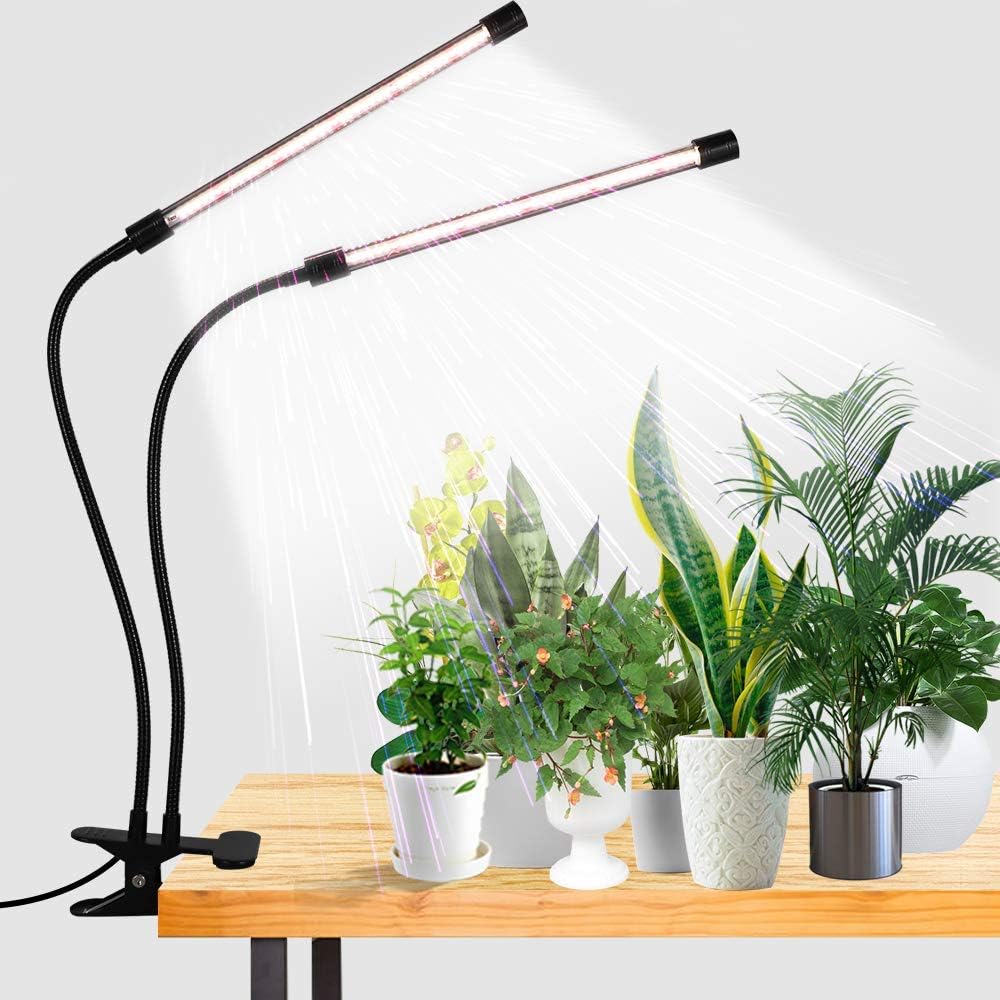 GooingTop LED Grow Light,6000K Full Spectrum Clip ...
10W LED clip light with 6000K full spectrum and 3 timer options, ideal for seedlings and small indoor plants.
~$20.79
GooingTop LED Grow Light,6000K Full Spectrum Clip ...
10W LED clip light with 6000K full spectrum and 3 timer options, ideal for seedlings and small indoor plants.
~$20.79
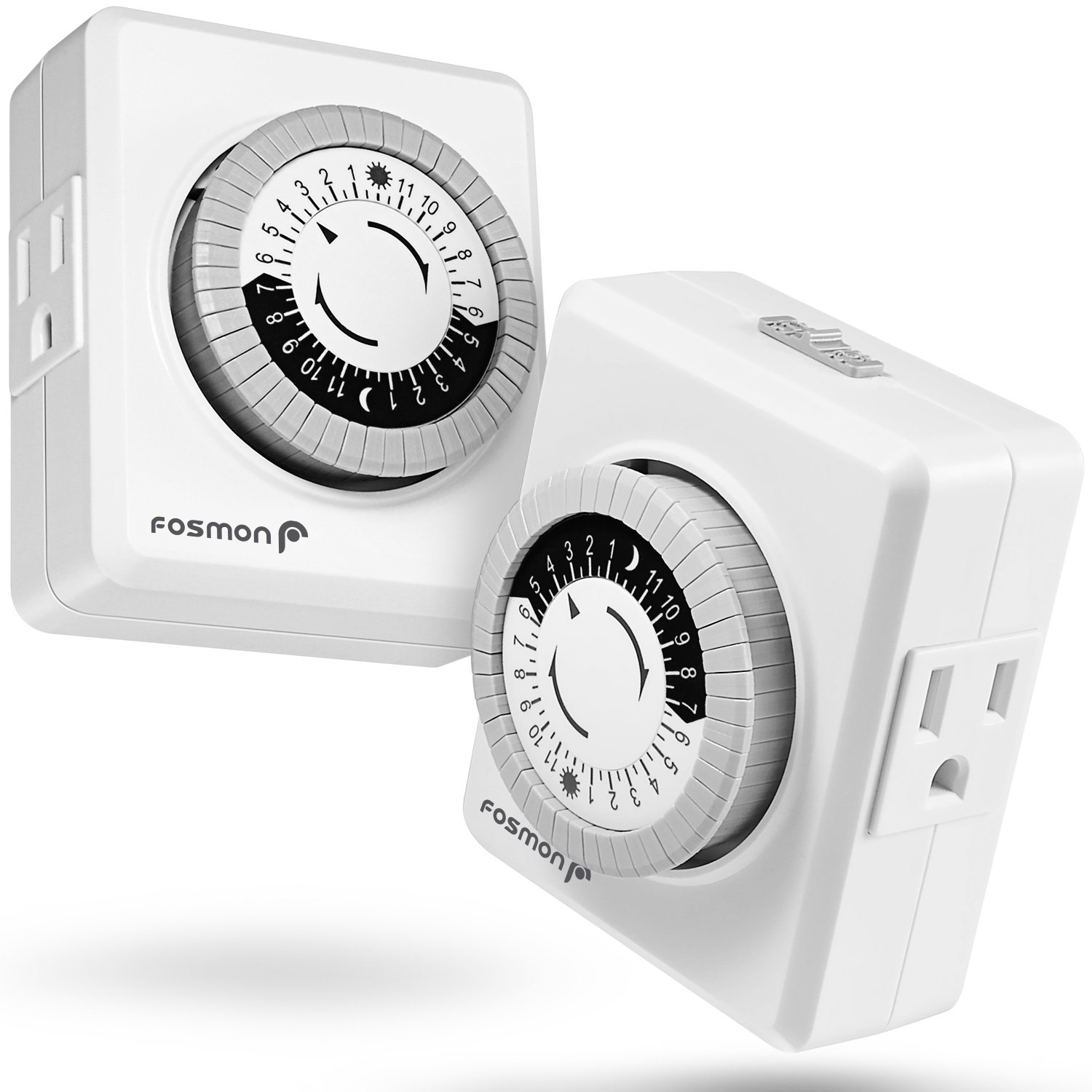 Fosmon Outlet Timers for Electrical Outlets, 24-Hour Dual ...
Dual outlet timer with 24 daily on/off settings in 30-minute intervals, rated for 1875W, ideal for automating grow lights and small appliances
~$14.99
Fosmon Outlet Timers for Electrical Outlets, 24-Hour Dual ...
Dual outlet timer with 24 daily on/off settings in 30-minute intervals, rated for 1875W, ideal for automating grow lights and small appliances
~$14.99
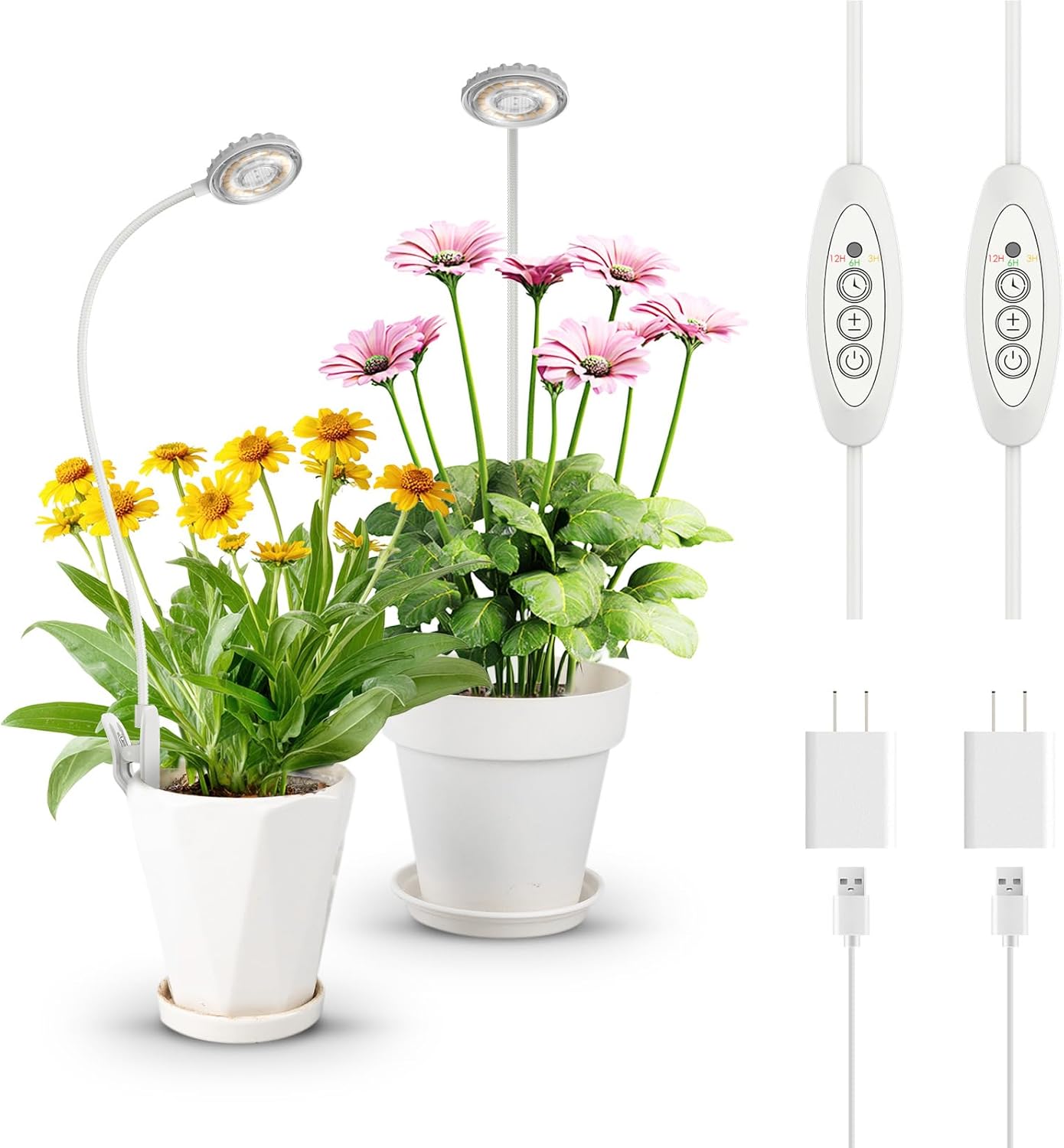 SANSI Upgraded Grow Lights for Indoor Plants, Full ...
10W clip-on LED with 360 μmol/s/㎡ output at 6 inches, timer, and dimming levels for potted houseplants.
~$79.99
SANSI Upgraded Grow Lights for Indoor Plants, Full ...
10W clip-on LED with 360 μmol/s/㎡ output at 6 inches, timer, and dimming levels for potted houseplants.
~$79.99
What PPFD Actually Means (And Why Watts Are Useless)
Every clip-on grow light on Amazon lists wattage. Watts measure electricity draw, not what actually reaches your plant. A 10W light and a 15W light can deliver wildly different amounts of usable light depending on their spectrum, lens design, and distance from the canopy.
The number that matters is PPFD: Photosynthetic Photon Flux Density, measured in µmol/m²/s. Here’s a rough reference for countertop crops:
| Crop | PPFD Target |
|---|---|
| Herbs and lettuce | 200 - 400 µmol/m²/s |
| Strawberries | 400 - 600 µmol/m²/s |
| Cherry tomatoes | 600 - 800 µmol/m²/s |
| Peppers | 600 - 1000+ µmol/m²/s |
The iDOO 12-pod maxes out around 500 µmol/m²/s directly under the light, dropping to 400 at center canopy and 300 at the edges. The AeroGarden Harvest’s 20W LED falls in a similar range. Both are fine for lettuce and basil. Neither is going to get you fruiting tomatoes without help.
Lumens measure brightness as perceived by human eyes. Completely irrelevant for plants. A “1200 lumen” claim on a clip-on package tells you nothing about whether it’ll actually grow food.
Scenario 1: The Plant Outgrew the Hood
This is the most common one with tomatoes. The arm on an AeroGarden Harvest only lifts to 12 inches. Cherry tomato plants, even dwarf varieties, will hit that ceiling. Once the stem is pressing against the light hood you’ve got two problems: the light is burning the top growth, and the rest of the plant is in shadow.
Prune first. Cut back to keep the canopy an inch or two below the hood, and cut hard. Keeping only two plants instead of three also helps with both crowding and light distribution. (I wrote more about managing tomato size in my guide on growing cherry tomatoes in a countertop hydroponic system .)
Then add a side-angle supplemental light aimed at the lower canopy. The GooingTop buy on Amazon works here, it’s 10W at 6000K and I’ve clipped it to a shelf edge to push more light toward the lower canopy on my iDOO. At about $21, it’s a reasonable first step. (check current price on Amazon)
But the clamp doesn’t open wide enough for some shelf edges, which is annoying when you’re trying to position it at a useful angle. Worth knowing before you buy.
Scenario 2: Flowers That Won’t Set Fruit
This is where light intensity is the actual problem, not coverage. The plant has room, the flowers are opening, and still nothing is turning into fruit. Pollen release in tomatoes needs both adequate light intensity and some physical disturbance. Indoors without a breeze, flowers can stay stuck even when everything else looks right.
Two things to address: bump up your PPFD, and add airflow. A small fan pointed near the plants a few times a day helps shake pollen loose.
For the light side, a 10W clip-on isn’t going to close the gap between 400 and 700 µmol/m²/s. The DOMMIA check current price (see on Amazon) is a 15W option with four brightness levels covering 25% to 100% output and a full spectrum from 380nm to 780nm. Having dimmability matters because seedlings need gentler light than a plant in full fruiting mode. And if you’re also dealing with nutrient questions alongside the lighting problem, the AeroGarden nutrient dosing breakdown is worth reading alongside this one.
🌿 Best for Serious Growers
DOMMIA Plant Light, Dimmable Desk Clip on ...
Dimmable 1200-lumen clip-on grow light with 6/12/16-hour timer and 360-degree gooseneck, ideal for supplemental lighting of houseplants on desks and shelves.
Check Price on AmazonScenario 3: Kratky Jars and Mason Jar Satellites
Running a mason jar or Kratky container next to your main AeroGarden is a good move for overflow herbs or a single experimental plant. The problem is those jars have no light source at all, and you can’t share the AeroGarden’s hood effectively across multiple containers spread around a counter.
For this, a simple clip-on positioned above the jar is enough. The GooingTop is probably fine for herbs and lettuce in a Kratky setup. For something fruiting, the DOMMIA at higher brightness is a better choice.
So the cheap bar and stick LED lights that flood Amazon are actually worth considering here. They look underpowered but for supplementing a single small container they tend to hold up reasonably well in terms of actual output per dollar. Based on what I’ve read from other growers who’ve tested them, the math works out, more detail in my Kratky herb garden writeup .
The Timer Gap Nobody Talks About
Your AeroGarden’s built-in timer controls the AeroGarden light. That’s it. So your supplemental light will either run 24 hours straight or you manually unplug it every day. Neither is viable.
You need a separate outlet timer.
The BN-LINK mechanical timer see on Amazon (grab it on Amazon) runs around $8-10 and works exactly like the old dial timers your grandparents used for lamps. Set it, forget it. No app required.
BN-LINK 24 Hour Plug-in Mechanical Timer Grounded ...
24-hour mechanical timer with 15-minute intervals supporting up to 96 ON/OFF cycles, rated for 1875W, designed for automating grow lights and small appliances
Check Price on AmazonFor fruiting crops, 12-14 hours is closer to what tomatoes and peppers want. And more hours at low intensity won’t substitute for adequate PPFD at the right hours. If you’re running two supplemental lights, the Fosmon dual-outlet timer check price on Amazon (available on Amazon) lets you control two plugs on independent schedules from one unit. You can find more on how I approach the full countertop system setup in my complete AeroGarden guide .
This article is part of my Grow Lights for Indoor Hydroponics , a complete resource for countertop hydroponic growing.
Frequently Asked Questions
Can you grow tomatoes in the AeroGarden?
Yes, but the Harvest model makes it harder than it needs to be. The light arm only extends to 12 inches, so you’re limited to micro-dwarf varieties. The Bounty gives you 24 inches of clearance and a 40W light, which is a much more reasonable starting point for fruiting tomatoes. Even then, supplemental light and consistent pollination are usually necessary to get a worthwhile harvest.
What grow light is best for tomatoes?
For supplementing a countertop system, you want something that actually adds PPFD rather than just lumens. A dimmable 15W+ clip-on with a full spectrum (380-780nm) is the minimum worth buying. The 10W options like the GooingTop are fine for herbs but fall short for fruiting crops that need 600-800 µmol/m²/s. The SANSI available on Amazon (buy on Amazon) delivers 360 µmol/m²/s at 6 inches from a 10W draw, which is around four times more efficient than comparable wattage from standard clip-ons, and comes as a two-pack.
Why are my AeroGarden tomatoes not flowering?
Usually one of three things: not enough light intensity, too short a photoperiod, or the plants are stressed in the wrong direction. Tomatoes need at least 8 hours of light to flower, and more is better. One fix that actually works is switching your AeroGarden to the Herbs/Basil setting for 7-10 days to extend the photoperiod. The extra hours can push reluctant plants into flowering mode. If you’ve already done that, the issue is probably light intensity, not duration.
How much light do hydroponic tomatoes need?
Cherry tomatoes want 600-800 µmol/m²/s at canopy level. Peppers push that up to 1000+. The AeroGarden Harvest’s 20W LED and the iDOO 12-pod both peak around 400-500 µmol/m²/s at the surface, which is why you see healthy vegetative growth but poor fruit set. Closing that gap with a supplemental light is the only real solution short of upgrading the whole system.
Do I need a timer for a supplemental grow light?
Yes. The built-in timer on your AeroGarden or iDOO only controls its own light. A supplemental clip-on plugged into a regular outlet will run continuously unless you add a separate timer. Mechanical outlet timers run around $8-10 and need no setup beyond turning the dial. For two lights on one schedule, the Fosmon dual-outlet handles both from a single plug.
What is PPFD and why does it matter for my indoor garden?
PPFD stands for Photosynthetic Photon Flux Density and measures how many light photons are actually hitting your plant canopy per second. It’s the only number that tells you whether your light will grow food. Watts tell you how much electricity the light draws. Lumens tell you how bright it looks to your eyes. Neither predicts plant growth accurately. A light listing “1200 lumens” with no PPFD spec is almost not strong enough for fruiting crops, and the listing is designed to obscure that fact.