
Cilantro is probably the most-failed crop in countertop hydro communities right now. Threads about it appear constantly: zero germination, sudden bolting after two weeks, plants looking fine and then going brown practically overnight. And honestly, a take I keep coming back to is that cilantro is “one of the least ROI things you can grow” in a pod garden. Growing cilantro hydroponically indoors is harder than most guides let on, it doesn’t produce enough per plant, it bolts fast if you look at it wrong, and a bunch at the grocery store costs a dollar.
So should you grow it at all?
Worth it if: you cook with cilantro multiple times a week and hate the waste from buying a bunch when you only need a tablespoon. Worth it if: you want to understand your system well enough to grow difficult herbs. Skip it if: you use it occasionally and just want fresh herbs without drama. Basil will make you happier. But if you’re committed, here’s what’s actually going wrong and how to fix it.
Quick Answer: Growing cilantro hydroponically indoors is doable but fails in three specific ways: germination (seeds need cracking and pre-sprouting), bolting (drop your light schedule to 12 hours, not the default 16-17), and water hogging (mature cilantro can drain a full reservoir in a day). Fix all three and you can get 4+ months of harvest from a single planting.
 General Hydroponics MaxiGro, 2.2 lb
~$22.09
General Hydroponics MaxiGro, 2.2 lb
~$22.09
 Gourmet Herbs Seed Pod Kit for AeroGarden, iDoo, Ahopegarden ...
12-pod replacement kit with heirloom herb seeds and growing supplies, compatible with AeroGarden and similar hydroponic systems
~$24.99
Gourmet Herbs Seed Pod Kit for AeroGarden, iDoo, Ahopegarden ...
12-pod replacement kit with heirloom herb seeds and growing supplies, compatible with AeroGarden and similar hydroponic systems
~$24.99
 General Hydroponics MaxiGro Plant Food for Vigorous ...
Balanced hydroponic nutrient formula with calcium and magnesium for vigorous vegetative growth in tomato and pepper systems.
~$15.99
General Hydroponics MaxiGro Plant Food for Vigorous ...
Balanced hydroponic nutrient formula with calcium and magnesium for vigorous vegetative growth in tomato and pepper systems.
~$15.99
 Cilantro Seed Pods for All Hydroponics Growing Systems, 12 ...
12-pod cilantro seed kit with peat sponges and reusable baskets, compatible with most hydroponic systems for herb growing
~$15.99
Cilantro Seed Pods for All Hydroponics Growing Systems, 12 ...
12-pod cilantro seed kit with peat sponges and reusable baskets, compatible with most hydroponic systems for herb growing
~$15.99
Failure Mode 1: The Germination Problem
What looks like a single cilantro seed is actually two seeds inside a hard outer husk. Most growers drop the whole thing in a pod and wait. Nothing happens. They assume bad seeds. They buy more. Same result.
The husk is the problem. It’s tough enough to block water from reaching the inner seeds, so germination in a wet sponge is inconsistent at best and near-zero at worst. Growers who switch from direct pod planting to a pre-sprouting method consistently report going from near-zero germination to near-100%.
Here’s the process that actually works:
- Crack the outer husk gently between two fingers. You’re not pulverizing it, just splitting it so the two seeds separate.
- Lay the seeds half an inch apart on a wet paper towel. The spacing matters. If seeds are clumped together and one goes moldy, it spreads.
- Fold the paper towel loosely over the seeds and slide it into a ziploc bag. Leave a small opening at the corner for air.
- Put the bag somewhere dark and warm. A kitchen cupboard is fine.
- Check on day 3. Many seeds will have a small root emerging (called a radicle) by then. Wait until the root is about half an inch long before transplanting, usually day 5-7.
When you transfer them to pods: open the sponge, place the sprout deep with the root pointing down, and cover it back up. Don’t add nutrients yet. Wait until the seedling is clearly established, a few days at minimum.
One variety tip that comes up repeatedly among experienced growers: Moroccan cilantro. The germination rate with this variety is noticeably higher than standard cilantro seed, and it holds flavor better when cooked. Worth sourcing specifically if you can find it.
For the pod kit itself, the Gourmet Herbs Seed Pod Kit buy on Amazon includes cilantro among its 12 types and uses peat-based sponges, which tend to work better than the polyurethane foam sponges that look identical but block root growth. Though a notable chunk of buyers report only 1 out of 6 seeds germinating, which makes the pre-sprout method even more important with this kit. I covered the sponge quality issue in my rockwool vs grow sponges article if you want the full breakdown. Alternatively, the HiHOYA Cilantro Seed Pods check current price give you a dedicated cilantro-only kit with 200+ seeds, 12 sponges, and baskets that fit most major systems. One note: the kit description implies nutrients are included, but they’re not. Annoying. Have your own on hand.
Cilantro Seed Pods for All Hydroponics Growing Systems, 12 ...
12-pod cilantro seed kit with peat sponges and reusable baskets, compatible with most hydroponic systems for herb growing
Check Price on AmazonFailure Mode 2: Bolting from Too Many Light Hours
Germination working? Good. Now the second problem shows up around week 2-3: your cilantro flowers, goes bitter, and the harvest window slams shut.
Cilantro is a long-day plant. When it senses more than 12 hours of light per day, it reads that as a signal to start its end-of-lifecycle process. Flower. Seed. Done. The AeroGarden’s default light schedule is 16-17 hours per day, depending on which grow profile you select. That schedule is designed for basil and tomatoes, which want the long days. For cilantro, it’s actively triggering early bolting.
I went into this in detail in my grow light schedule post , but the short version for cilantro: cap your light hours at 12. If your system lets you customize the schedule, set it to 12 on, 12 off.
Some systems let you adjust the start time but not the duration. If you’re stuck on a 16-hour default you can’t change, run the lights at night so the “off” period overlaps with whatever ambient light comes through your windows during the day. Cilantro cares about total light received, not the clock.
The other half of bolting prevention is aggressive harvesting. Prune every other day. Take from the outer stems, leave the interior growth. One approach that works: run 6 cilantro plants together in a Harvest 360, combine the 12-hour light schedule with very deliberate, balanced harvesting across all plants, and you can push a grow to 140 days without bolting. That requires real attention, but it shows the ceiling if you manage it right. Most growers see around 4 months when they get both the light schedule and the harvesting pattern dialed in.
The “time-to-harvest” figure you’ll see in most guides is 4-6 weeks. Technically accurate for a first harvest. But 4-6 months of total production is achievable, which is a completely different picture.
Failure Mode 3: Cilantro Drinking Everyone Else’s Water
This one catches people off guard. Once cilantro really takes off, the roots expand fast. A mature plant can pull down an entire reservoir in a single day. Not gradually over a week. In a day. The plants sharing that reservoir, your basil, your dill, whatever else you have going, start showing stress. You blame the basil. The problem is the cilantro.
The fix is simple in principle: dedicate pods specifically to cilantro rather than mixing it with slower-growing herbs, and once plants are mature, check the reservoir daily. Not weekly. Daily. This is the part that separates a good cilantro grow from a frustrating one.
If you have a 6-pod system, I’d consider running 4-6 pods as cilantro only, at least for one full grow, to understand what the water demand actually looks like at your apartment temperature. Temperature affects transpiration rate. Warmer kitchens mean faster water draw.
This is also why some growers start cilantro in a countertop pod garden, then move established plants to a Kratky setup once roots are developed. The Kratky method uses a static reservoir where the plant sits above the water line and pulls what it needs. Less fussing with daily top-offs. I covered that setup in my Kratky herb garden post if you’re curious about the transition.
Nutrients: Less Is More
Full-strength AeroGarden brand nutrients cause problems with cilantro. The symptoms are curling leaves that turn black at the tips, which is easy to misread as a pH issue or a light problem. The fix is simple: reduce the AeroGarden liquid nutrients to about 75% of the recommended amount. That’s it. Don’t add it back up. Just run it lighter.
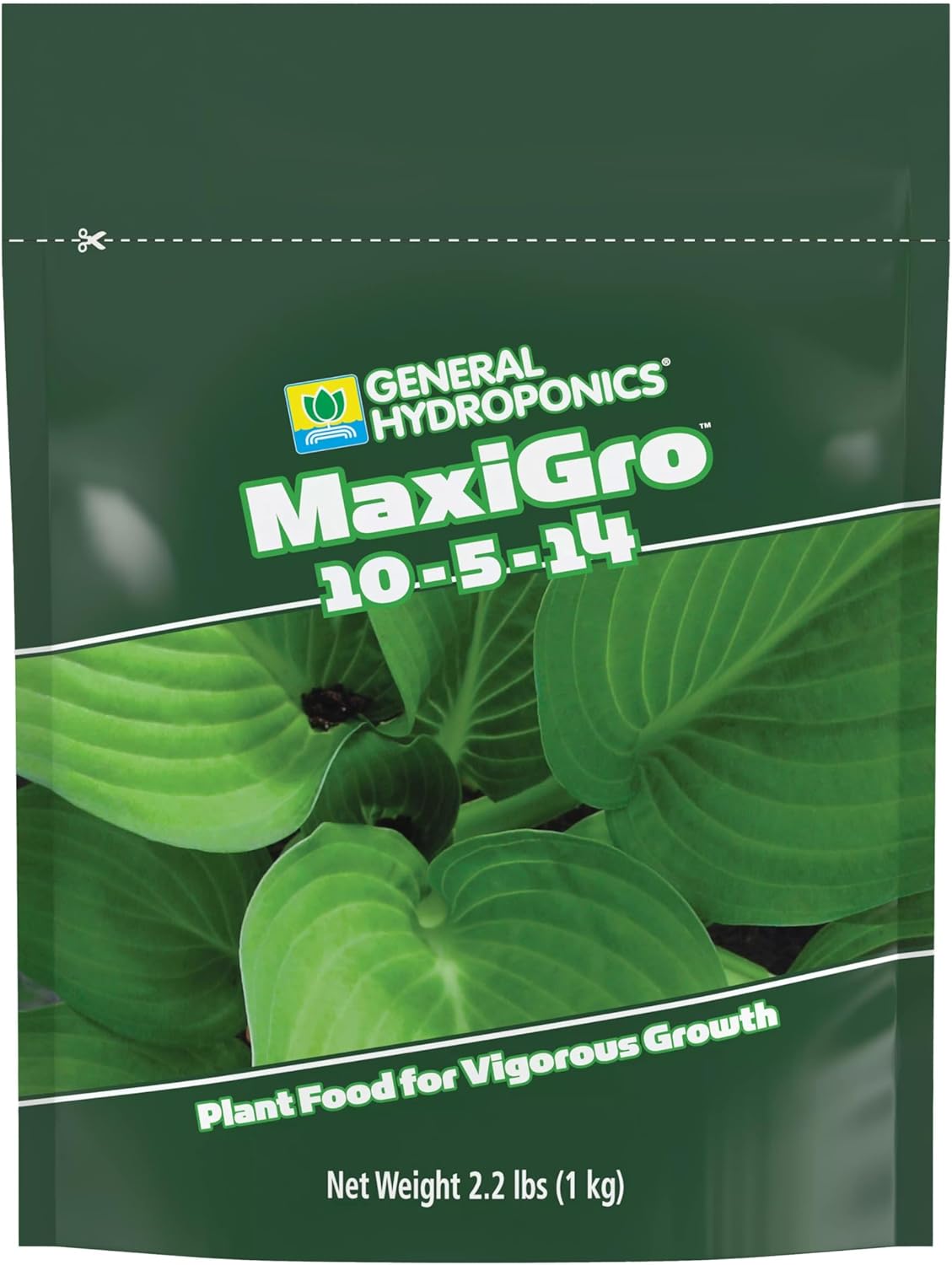
The other option that tends to work better, especially if you want to run cilantro seriously, is General Hydroponics MaxiGro see on Amazon (check current price on Amazon). It’s a 10-5-14 NPK powder, nitrogen-forward, which is exactly what you want for a leafy herb where you’re not trying to produce flowers or fruit. Most growers use around 1/2 tsp per gallon for seedlings and 1 tsp per gallon once plants are mature, dissolved in the reservoir, and report better flavor than the AeroGarden liquid, which is a common complaint with the branded formula specifically. And if you want the full side-by-side on nutrients, I wrote about MaxiGro and three other options in my hydroponic nutrients post .
🏆 Best Value Overall
General Hydroponics MaxiGro Plant Food for Vigorous ...
Balanced hydroponic nutrient formula with calcium and magnesium for vigorous vegetative growth in tomato and pepper systems.
Check Price on AmazonThe one timing rule: don’t add nutrients at transplant. Wait until seedlings are visibly growing, a few days after transfer.
Also keep your pH in the 5.5-6.7 range. Cilantro isn’t as sensitive as strawberries, but high tap water pH (mine’s 8.7) causes yellowing that looks like a nutrient problem but isn’t. So if you haven’t checked your tap water pH yet, that’s worth doing before you start troubleshooting anything else. And if you skip that step, you can spend weeks chasing a problem that has nothing to do with your nutrients or light schedule. My water quality post covers how to check and fix that without overcomplicating it.
The Bolt-Proof Alternative: Culantro
If you want cilantro-flavored leaves without the germination headaches and the bolting anxiety, culantro (Eryngium foetidum) is worth knowing about. It’s a different species with long serrated leaves, but the flavor is nearly identical, maybe slightly stronger. It doesn’t bolt. Growers who’ve switched to it find that it germinates quickly and produces reliably over a much longer window than cilantro. I haven’t grown it yet, which is frustrating given how many cilantro fails I’ve watched people document, because the accounts are consistent enough that I should have tried it already.
It won’t scratch the itch if you want something visually like cilantro, the leaves look nothing alike. But for cooking, the flavor is the right one.
Succession Planting: How to Always Have Something to Harvest
Even with everything dialed in, a single cilantro planting has a lifespan. Start a new pod every 4-6 weeks. Once you’re running two or three overlapping plantings at different stages, you always have mature growth available. The first is giving you full harvests, the second is filling in, the third is just sprouting.
The same logic applies to cilantro microgreens. If your pod garden keeps bolting before you get usable leaves, microgreens give you cilantro flavor in days, not months. More tender, better as a garnish, and zero bolting because you harvest before the plant gets anywhere near that stage. I wrote a full guide on growing microgreens on the counter that covers the setup.
This article is part of my Growing Herbs Hydroponically: Complete Guide , a complete resource for countertop hydroponic growing.
Frequently Asked Questions
Does cilantro grow well hydroponically?
With the right setup, yes. Without it, no. The three failure modes above (germination, bolting, water hogging) will derail most grows if you don’t address them specifically. Cilantro is not a set-and-forget herb like basil. It needs a 12-hour light schedule, pre-sprouted seeds, and regular reservoir checks once mature. Handle those three things and it grows well.
How long does it take to grow cilantro in a hydroponic system?
First harvest is typically 4-6 weeks from transplant. A well-managed grow with the right light schedule and harvesting pattern can last 4+ months. That 4-6 week figure describes when you can take your first cut, not when the plant is done.
What are three plants that are not recommended for hydroponics?
Vining plants like cucumbers and melons get too large for countertop systems fast. Root vegetables like carrots and potatoes need soil depth that hydroponic setups can’t provide. And large brassicas like cauliflower need more physical space than any pod garden realistically offers. Cilantro gets added to “not recommended” lists frequently, but it’s more accurate to say it’s high-maintenance rather than unsuitable.
What is the trick to growing cilantro indoors?
Crack the seed husk, pre-sprout on a wet paper towel in a barely-vented bag for 5-7 days before planting, cap light hours at 12 per day, and check your reservoir daily once the plant matures. Any one of those changes helps. All four together is what gets you a long, productive grow.
One honest caveat to close with: cilantro is always going to be more work than basil for less yield per pod. If you’re using it constantly, the fresh flavor is worth the management. But if you’re not, the dollar bunch at the store is the smarter call. No shame in it.