
Four systems. Under $60 each. One shelf. That’s what I was working with when I decided to actually map out the best budget countertop hydroponic garden under $50 (and a few just above it), because every article I found either covered one system in isolation or called a soil-based kit the “best budget” pick. That’s not useful if you want actual hydroponics.
So here’s what the sub-$60 tier actually looks like, with numbers.
Quick Answer: The SUNCOZE 12-pod buy on Amazon at $39.99 is the best value at this price point for herbs and greens, with a 24W LED that outperforms every other system in this range. The Ahopegarden 10-pod check current price at $53.99 is the better buy if you want a slightly more established brand with more reviews behind it. Both work well for basil, cilantro, and lettuce. Neither is the right call for tomatoes or peppers.
 Hydroponics Growing System, Indoor Herb Garden, 12 Pods ...
12-pod hydroponic system with 20W LED and adjustable height, grows herbs 3x faster than soil year-round
~$58.99
Hydroponics Growing System, Indoor Herb Garden, 12 Pods ...
12-pod hydroponic system with 20W LED and adjustable height, grows herbs 3x faster than soil year-round
~$58.99
 Ahopegarden Hydroponics Growing System Kit Indoor Herb Garden ...
12-pod hydroponic system with 5L tank, full-spectrum LED, and 22-hour light mode for herbs and leafy greens in compact spaces
~$59.99
Ahopegarden Hydroponics Growing System Kit Indoor Herb Garden ...
12-pod hydroponic system with 5L tank, full-spectrum LED, and 22-hour light mode for herbs and leafy greens in compact spaces
~$59.99
 Ahopegarden Indoor Garden Hydroponics Growing System ...
10-pod hydroponic system with full-spectrum adjustable LED light, ideal for growing herbs, vegetables, and flowers indoors year-round
~$53.99
Ahopegarden Indoor Garden Hydroponics Growing System ...
10-pod hydroponic system with full-spectrum adjustable LED light, ideal for growing herbs, vegetables, and flowers indoors year-round
~$53.99
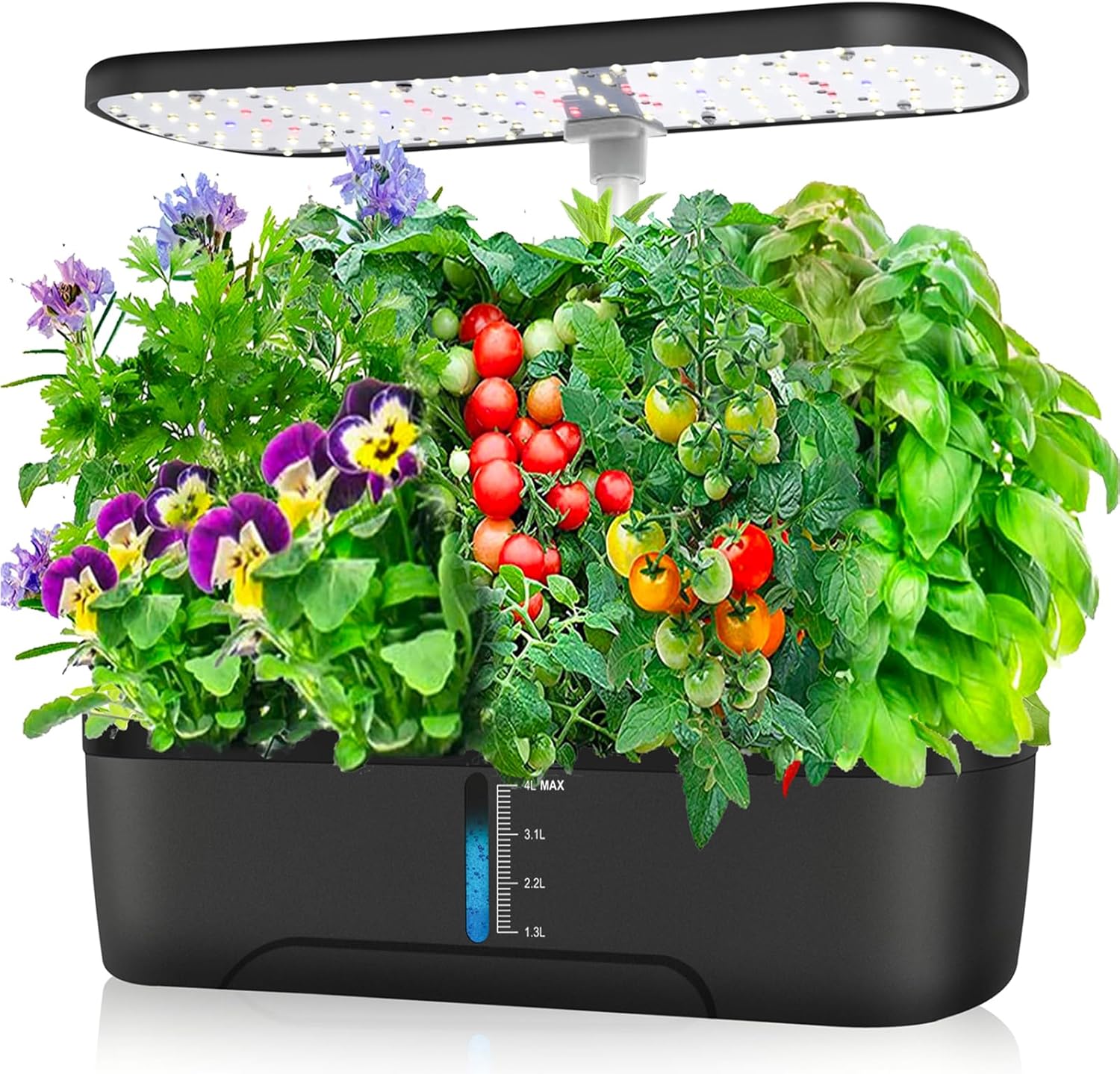
 SUNCOZE Hydroponics Growing System Kit 12 Pods, 24W ...
12-pod hydroponic system with 24W LED and 4L tank, ideal for growing herbs and leafy greens indoors
~$39.99
SUNCOZE Hydroponics Growing System Kit 12 Pods, 24W ...
12-pod hydroponic system with 24W LED and 4L tank, ideal for growing herbs and leafy greens indoors
~$39.99
 GARDENCUBE 160pcs Hydroponic Pods Kit Grow ...
160-piece pod kit with grow sponges, baskets, and domes for hydroponic herb cultivation, compatible with multiple indoor garden systems.
~$16.99
GARDENCUBE 160pcs Hydroponic Pods Kit Grow ...
160-piece pod kit with grow sponges, baskets, and domes for hydroponic herb cultivation, compatible with multiple indoor garden systems.
~$16.99
The One Spec That Actually Matters
The light is what you’re paying for. The tank is just a tank. The pump is just a small submersible motor. But the LED panel determines what you can actually grow, and a 15W light and a 24W light are not close to equivalent.
Under 20W, you’re in herbs-and-greens territory. Basil, cilantro, lettuce, mint, maybe dill. These crops want roughly 20-30 watts per square foot and are forgiving enough to do okay with a little less. Fruiting plants, tomatoes, peppers, strawberries, need closer to 40+ watts and specific light spectrum at the right growth stage. A 15W panel won’t get you there. I’ve written about this in more depth in my post on grow light schedules for hydroponic indoor gardens , but the short version is: don’t let the “fruit/flower mode” button on a cheap system make you think it’ll grow tomatoes. It probably won’t.
Water circulation matters too. Budget systems use cheaper pumps, and a pump that runs 5 minutes on / 25 minutes off is not delivering the same oxygen to roots as one cycling every 15-30 minutes. Root rot is a real risk in systems with poor circulation, especially in warm kitchens.
The Budget Systems, One by One
Ahopegarden 10-Pod (~$53.99)
Ahopegarden Indoor Garden Hydroponics Growing System ...
10-pod hydroponic system with full-spectrum adjustable LED light, ideal for growing herbs, vegetables, and flowers indoors year-round
Check Price on AmazonThe 10-pod Ahopegarden see on Amazon is the most-reviewed system in this tier at over 3,200 ratings and a 4.6 average. It runs a fixed 16-hours-on / 8-hours-off cycle, which is fine for most herbs but not adjustable if you want to experiment. Two light modes: vegetable and fruit/flower. 3-liter tank. Max grow height 14.5 inches. I broke down what those 3,200 ratings actually say in my Ahopegarden review .
The locked timer is the main limitation. You can’t change the duration, only when the cycle starts, which you control by when you first plug it in. For most beginners that’s completely fine. And if you’re the type who wants to tweak your photoperiod, the iDOO vs AeroGarden comparison covers systems that give you more control.
Germination tends to be fast and setup is simple. The main complaint is the water level window being hard to read without pulling the deck, and the instructions being vague on a few accessories.
Ahopegarden 12-Pod (~$59.99)
The 12-pod version check price on Amazon adds two more growing spots, bumps the tank to 5 liters, and adds an LCD touchscreen. The pump cycles every 30 minutes, though the specs don’t clarify the on/off split within that cycle, so I can’t compare it directly to the ScienGarden’s 5-minutes-on / 25-minutes-off pattern. Those are different things. Adjustable height up to 17 inches. It also has a 22-hour light mode specifically for fruiting, which Ahopegarden claims boosts flowering by 50%.
I’d take that claim with some skepticism. What I can say is that the 22-hour schedule is a real differentiator at this price point, even if the underlying light wattage still limits what you can realistically fruit. The extra two pods and larger tank are useful for lettuce rotations.
One note: Ahopegarden’s name is not an accident. It’s close enough to “AeroGarden” that people searching Amazon sometimes land on it by mistake. You’re not getting an AeroGarden. You’re getting a different product that competes on price. That’s fine, just know what you’re buying.
SUNCOZE 12-Pod (~$39.99)
The 24W LED is the standout spec at this price. That’s the same wattage as the AeroGarden Harvest ($109.95), for $70 less. The SUNCOZE available on Amazon runs 16 hours on / 8 hours off automatically, has two growth modes, and a 4-liter tank. Height adjusts from 2.2 to 12.4 inches.
The main reported issue is pump longevity. There are enough early failure reports to take seriously, with at least one review mentioning the pump dying at the one-month mark. One month. That’s annoying for a product you’ve spent real money on, and it’s the reason I’d buy this as a trial purchase rather than a forever system. The height adjustment is also apparently fiddly. But at $39.99 with a 24W light, it’s the best light-per-dollar option in this comparison.
The GardenCube Pod Kit (~$16.99)
The GardenCube buy on Amazon is different from the others here. It’s not a complete system. It’s a 160-piece replacement pod kit (40 sponges, 40 baskets, 40 domes, 40 labels) that works with GardenCube’s own garden unit or compatible systems from other brands.
If you already have a system and want cheap pod replacements, this is good value. At $16.99 for 40 complete pod setups, that’s about $0.42 per pod, which beats AeroGarden’s blank pod kits by a significant margin. My post on AeroGarden seed pod alternatives covers the full cost breakdown if you want the math.
The GardenCube system itself (the full garden unit) runs around $40-45 and has comparable specs to the Ahopegarden 10-pod.
Hydroponics Growing System, Indoor Herb Garden, 12 Pods ...
12-pod hydroponic system with 20W LED and adjustable height, grows herbs 3x faster than soil year-round
Check Price on AmazonScienGarden 12-Pod (~$58.99)
The ScienGarden 12-pod system check current price at ~$58.99 has a 20W LED and three adjustable timer modes (12/14/16 hours), which gives you more flexibility than the fixed-cycle Ahopegarden 10-pod. The 5-minute-on / 25-minute-off pump cycle is the least aggressive circulation in this group, which I’d keep an eye on in a warm kitchen. The user reviews also flag mold on the grow plugs and wiring that can look seated without actually connecting, worth knowing before you buy.
🏆 Best Value Overall
SUNCOZE Hydroponics Growing System Kit 12 Pods, 24W ...
12-pod hydroponic system with 24W LED and 4L tank, ideal for growing herbs and leafy greens indoors
Check Price on AmazonThe Pump Reliability Problem
Budget hydroponic systems use cheap submersible pumps. They work fine for the first few months. After 12-18 months, the failure rate climbs noticeably. Experienced growers who’ve cycled through everything in the $40-60 range reach the same conclusion: most budget pumps just don’t last.
This matters for how you think about the purchase. A $45 system that needs replacing at 18 months has a different real cost than one that runs for three years. The iDOO 12-pod at $80 (the step-up option here) has better build quality and a stronger track record. It’s not twice as good, but it’s probably more reliable over time. I ran lettuce in mine for a full growing cycle without any pump issues. If you want the full picture on true cost of owning a hydroponic garden including nutrients and electricity, I covered that separately. The Growell 16-pod is another step-up worth considering at ~$70, I grew herbs in the Growell for 55 days and wrote up what I’d tell a beginner about it.
So if you’re buying a budget system as a gift or as a trial before committing to something more expensive, the pump lifespan is less important. Buy the SUNCOZE, grow herbs for a year, decide if you want to upgrade. And if the pump does fail early, most sellers will replace it without much pushback, so it’s worth reaching out before writing the system off entirely.
Who Should Skip Budget Systems Entirely
Fruiting plants. If you want tomatoes or peppers, you need a higher PPFD than any of these systems reliably deliver. I went through three tomato attempts before I figured this out, and I was using better gear than a $45 unit. My post on growing cherry tomatoes in a countertop hydroponic system has the full story, but the short version is: save yourself the frustration. Herbs. Lettuce. Greens. That’s what budget hydro is for.
Anyone who wants app control, reminders, or WiFi connectivity should also skip this entire tier. None of these systems have it. App features on hydroponic gardens are limited to AeroGarden’s Bounty and Bounty Elite models ($229.95+). For herbs, you don’t need any of that. Worth knowing. The one budget-adjacent exception is the app-first LetPot LPH-Air in the $80-100 range, which I break down in my LetPot LPH-Air vs iDOO 12-pod comparison .
The Zero-Cost Alternative
Kratky method. Mason jar, 3-inch net cup, rockwool cube, a small bottle of General Hydroponics nutrients. Total cost under $15, no pump, no electricity beyond whatever supplemental light you add. It works for lettuce and herbs. The tradeoff is no built-in light (you need a grow light separately) and slightly slower growth than an actively circulated system.
Honestly, for someone who wants to try hydroponics before spending any real money, it’s worth doing once. I set up a Kratky herb garden for under $15 and wrote up exactly how I did it. But for most people, the all-in-one convenience of a $40-50 system with a built-in light is worth the difference.
As a Gift
Budget hydroponic systems are good gifts for the right person. Someone curious about hydroponics who doesn’t want to drop $110-150 on a hobby they might not stick with. Someone who mentioned wanting fresh herbs in winter. A college student with a small kitchen.
The SUNCOZE or Ahopegarden 10-pod both ship as complete kits. Add a packet of basil seeds and you’ve put together a thoughtful gift for well under $70 total. What to skip in the gift bundle: don’t add a pH meter. It’ll overwhelm a beginner. The included A+B nutrients in these kits are simple enough that most people won’t need to pH-adjust for herbs. My post on pH meters for hydroponic gardens has the full breakdown if you want it.
This article is part of my Countertop Hydroponic Systems: Complete Comparison , a complete resource for countertop hydroponic growing.
Frequently Asked Questions
What is the best countertop hydroponic system under $60?
The SUNCOZE 12-pod has the strongest light output at this price. The Ahopegarden 10-pod has more reviews and a more proven track record. Both work well for herbs and greens.
What is the best hydroponic garden for beginners?
For beginners with a tighter budget, the Ahopegarden 10-pod is hard to argue against, it comes with everything you need except seeds, setup takes a few minutes, and germination tends to happen fast enough to keep you motivated. If you’re willing to spend around $80, the iDOO 12-pod adds a bit more build quality and a better track record for long-term reliability.
Is tap water ok in hydroponics?
Usually yes for herbs, with some caveats. My tap water is pH 8.7, which caused months of problems I mistook for nutrient issues. Most budget systems with included A+B nutrients don’t have pH buffering, so if your water is alkaline, you may see yellowing leaves that don’t respond to nutrient top-offs. More detail in my post on water quality and hydroponic gardens .
What is the cheapest substrate for hydroponics?
The grow sponges included with these kits are free in the sense that they come in the box, but they run out. The cheapest ongoing option is rockwool, cut from a bulk cube, I cut mine from a Grodan Big Mama block and get individual cubes for about $0.03 each. Peat-based sponges from third-party kits on Amazon run about $0.10-0.15 each. My post on rockwool vs grow sponges has the full comparison.
Is a cheap hydroponic garden worth buying?
For herbs and greens, yes. A $40-50 system will grow basil, cilantro, lettuce, and mint without much fuss. The honest limitation is the pump, budget systems use components that may not last past 18 months, so think of the purchase as a trial rather than a long-term setup. If hydroponics sticks as a hobby, you’ll probably want to upgrade anyway. But going in with realistic expectations means you’re unlikely to be disappointed with what a budget system can actually do.
How long do budget hydroponic systems last?
The lights and electronics tend to hold up fine. The pump is the weak point. The most common failure pattern is the pump dying somewhere in the 12-18 month window, sometimes earlier. One review on the SUNCOZE mentioned a pump failure at one month, which is an outlier but not unheard of at this price. If you need something that will run reliably for two-plus years, spend at least $80.
Can you grow vegetables in a budget hydroponic garden?
Leafy vegetables, yes. Lettuce, spinach, kale, arugula all work well. Root vegetables and fruiting crops, no. Stick to greens and you’ll be happy with what a $40-60 system can do.