
Some links in this post are affiliate links. I get a small cut if you buy, but it doesn’t cost you anything extra.
The LetPot Senior vs Spider Farmer G12 hydroponic garden comparison comes up more than you’d think for two systems that aren’t exactly household names yet. The Spider Farmer G12 buy on Amazon costs $60-69. The LetPot LPH-SE check current price costs $96-120. Both are 12-pod, 24W systems sitting on your counter. So the obvious question is whether the LetPot is worth an extra $30-60, and the answer depends entirely on what you’re planning to grow and whether you’ll ever want to run more than one unit.
Quick Answer: For herb-only growers on a budget, get the Spider Farmer G12. It’s $60, has better light control (dual spectrum, 6 intensity levels), and a stronger air pump design. Get the LetPot LPH-SE if you want app control, plan to grow taller plants, or already own one LetPot and want the app to manage multiple units. The iDOO 12-pod has documented reliability problems that make it hard to recommend at any price point.
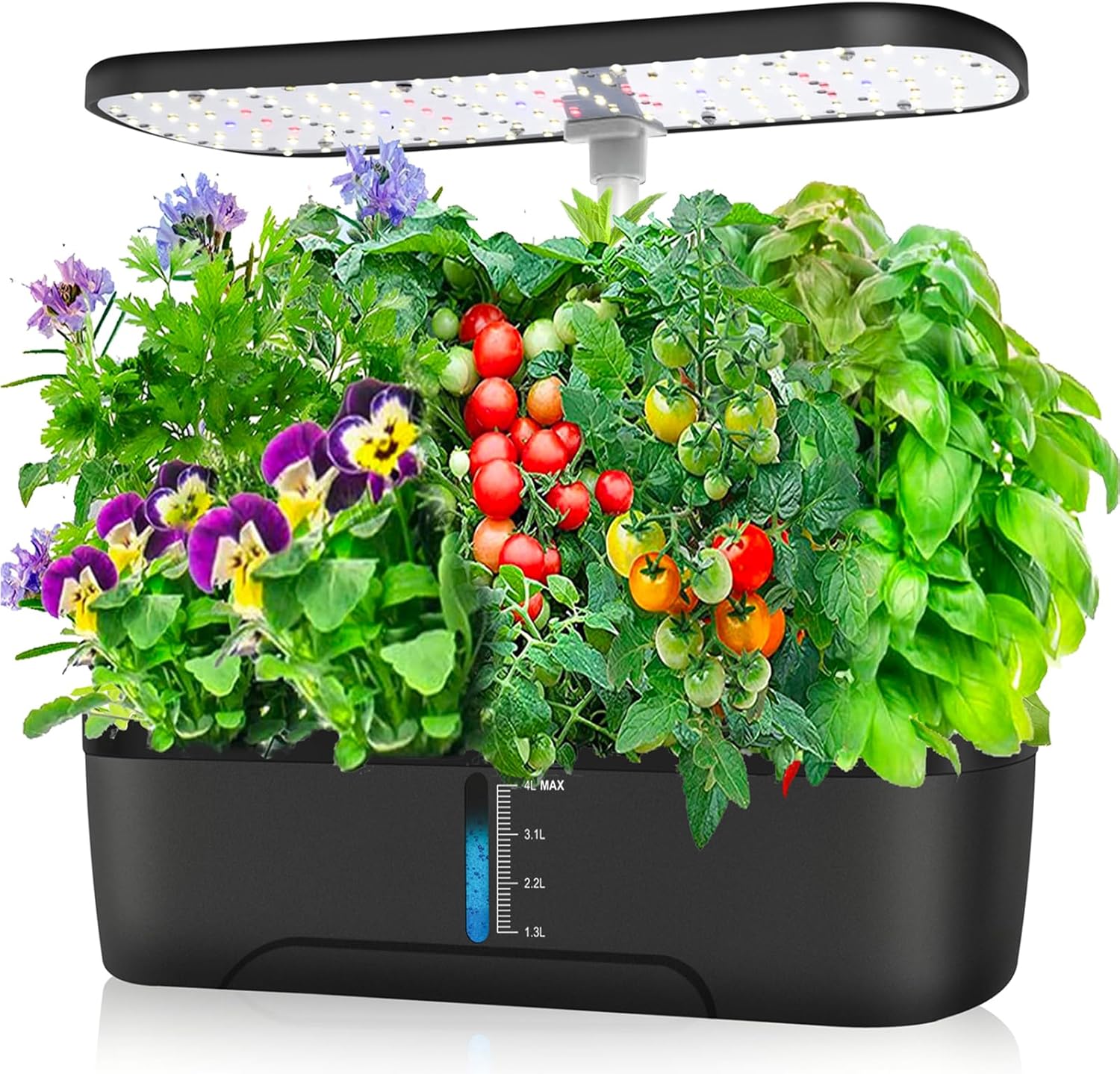 Hydroponics Growing System, Indoor Herb Garden, 12 Pods ...
12-pod hydroponic system with 20W LED and adjustable height, grows herbs 3x faster than soil year-round
~$58.99
Hydroponics Growing System, Indoor Herb Garden, 12 Pods ...
12-pod hydroponic system with 20W LED and adjustable height, grows herbs 3x faster than soil year-round
~$58.99
 LETPOT LPH-SE Hydroponics Growing System, 12 Pods Smart ...
12-pod hydroponic system with 24W full-spectrum LED and app control, ideal for herbs and leafy greens with 3-week water capacity.
~$119.97
LETPOT LPH-SE Hydroponics Growing System, 12 Pods Smart ...
12-pod hydroponic system with 24W full-spectrum LED and app control, ideal for herbs and leafy greens with 3-week water capacity.
~$119.97
 iDOO Hydroponics Growing System Kit 12 Pods, Christmas Gifts ...
12-pod system with full-spectrum LED light and 5L water tank, ideal for growing herbs and vegetables year-round indoors
~$89.99
iDOO Hydroponics Growing System Kit 12 Pods, Christmas Gifts ...
12-pod system with full-spectrum LED light and 5L water tank, ideal for growing herbs and vegetables year-round indoors
~$89.99
 iDOO Hydroponics Growing System Kit 12Pods, Christmas Gifts for ...
12-pod hydroponic system with 22W LED and 4.5L water tank, designed for fast vegetable and herb growth indoors.
~$129.99
iDOO Hydroponics Growing System Kit 12Pods, Christmas Gifts for ...
12-pod hydroponic system with 22W LED and 4.5L water tank, designed for fast vegetable and herb growth indoors.
~$129.99
Build Quality and First Impressions
The LetPot LPH-SE has a stainless steel outer wall with an ABS resin inner layer, which sounds premium until you notice that the grow deck wobbles and pops loose from the bowl. The grow bowl tends to feel lightweight and slightly flimsy despite the stainless exterior looking clean on a counter. But it’s cosmetic. What matters more: the light arm adjusts to 30 inches, the 5.5L tank supports a few weeks between fills, and the whole package comes with A+B powder nutrients, shade covers, support rods, and tweezers. You’re not buying much extra to get started.
The Spider Farmer G12 skips the stainless aesthetic entirely, which is fine. Spider Farmer built its reputation on grow tent LEDs before getting into countertop systems, so there’s actual LED manufacturing experience behind the light panel, which matters. The reservoir is removable without detaching anything else, and there’s a side lid for refilling without moving the whole unit. The Spider Farmer light tends to read as noticeably brighter in practice, and the air pump actually oxygenates the water through splashing rather than just circulating it.
The iDOO 12-pod is the reference point here mostly as a warning. The pump sits high in the reservoir, so the moment water level drops even slightly, you’re listening to running water. The lid fit loosens over time, the water container tends to expand or warp with use, and the pump noise problem gets worse as the water level drops during a normal grow cycle. Most growers end up using it as a seed starter rather than a full growing system because of the pump issue.
Grow Performance: What the Spinach Test Actually Shows
The LetPot 12-pod Senior typically handles amaranth and red romaine fine, but falls short on Bloomsdale spinach. The spinach comparison is the most telling. At day 47, the LetPot produced baby-sized leaves. The same variety, same nutrients, same day in an AeroGarden produced giant leaves. The conclusion is that the LetPot isn’t giving the right conditions for spinach, with both the pump and the lights flagged as likely culprits.
The pump issue is specific: at max fill, water circulation is barely perceptible. The workaround is filling to only half capacity, which means your usable tank volume is roughly half of the advertised 5.5L. That’s not nothing. And on the lights, despite the 24W spec, actual output doesn’t seem equivalent to other 24W systems in practice. I’ve had my own frustrations with spinach (I wrote a whole piece on growing spinach in AeroGarden that covers why it’s the hardest crop in these systems), but the LetPot spinach results at day 47 are weak.
The Spider Farmer G12 doesn’t have equivalent long-form grow documentation yet, but the light panel consistently performs well in direct comparison with other systems at this tier. The micro tom results growers tend to get with the Spider Farmer are better than what the iDOO manages under the same conditions. That’s directionally useful even without a controlled test.
Light Height: The Spec That Actually Decides This for Tall Plants
This is the clearest differentiator between these two systems. The LetPot LPH-SE light arm adjusts up to 30 inches. The Spider Farmer G12 light arm adjusts from 6 to 12 inches above the pod deck. That gap is significant.
For herbs, it doesn’t matter much. Basil, cilantro, mint, lettuce, none of them are going to push past a foot in a countertop system before you’re harvesting. But for anything with ambition, you run out of headroom fast on the Spider Farmer. Peppers, tomatoes, even a cucumber going vertical, the light can’t follow the plant. If there’s any chance you’ll want to experiment beyond herbs (and most outdoor gardeners who move indoors eventually do), the LetPot’s 30-inch arm is a real advantage.
That said, I’ve written about growing peppers indoors in a hydroponic garden and the ceiling problem isn’t always the light height, it’s also PPFD at distance. Even at 30 inches, you want the light as close to the canopy as practical. So the LetPot’s height advantage only helps if the light output at that distance is sufficient for the crop you’re growing.
The Spider Farmer’s compensation for the short arm is the light control itself. Dual spectrum modes (vegetative and flowering) plus 6 intensity levels gives you more practical dialing-in than the LetPot’s fixed spectrum. For herb growers who want to match light intensity to growth stage, that’s more useful than app notifications.
App and Controls
The LetPot app connects via WiFi and lets you set a 0-24 hour light schedule, switch between vegetative and flowering modes, track growing days, and get reminders for water and nutrients. Growers who travel or maintain multiple units find it useful for remote management without physically touching the system. That’s the real use case, not growing better plants, but managing the schedule from your phone when you’re not home.
The Spider Farmer G12 has no app. Timer starts on power-on, so you plug it in when you want the light day to begin. Plug-and-play setup, no accounts, no WiFi. If you’re home most of the time and just want to grow herbs on your counter, the absence of an app is not a loss. If you want to coordinate light schedules across multiple units from a phone, the LetPot app is useful. I covered the LetPot Max vs AeroGarden Bounty comparison in another post and came to a similar conclusion there: the app earns its keep for multi-unit growers and frequent travelers, but it’s not worth a significant price premium for single-unit herb growers.
One honest note: grow results across brands at this tier tend to be close, and AeroGarden generally germinates slightly faster. The app tracks the journey but doesn’t improve the biology.
Longevity
Growers who’ve run the LetPot LPH-SE for extended periods report no trouble with the lights dimming, flickering, or going out over two-plus years of use. That’s a better track record than most systems at this price point. Spider Farmer’s LED credibility comes from years in the grow tent market, where LED longevity is more scrutinized than in the countertop garden segment, and there’s no pattern of early failures in the countertop product.
iDOO, by contrast, has a documented failure pattern. The pump becomes noticeably loud within a year of regular use, and the lid fit and container warping issues tend to compound over time. The system works for a while, but most growers find it degrades faster than either LetPot or Spider Farmer.
The true cost of running a countertop hydroponic system is worth thinking through carefully. I covered this in more detail in my post on the real cost of owning a hydroponic garden . But the short version is that a system requiring repairs or replacement within the first two years isn’t actually cheaper than one that costs $30 more upfront.
True First-Month Cost
The LetPot LPH-SE includes A+B powder nutrients, support rods, and shade covers. The Spider Farmer G12 does not include nutrients. Factor in a basic nutrient starter kit at around $10-15, and the difference between the two systems narrows meaningfully.
Rough first-month cost:
- Spider Farmer G12: ~$60-69 + ~$12 nutrients = ~$72-81
- LetPot LPH-SE: ~$96-120, nutrients included
After the first month, costs equalize on consumables.
And at startup, the gap could be closer to $15-45, not $30-60. That framing changes how each system looks on value.
Both systems accept third-party seeds. Neither locks you into branded pod refills the way Click & Grow does, which I wrote about in my Click & Grow Smart Garden review , the pod pricing there was untenable for regular growing. I’ve also put the LPH-SE head-to-head against the Click & Grow Smart Garden 9 , same price, completely different growing philosophies. And if you’re thinking about media costs more broadly, I covered rockwool vs grow sponges for countertop hydro in a separate post that’s worth reading before you commit to any system’s ecosystem.
💰 Budget Pick
Hydroponics Growing System, Indoor Herb Garden, 12 Pods ...
12-pod hydroponic system with 20W LED and adjustable height, grows herbs 3x faster than soil year-round
Check Price on Amazon
📱
Smart Pick
LETPOT LPH-SE Hydroponics Growing System, 12 Pods Smart ...
12-pod hydroponic system with 24W full-spectrum LED and app control, ideal for herbs and leafy greens with 3-week water capacity.
Check Price on AmazonWho Should Buy Which
Get the Spider Farmer G12 if: you want to grow herbs and lettuce, you’re on a strict budget, you don’t care about app control, and you want better light intensity control than the LetPot offers at this price point. The short light arm is a real ceiling for ambitious crops, but for a kitchen herb rotation it doesn’t matter.
Get the LetPot LPH-SE if: you want to grow taller plants, you travel and want remote schedule management, or you already own a LetPot and want unified app control across units. The pump issue is real and annoying, but the 30-inch arm and the strong user-reported light longevity make it the better long-term system for growers who want flexibility. And if you’re tempted to size up within the brand, I compared the bigger LetPot Max against the iDOO 20-pod in a separate post, where the pump-versus-no-pump question decides everything.
But the iDOO’s documented reliability issues make it hard to recommend at any price point. A system that degrades noticeably within the first year or two of use isn’t really a budget option, it’s a delayed expense. So if you’re choosing between these three, iDOO should be the last option you consider, not the first.
This article is part of my Countertop Hydroponic Systems: Complete Comparison , a complete resource for countertop hydroponic growing.
Frequently Asked Questions
What is the best brand of hydroponic garden?
For most countertop herb growers, AeroGarden has the strongest track record on germination speed and long-term reliability. LetPot is a solid second choice with better value at the 12-pod tier. Spider Farmer is worth attention for budget buyers who want real LED quality. iDOO makes attractive-looking systems that tend to have reliability problems after the first year.
Is the LetPot app worth it, or can I manage without it?
If you’re home most days and running a single unit, you can manage without it. The timer is set on the device and runs automatically. The app earns its keep if you travel, forget to add water regularly, or want to coordinate multiple LetPot units from one place. It doesn’t make plants grow better. It makes the schedule easier to adjust remotely.
Does the Spider Farmer G12 work for tall plants like peppers or tomatoes?
No. The light arm tops out at 12 inches above the pod deck, which isn’t enough for peppers or tomatoes once they get going. For anything with fruiting ambitions, the LetPot LPH-SE’s 30-inch arm is the minimum you want. I’d also check my post on growing cherry tomatoes in a countertop hydroponic system before committing to either one for tomatoes, countertop fruiting crops have more constraints than the light height alone.
How long do countertop hydroponic systems last before the light fails?
Growers running the LetPot LPH-SE report 2+ years without light issues. Spider Farmer’s LED background suggests similar durability. iDOO is the outlier, with pump degradation and general reliability problems being a known pattern after a year of regular use. AeroGarden’s post-relaunch track record on light longevity is still being established, but older Harvest models generally lasted 3+ years without light problems.
Do I need to buy seeds separately for LetPot and Spider Farmer systems?
Both systems require you to source your own seeds. Neither includes pre-seeded pods. The LetPot includes blank sponges, baskets, and covers in the box. Spider Farmer’s included accessories vary by listing, so check before buying. Standard herb and lettuce seeds from any garden center work fine in both systems, you don’t need anything special for hydroponic use.
Which 12-pod hydroponic system is best for beginners?
Spider Farmer G12 for herb-focused beginners who want to spend as little as possible. LetPot LPH-SE for beginners who want app guidance and plan to grow a wider variety of plants. Both are more beginner-friendly than iDOO because neither has the pump noise problem that develops as water drops, which is disorienting when you don’t know what’s causing it.
Is Spider Farmer a good hydroponic brand?
Spider Farmer’s countertop garden line is newer, but the company has years of experience manufacturing LED panels for grow tents, which is a more demanding and more scrutinized application than a countertop herb garden. The light quality reports from growers who’ve actually run it are consistently strong. It’s not a vaporware brand selling rebranded commodity hardware, there’s real LED engineering behind the product.