
Some links in this post are affiliate links. I get a small cut if you buy, but it doesn’t cost you anything extra.
My cilantro went brown at the tips, stopped growing entirely, and then just sat there looking miserable for three weeks before I figured out what was happening. Not yellowing, not wilting, just hard brown edges on every leaf and zero new growth. I’d added nutrients on schedule. I’d checked the light. The water level was fine. If you’re searching for a hydroponic garden nutrient schedule beginners can actually use, the standard advice online will get you in trouble fast.
The problem was I was dosing nutrients for a 6-pod system with only 4 pods planted, in a 1.1-liter tank, following instructions written for a 5-gallon bucket. Every hydroponic garden nutrient schedule for beginners I found online was written for commercial DWC setups or serious hobbyists with big reservoirs. None of it mapped to my AeroGarden Harvest sitting on a kitchen shelf. And if you’ve just set up your first countertop garden and something’s already going wrong, this is the article that actually fits your situation.
Quick Answer: For countertop pod gardens (AeroGarden, iDOO, LetPot), start at 50% of any nutrient label’s recommended dose, scale down further if you have fewer pods than the system supports, and check pH every 3-4 days. The standard hydro guides are written for reservoirs 5-10x larger than yours. Most beginner failures trace back to overdosing in a tiny tank, not underdosing.
 Jack's 321 Hydroponic Nutrients Fertilizer Plant Food - 2 lb ...
Two-pound hydroponic nutrient kit with 5-12-26 formula, makes 150 gallons of solution, ideal for beginner hydroponic growers.
~$33.98
Jack's 321 Hydroponic Nutrients Fertilizer Plant Food - 2 lb ...
Two-pound hydroponic nutrient kit with 5-12-26 formula, makes 150 gallons of solution, ideal for beginner hydroponic growers.
~$33.98
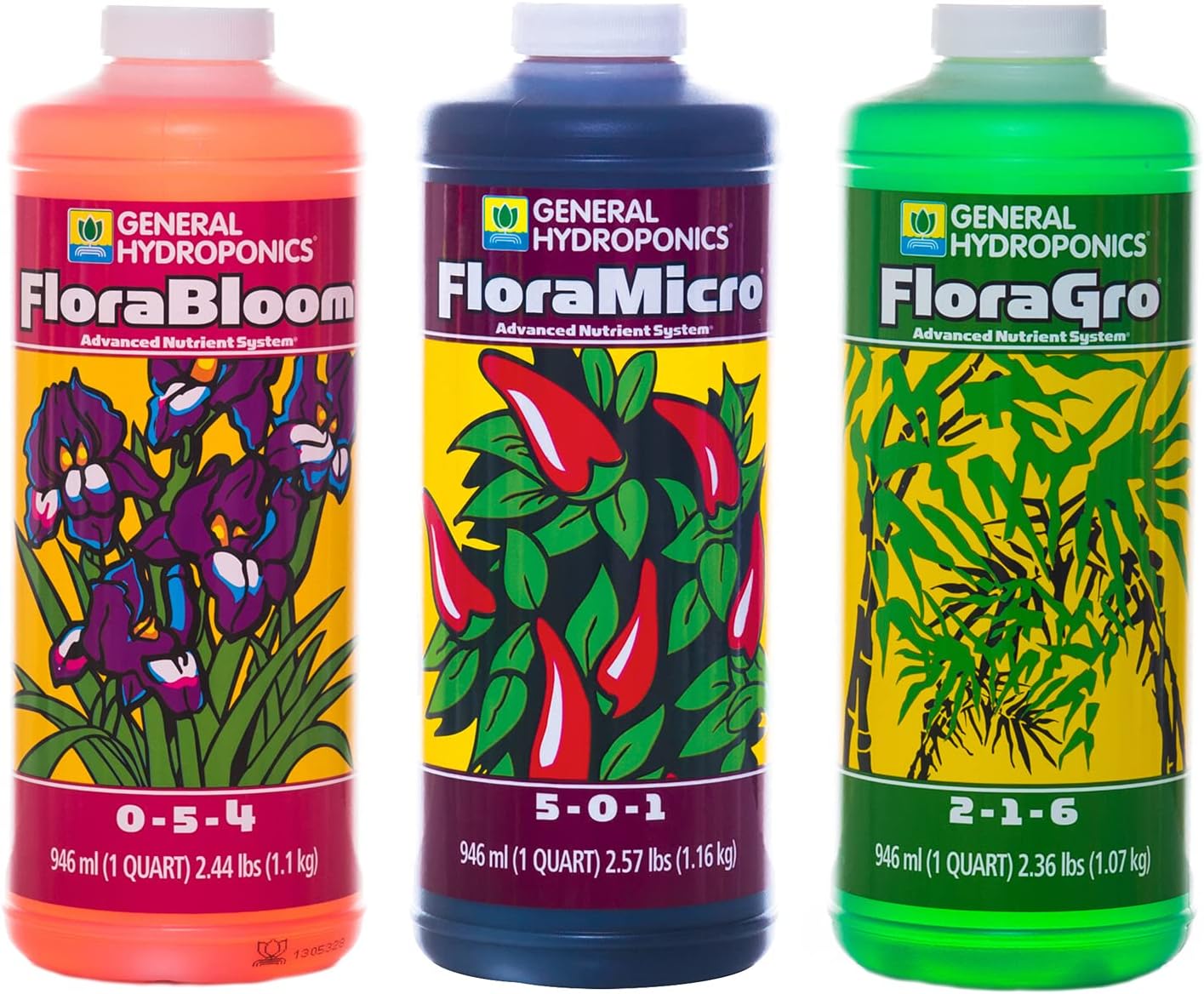 General Hydroponics Flora Series: FloraMicro, FloraBloom, FloraGro
Three-part synthetic nutrient system (micro, bloom, grow) for customizable hydroponic feeding across all plant growth stages
~$32.86
General Hydroponics Flora Series: FloraMicro, FloraBloom, FloraGro
Three-part synthetic nutrient system (micro, bloom, grow) for customizable hydroponic feeding across all plant growth stages
~$32.86
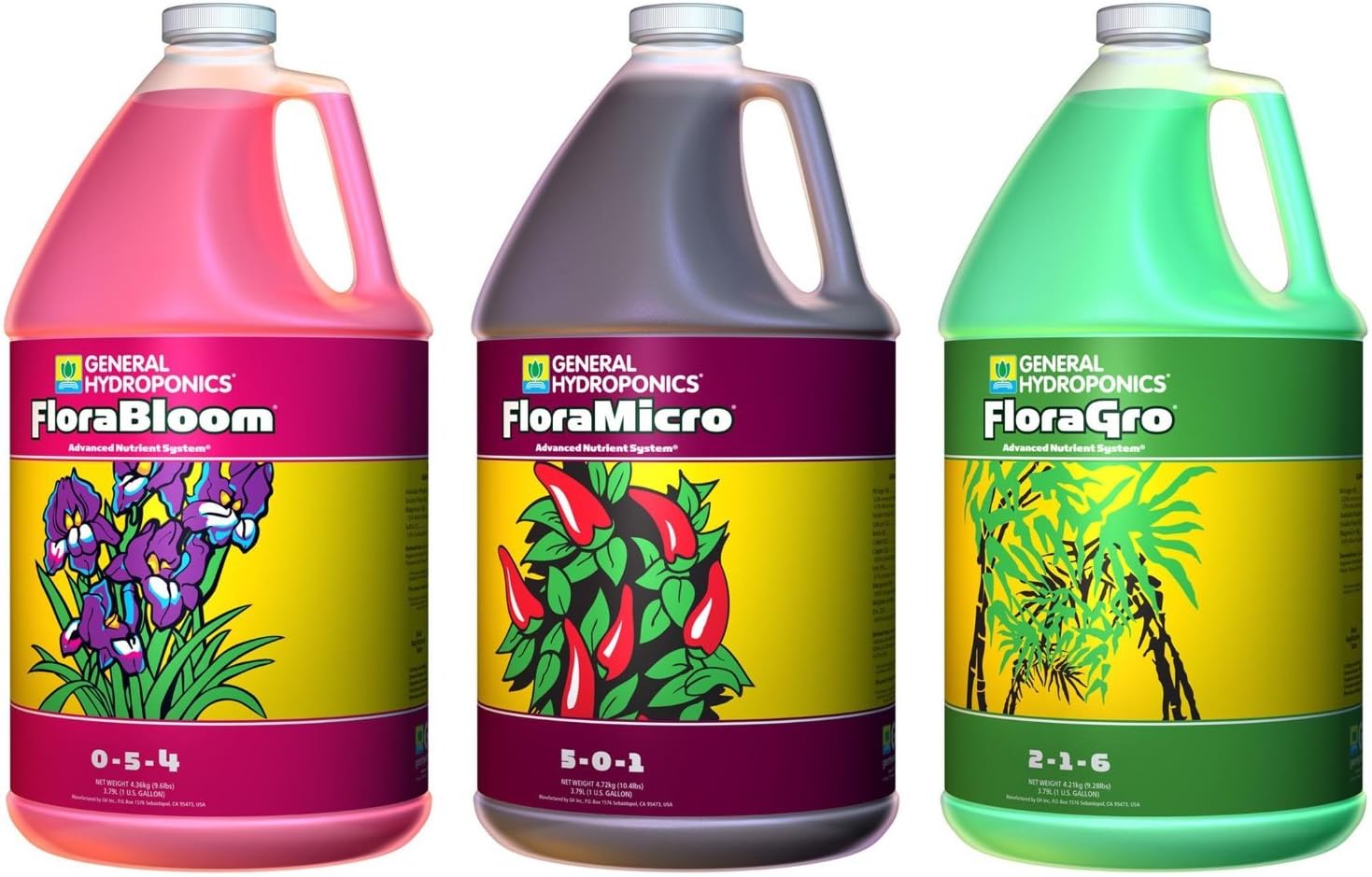 General Hydroponics Flora Grow, Bloom, Micro Combo ...
Three-part nutrient concentrate system for customizable nutrient mixing in hydroponic and soil growing applications.
~$78.85
General Hydroponics Flora Grow, Bloom, Micro Combo ...
Three-part nutrient concentrate system for customizable nutrient mixing in hydroponic and soil growing applications.
~$78.85
 GH General Hydroponics pH Up and pH Down 1 Quart Combo Kit ...
~$27.99
GH General Hydroponics pH Up and pH Down 1 Quart Combo Kit ...
~$27.99
Why Countertop Dosing Is Completely Different
The AeroGarden Harvest holds about 1.1 liters. The iDOO 12-pod holds roughly 3.5-4 liters. The LetPot LPH-SE runs about 3.5 liters.
The guides you’ll find when you search for hydroponic nutrient schedules? They’re written for 5-gallon buckets at minimum. Some assume 20 gallons. The math doesn’t scale down automatically, it actively misleads you.
In a small reservoir, everything moves faster. Nutrient concentration climbs quickly as plants drink water without consuming nutrients at the same rate. pH swings that would take a week to matter in a big system can happen overnight in a 1-liter tank. And if you’re only running 4 pods in a 6-pod system, you’ve got even less plant mass pulling nutrients from that small volume of water.
This isn’t harder than large-reservoir growing. It’s just different. Smaller doses, more frequent checks, and a few rules that nobody writes down anywhere. But once you understand how these small tanks behave, the fixes are simple.
The 5 Mistakes That Kill Countertop Plants
Mistake 1: Dosing for the full pod count, not the actual plant count.
This one gets overlooked in every guide. If you’re running 4 plants in a 6-pod system, you need roughly 67% of the normal dose. The nutrient recommendation assumes a full system with full plant mass drawing nutrients from the water. Fewer plants means less uptake, which means concentration builds up faster. Too much nutrient in a small tank shows up exactly like what happened to my cilantro: brown tips, stunted growth, no new leaves.
The math is simple: (pods planted ÷ total pods) × recommended dose.
Mistake 2: Not shaking the nutrient bottle.
This one sounds too basic to matter. It isn’t. Nutrient components settle in liquid formulas, so if you’ve had your bottle sitting for a few weeks and just tip it in without shaking, you’re getting an uneven dose, heavy on some elements, light on others. Plants die from this. Shake thoroughly every time.
Mistake 3: Using distilled water without adding CalMag.
AeroGarden’s own documentation recommends distilled or RO water for people with hard tap water. That’s fine advice, except distilled water has all trace minerals stripped out. Calcium and magnesium don’t come back when you add standard nutrients. So plants show deficiency symptoms even when EC looks fine: yellowing between leaf veins, weak stems, poor germination. The fix is adding a CalMag supplement separately before adding your main nutrients. This catches a lot of people off guard because they’re doing exactly what the manual said.
For reference, my tap water runs about 8.7 pH and sits well above 150 ppm TDS. I blend it rather than going full distilled, which sidesteps the CalMag trap. There’s more on tap water TDS at my article on water quality specifically for AeroGardens .
Mistake 4: Letting pH drift and blaming nutrients.
pH drift is probably the most common countertop problem, and it masquerades as a nutrient problem almost every time. The target range for most countertop crops is 5.5-6.5. Outside that window, plants can’t absorb nutrients regardless of what’s in the water. You can have perfect EC and still watch plants decline if pH is sitting at 7.5.
I found this out the hard way over six months of yellowing basil. The nutrient mix wasn’t the problem. The pH was. If you’re troubleshooting yellow leaves, check pH before you change anything else. The deep dive on that is in my yellow leaves troubleshooting piece .
Mistake 5: Never flushing, just topping off.
Topping off with plain water between changes is correct. But it dilutes nutrients gradually, so EC drifts down over time while certain mineral salts accumulate. Eventually the balance is off enough that plants suffer. At that point, topping off more doesn’t help, you need a full drain and refill. Most beginners top off indefinitely and wonder why growth slows down at week 4.
How to Actually Mix Nutrients for a Countertop Garden
Start with room-temperature water. Cold water shocks roots when it hits the basin, this matters more than most guides acknowledge.
If you’re using the AeroGarden liquid food, shake the bottle hard, add the dose scaled to your pod count, and you’re mostly done. It has pH buffering built in, which is why it stays workable for most tap water sources without a meter. That convenience costs money, but it’s real.
If you switch to the General Hydroponics Flora Series buy on Amazon (check current price on Amazon), the mixing order is non-negotiable, FloraMicro first, according to every experienced grower I’ve seen weigh in on this. Mix thoroughly. Then FloraGro. Mix again. FloraBloom last. If you add them together without this order, or tip them into each other before diluting in water, you get nutrient precipitation and lockout. The plants can’t absorb what’s clumped at the bottom of your tank.
For a countertop system with weak LEDs, 50% of the label recommendation is the right starting point. Those 20-30W lights don’t drive enough photosynthesis to justify heavy feeding. Plants can only uptake what they can process, and pushing EC high when light is limited just builds up salt stress. The nutrient alternatives breakdown covers more on how different formulas perform in small systems.
When adjusting pH with Up or Down, dilute the pH solution in about 50ml of water before adding it to the reservoir. Straight pH Up or Down dropped directly into nutrient solution causes precipitation. Add 0.5ml at a time, wait 30 minutes, re-test. It’s annoying. Do it anyway.
The GH pH Up and pH Down combo check current price (see on Amazon) comes in quart bottles. A single set lasts most countertop growers well over a year at the doses these small reservoirs require. You’re using maybe 0.5ml per adjustment, so the math works in your favor.
📱 Smart Pick
GH General Hydroponics pH Up and pH Down 1 Quart Combo Kit ...
Check Price on AmazonNutrient Options Compared: OEM vs. GH Flora vs. Jack’s 321
| AeroGarden Liquid Food | GH Flora Series | Jack’s 321 | |
|---|---|---|---|
| Form | Liquid | Liquid (3-part) | Dry (2-part + Epsom) |
| Cost per gallon | ~$1.50-2.00 | ~$0.30-0.50 | ~$0.05-0.10 |
| Effort | Very low | Medium | Medium |
| pH buffer | Yes | No | No |
| Best for | Beginners, herbs, greens | Herbs through fruiting, experienced users | High-volume or committed growers |
| Calcium included | Yes | Yes (FloraMicro) | Yes (Part A) |
| Mixing complexity | Shake and pour | Strict order required | Dissolve in order |
Jack’s 321 see on Amazon (grab it on Amazon) is the cheapest option per gallon by a wide margin. It’s a dry formula, Part A (5-12-26) plus calcium nitrate and Epsom salt. From what I’ve read across hydroponic communities, committed growers tend to use it almost exclusively because the cost savings are significant at scale. For someone running one countertop garden, the startup cost and the learning curve for dry mixing may not be worth it. But if you’re already comfortable with EC and pH monitoring, it’s hard to argue with the math.
The GH Flora Grow, Bloom, Micro combo check price on Amazon (available on Amazon in larger sizes) is what many growers recommend when switching away from OEM nutrients. It covers the full lifecycle and the cost per gallon is reasonable, though fair warning, it has a steeper learning curve than the label implies, and some buyers report incomplete orders from certain sellers. Worth knowing before you commit. And if you’re already monitoring EC and pH regularly, the GH line gives you more precision than the OEM formula ever will.
Simple Weekly Maintenance Schedule
Every 2-3 days (new setup, first two weeks):
- Check pH. Target 5.5-6.5.
- Check water level. Top off with plain room-temperature water if low.
Every week (established system):
- Check EC or PPM if you have a meter. If it’s creeping up, dilute with plain water. If it’s dropped a lot, you’re due for a full flush.
- Inspect roots. White and slightly fuzzy is healthy. Brown and slimy is root rot.
- Check that all pod slots are covered. Light hitting open slots feeds algae, not plants.
Every 7 days (fruiting plants: tomatoes, peppers, strawberries):
- Full drain and refill with fresh nutrient solution.
- Rinse the reservoir if there’s any buildup.
Every 10-14 days (herbs and leafy greens):
- Full drain and refill.
- Trim any root mass that’s blocking the pump intake. Yes, you can trim roots. It doesn’t hurt the plant.
The top-off vs. flush decision is simpler than most guides make it sound. If the water level dropped but the plants look healthy: top off with plain water. If growth has stalled, tips are browning, or it’s been more than two weeks since a full change: flush and refill. Don’t try to save a declining reservoir by adding more nutrients to it. So if you’re not sure which situation you’re in, err on the side of a full flush rather than topping off with more nutrients. And if you’ve been topping off for more than two weeks without a full change, just go ahead and flush now regardless of how things look.
For more on how nutrient timing interacts with light hours, especially for basil and peppers, the pepper growing article covers what happens when nutrients are right but light schedule isn’t.
This article is part of my Hydroponic Nutrients Guide , a complete resource for countertop hydroponic growing.
Frequently Asked Questions
What can I grow in a countertop hydroponic garden?
Herbs (basil, cilantro, dill, mint), leafy greens (lettuce, kale, tatsoi), and cherry tomatoes all work well. Microgreens are the fastest return at 7-10 days from seed. Fruiting plants like peppers and tomatoes are possible but require more nutrient attention and manual pollination. I’ve covered this in detail in the crops that actually thrive indoors piece .
Do you add CalMag before or after nutrients?
Add CalMag first, before your main nutrients. Mix it into plain water, then add your base nutrients in the correct order. CalMag added after can interact with certain nutrient compounds and reduce absorption.
How often should I add nutrients to a hydroponic garden?
In a countertop system, you’re not adding nutrients between water changes, you’re changing the whole reservoir and mixing fresh solution each time. The exception is topping off with plain water to maintain water level, which dilutes nutrient concentration slightly over time. A full nutrient refresh every 7 days for fruiting plants, 10-14 days for herbs and greens, is the right cadence.
Can I use General Hydroponics nutrients in an AeroGarden or iDOO?
Yes. The GH Flora Series works well in both. For the iDOO, the same rules apply as any countertop system, start at 50% dose. For AeroGarden specifically, remember the mixing order (FloraMicro first, always) and that you’ll need to manage pH yourself since GH nutrients don’t have the built-in buffer AeroGarden’s own formula uses. The AeroGarden nutrient alternatives article has the full breakdown on making the switch.
What is the right pH for a countertop hydroponic garden?
5.5-6.5 covers most herbs, greens, and fruiting plants. Fruiting plants (tomatoes, peppers, strawberries) prefer the tighter range of 5.8-6.5 and are more sensitive to drift outside it. If you’re growing spinach specifically, there’s a whole other set of complications, the spinach troubleshooting article has everything.
How often should I change the water in my hydroponic system?
Full flush: weekly for fruiting plants, every 10-14 days for herbs and leafy greens. Between flushes, top off with plain water to maintain level. Never try to correct a stale, salt-loaded reservoir by adding more nutrients, drain it and start fresh.