
Fair warning: affiliate links ahead. I earn a small commission on purchases, which helps keep this site running. You pay the same either way.
Picture-perfect hydroponic basil. Glossy leaves, no yellowing, standing straight up under the light. And then you pinch a leaf and it smells like… wet paper. Maybe a faint green-ness. Nothing close to what basil from a good farmers market smells like, and definitely not what you pictured when you planted it. Flavor payoff is the metric that actually matters when you’re figuring out the best herbs to grow in hydroponic garden indoors, not germination speed.
This happens more than people admit, and the reason is interesting. A plant that’s perfectly fed, perfectly lit, and perfectly watered has no reason to produce aromatic compounds. It just grows leaves. The stress triggers, the slight water fluctuation, the competition for light, those are what push a plant to load up on the volatile oils that make herbs worth cooking with. Hydroponics removes a lot of that stress by design. Which is great for growth rate and terrible for flavor if you’re not paying attention.
So I’m not ranking these herbs by how fast they germinate or how easy they are to grow. I’m ranking them by whether the flavor payoff actually justifies the pod space, with a kitchen use case for each one.
Quick Answer: Basil, thyme, dill, oregano, chives, parsley, and rosemary are the best herbs to grow in a countertop hydroponic garden for flavor payoff. Mint is worth growing only if you start from a grocery store cutting, not an OEM seed pod. Skip tarragon from seed entirely. For most home cooks with a 6-pod system, a basil-heavy rotation with thyme and chives covers 80% of actual cooking needs.
The 7 Worth Growing
1. Basil, WORTH IT
Basil is the reason most people buy a countertop hydroponic garden in the first place, and it mostly delivers. Mine germinates in about 4 days and gets to first harvest in 3-4 weeks. The flavor question is real, but basil responds better to mild stress management than almost any other herb in a pod garden.
The trick is not overfeeding it. I’ve found the flavor holds up well through a long grow if I keep the light schedule at 14-15 hours instead of the default 16-17. Lower light duration plus consistent pruning means the plant puts more into aromatic oils than into rapid leaf mass. I’ve kept a single basil plant going for over four months that way. The full method is in my post on growing basil hydroponically indoors .
Best for: pesto, caprese, pasta finishing, Thai dishes if you’re growing Thai basil.
2. Thyme, WORTH IT
Thyme is slow to start (first harvest typically around day 28 in a hydro setup), but once it’s established it’s one of the most reliably potent herbs you can grow this way. The small leaves concentrate flavor well, and the plant is compact enough that it doesn’t bully its neighbors. It tends to produce 20+ harvests from a single plant before quality starts declining. That’s an absurd return on one pod.
Best for: roasted vegetables, soups, any braise, compound butter.
- Dill, WORTH IT (with a catch)
Dill tastes great from a countertop system. The flavor is bright and clean, and it’s one of the few herbs that tends to actually exceed the grocery store version in a well-run hydro setup. The catch is height. Dill grows fast and tall, and if you let it get away from you, you’ll end up raising the light arm so high that whatever’s growing next to it starts suffering. Keep dill in a dedicated system or only pair it with other tall-growing herbs. Do not plant it next to thyme or rosemary.
Best for: salmon, tzatziki, pickles, potato salad.
- Oregano, WORTH IT
Oregano takes a while, first harvest somewhere around day 55-60 in my experience, but it’s potent. Stronger than almost anything you’ll buy dried. A little goes a long way, which makes a single pod stretch further than you’d think. It’s also one of the more forgiving herbs in terms of light fluctuations. Good choice to stagger in 2 weeks before your faster-growing herbs so it has time to establish.
Best for: pizza, tomato sauces, marinades, Greek dishes.
- Chives, WORTH IT
Chives don’t get enough credit. They grow tidily, they don’t bolt aggressively, and the flavor from a hydro setup is good. They’re also a nice pairing with parsley in a 6-pod garden because they occupy similar height ranges and don’t compete for light.
Best for: eggs, baked potatoes, cream cheese, finishing oil.
- Rosemary, WORTH IT (for patient growers)
Rosemary is slow and a bit finicky in hydroponics, but when it works, it works well. The flavor is concentrated and the plant produces continuously once established. It won’t fill your pod in the first month, so plant it alongside faster herbs so you’re not staring at empty space. My post on grow light schedule for a hydroponic indoor garden covers the light setup that helps slower herbs like this one.
Best for: roasted potatoes, focaccia, infused olive oil, lamb.
- Parsley, WORTH IT (barely)
Parsley is fine. It grows, it tastes like parsley, it’s fine. Germination takes up to 21 days, which is frustrating to watch when the basil next to it is already four inches tall. But the flavor is decent and it earns its pod space if you actually cook with it.
Best for: chimichurri, tabbouleh, finishing oil, anything where you’d use it fresh rather than cooked.
The 3 to Skip
Mint from OEM seed pods, SKIP IT
Mint is one of the most useful herbs in a kitchen. But the mint seed pods in most branded kits are one of the most consistently disappointing things I’ve grown. The problem isn’t hydroponics, it’s the seed source. The variety available in most pod kits produces plants with almost no aroma. New growth smells fine, but older leaves can have nearly zero scent by week 6.
The actual fix: grab a stem from a bunch of grocery store mint, stick it in a glass of water until it roots (takes about a week), then plant that cutting in a blank pod. Mint from a cutting of a good variety tastes like mint. And that single change fixes nearly every complaint about hydroponic mint flavor. Just keep it in its own container eventually, because mint roots will go everywhere.
Russian tarragon from seed, SKIP IT
The tarragon available as hydroponic pods is almost always Russian tarragon, which produces limp, flavorless leaves that are vaguely herby at best. French tarragon, the kind that actually tastes like tarragon, can’t be grown from seed at all, it only propagates from cuttings. If you’re a big tarragon user, this is a dead end for pod growing. Save the pod for something else.
Cilantro, SKIP IT (probably)
This is going to upset some people. Cilantro in hydroponics is technically doable, but the ROI is terrible. It bolts fast, the seeds can take up to a month to germinate and sometimes rot before they do, and the flavor from hydro-grown cilantro is rarely as good as a fresh bunch from the store. Honestly, the first time I tried cilantro in my Harvest I spent three weeks watching nothing happen and then pulled a rotting sponge out of the pod. That was annoying enough that I haven’t tried again. When you can buy a huge bunch for under $2, it’s hard to justify the pod space and the hassle.
If you really want to try it, germination improves a lot by cracking the seed hulls before planting and using coco coir as your medium rather than standard sponges.
 AeroGarden Harvest Indoor Garden Hydroponic System ...
6-plant hydroponic system with 20W full-spectrum LED light, ideal for growing herbs and vegetables indoors year-round
Check Price on Amazon
AeroGarden Harvest Indoor Garden Hydroponic System ...
6-plant hydroponic system with 20W full-spectrum LED light, ideal for growing herbs and vegetables indoors year-round
Check Price on AmazonHerb Combination Planner
This is the thing nobody talks about but everyone eventually figures out the hard way.
Dill goes alone or with other tall herbs. That’s the rule. Dill grows fast and tall and will force you to raise the light arm until shorter herbs like thyme and rosemary are basically useless. If you’re running a 6-pod system and want dill, fill two pods with it and pair it only with other tall herbs.
Basil bullies its neighbors differently. It doesn’t go tall as fast as dill, but it spreads wide and shades nearby pods. Give basil 2 pods if you cook with it heavily.
Thyme and oregano need a head start. Plant them 2 weeks before anything else. They’re slow to establish and will get outcompeted for light if they’re starting at the same time as basil.
Mint in a shared reservoir is a slow-motion disaster. The roots spread aggressively and will eventually clog your pump sensor. Mint is happiest in its own container, period.
Chives and parsley are compatible. Similar height, similar light needs, neither one is going to take over the tank. Good pair for the remaining pods once you’ve got basil and thyme sorted.
For the flavor fix across all of these: the biggest single improvement most growers see comes from nutrients, not technique. AeroGarden’s liquid food does the job but lacks trace minerals. Adding a small amount of GH Flora Micro on alternating weeks with your regular nutrients makes a noticeable difference in aromatic intensity. My full breakdown is in my post on AeroGarden nutrient alternatives .
So don’t write off an herb based on the first run. First grows are almost always the weakest for flavor. Subsequent cycles, once your system is dialed in and your nutrient dosing is consistent, tend to be noticeably better.
System and Pod Recommendations
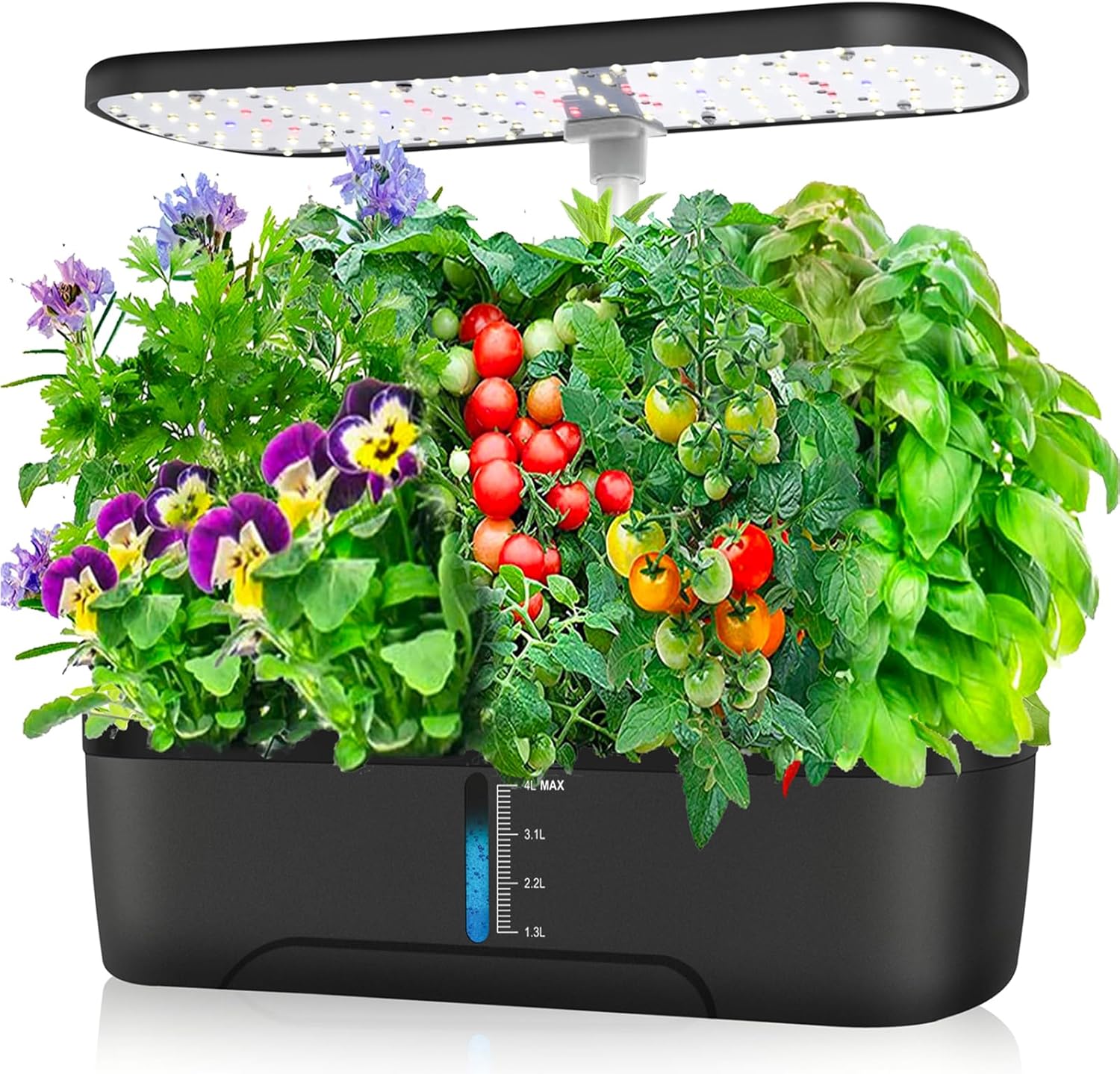 Hydroponics Growing System, Indoor Herb Garden, 12 Pods ...
12-pod hydroponic system with 20W LED and adjustable height, grows herbs 3x faster than soil year-round
~$58.99
Hydroponics Growing System, Indoor Herb Garden, 12 Pods ...
12-pod hydroponic system with 20W LED and adjustable height, grows herbs 3x faster than soil year-round
~$58.99
 LETPOT LPH-SE Hydroponics Growing System, 12 Pods Smart ...
12-pod hydroponic system with 24W full-spectrum LED and app control, ideal for herbs and leafy greens with 3-week water capacity.
~$119.97
LETPOT LPH-SE Hydroponics Growing System, 12 Pods Smart ...
12-pod hydroponic system with 24W full-spectrum LED and app control, ideal for herbs and leafy greens with 3-week water capacity.
~$119.97
 Seewaazee 79 PCS Hydroponic Indoor Seed Pods ...
79-piece seed pod accessory kit with sponges and domes, compatible with hydroponic systems like AeroGarden, suitable for growing herbs, vegetables, and flowers indoors.
~$8.69
AeroGarden Harvest Indoor Garden Hydroponic System ...
6-plant hydroponic system with 20W full-spectrum LED light, ideal for growing herbs and vegetables indoors year-round
Seewaazee 79 PCS Hydroponic Indoor Seed Pods ...
79-piece seed pod accessory kit with sponges and domes, compatible with hydroponic systems like AeroGarden, suitable for growing herbs, vegetables, and flowers indoors.
~$8.69
AeroGarden Harvest Indoor Garden Hydroponic System ...
6-plant hydroponic system with 20W full-spectrum LED light, ideal for growing herbs and vegetables indoors year-round
One thing worth knowing before you buy: AeroGarden shut down in January 2025 and relaunched under Scotts Miracle-Gro in Spring 2025. The brand is currently operational and selling on Amazon and aerogarden.com, but the disruption is real context if you’re buying for the long haul. With that said, the AeroGarden Harvest buy on Amazon is what I’d tell most herb growers to start with. Six pods is the right size for a kitchen herb rotation, the 20W light handles herbs without issue, and the system is easy to dial in.
🌱 Best for Beginners
AeroGarden Harvest Indoor Garden Hydroponic System ...
6-plant hydroponic system with 20W full-spectrum LED light, ideal for growing herbs and vegetables indoors year-round
Check Price on AmazonIf you want 12 pods and a bigger water tank, the ScienGarden 12-pod check current price runs around $59, has a quiet pump that cycles 5 minutes on / 25 minutes off, and the 4L tank is large enough that most growers aren’t refilling it every couple of days. The common failure modes are timer circuit issues and mold in the growing medium, worth knowing going in.
For pod media, the Seewaazee 79-piece kit see on Amazon fits AeroGarden round-pod slots well, but compatibility is hit-or-miss with other systems. Some units use square pods and these won’t work. Check your pod shape before ordering. Using your own seeds instead of branded pods is one of the better cost decisions you can make long-term. I did the math in my post on AeroGarden seed pod alternatives and the savings compound fast.
The LetPot LPH-SE check price on Amazon is worth a look if you want app control and a stainless steel design. The 24W light and 5.5L tank are genuine upgrades over the basic 6-pod systems. But the app tends to disconnect frequently enough that power-cycling the unit to reconnect is a common fix. If app reliability matters to you, that’s worth knowing upfront. My full comparison is in my LetPot LPH-SE vs AeroGarden Harvest post.
This article is part of my Growing Herbs Hydroponically: Complete Guide , a complete resource for countertop hydroponic growing.
Frequently Asked Questions
Why do my hydroponic herbs have no flavor?
The core issue is that well-fed plants grow fast and put energy into leaf mass, not aromatic compounds. To get better flavor, try alternating your regular nutrient dose with a Cal-Mag supplement weekly, run your light cycle at 14-15 hours instead of 16+, and wait a day or two after feeding before harvesting. First-cycle herbs are also almost always milder than subsequent grows.
Which herbs grow best together in an AeroGarden?
Basil, chives, thyme, oregano, and parsley all coexist reasonably well. The main rule is keeping dill away from compact herbs. Mint should be in its own system regardless, because the roots spread aggressively and will eventually cause pump problems in a shared reservoir.
Is it worth growing cilantro in a hydroponic garden?
Probably not for most people. It bolts fast, germination is unreliable in moist growing media, and the flavor rarely beats a fresh store bunch. If cilantro is a staple ingredient for you, the effort may be worth it. Otherwise save the pod for something else.
How long do herbs last in an AeroGarden or hydroponic system?
With regular pruning, most herbs last around 6 months before quality noticeably declines. Basil can go longer if you stay on top of removing flower buds. Thyme and oregano often outlast basil because they’re more naturally compact and don’t bolt the same way.
Can you grow rosemary and thyme hydroponically?
Yes, and both taste good. They’re slow growers, so stagger them a couple of weeks before faster herbs like basil. Thyme is one of the more reliably potent herbs in a pod system, and once it’s established, the harvest count before quality drops is higher than most growers expect.
Why does my AeroGarden basil taste bland?
AeroGarden’s nutrient formula works fine for growth but lacks trace minerals that contribute to aromatic compound production. Adding GH Flora Micro on alternating weeks helps a lot. The other common issue is light schedule, drop to 14-15 hours and see if that makes a difference within a couple of weeks.
What plants should you avoid growing in a hydroponic garden?
In a countertop pod system: anything that fruits heavily unless you have a tall-clearance unit and are prepared to hand-pollinate. I’ve covered the full attempt in my post on growing cherry tomatoes indoors hydroponically . Tarragon from seed is a waste of time for flavor. Mint from OEM pods is reliably disappointing.