
Some links in this post are affiliate links. I get a small cut if you buy, but it doesn’t cost you anything extra.
Mint is the most rewarding herb you can grow in a countertop garden. It’s also the one that will destroy your other herbs if you’re not paying attention. Growing mint in AeroGarden or hydroponic pod garden setups is one of the best uses of these systems, but only if you know the one rule that most guides skip entirely.
That’s the part nobody writes about. Every guide covers germination timelines and light hours. None of them warn you about what mint’s roots actually do inside a shared pod system, and if you’re running an AeroGarden, iDOO, LetPot, or any 6-12 pod garden, this matters more than any of the standard setup advice. So before you drop a mint pod in alongside your basil, read this first.
Quick Answer: Mint thrives in countertop hydroponic systems and is one of the easiest herbs you can grow this way. The catch: never mix it with other herbs in the same pod garden. Mint roots invade neighboring pods, wrap around pump sensors, and can trigger false “tank full” readings that starve your whole garden. Give mint its own dedicated system (or its own corner pods in a 12-pod), run it at 14-16 hours of light, and start from a grocery store cutting instead of seed for results in 3-4 weeks instead of 6+.
The Root Invasion Problem Nobody Warns You About
Mint is a colonizer. In soil, that’s annoying, it escapes containers and takes over garden beds. In a countertop pod system, it does something worse: the roots grow long and aggressive, thread themselves through the basket mesh of neighboring pods, and eventually find the pump sensor.
When that happens, your system thinks the tank is full. It’s not. It’s just mint roots sitting on the float sensor. Your basil and cilantro are quietly drying out while the display reads a full tank. This can go on for days without being obvious, and the only way to catch it is to randomly check the actual water level.
Above the waterline it’s the same story. Mint branches don’t stay in their pod. They grow fast and sideways, burrowing into adjacent pods and stealing light from everything around them.
This isn’t a fluke or a one-off bad batch. It’s what mint does. The most extreme cases involve column-style systems where mint roots thread through every level of the unit, hours of cleanup, not minutes. The pattern is consistent enough to treat as a certainty rather than a risk.
The fix is simple: mint gets its own system, or it gets its own isolated corner of a 12-pod with empty buffer pods between it and everything else. That’s the rule. Everything after this assumes you’re following it.
If you want a dedicated 12-pod system for mint and a few companion herbs you’re not too precious about, the ScienGarden 12-pod buy on Amazon is a reasonable option at around $59. It runs a 20W LED on adjustable 12/14/16-hour cycles and has a 4L tank, enough buffer that mint won’t drain it in a day.
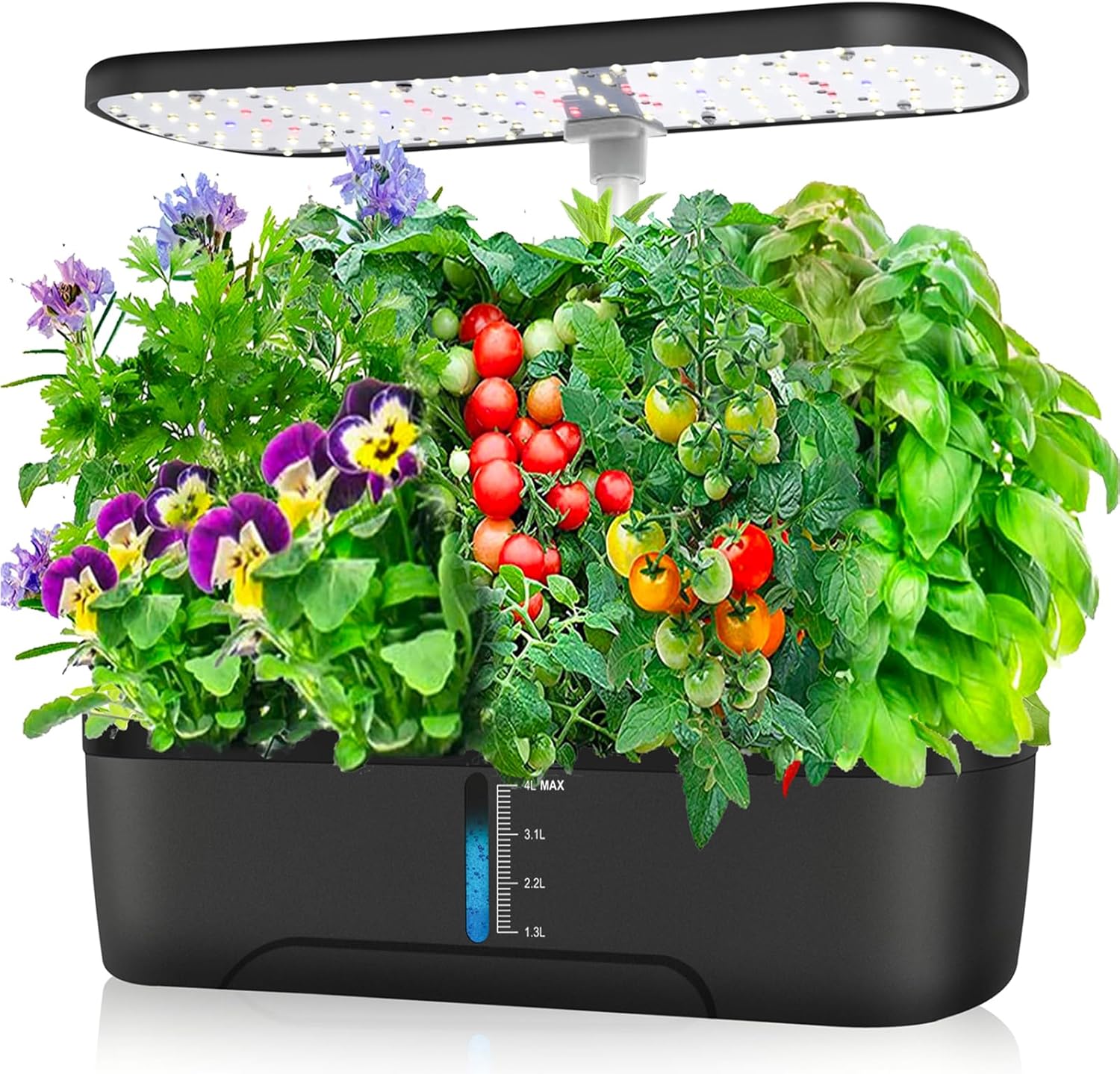 Hydroponics Growing System, Indoor Herb Garden, 12 Pods ...
12-pod hydroponic system with 20W LED and adjustable height, grows herbs 3x faster than soil year-round
Check Price on Amazon
🌱
Best for Beginners
Hydroponics Growing System, Indoor Herb Garden, 12 Pods ...
12-pod hydroponic system with 20W LED and adjustable height, grows herbs 3x faster than soil year-round
Check Price on Amazon
Hydroponics Growing System, Indoor Herb Garden, 12 Pods ...
12-pod hydroponic system with 20W LED and adjustable height, grows herbs 3x faster than soil year-round
Check Price on Amazon
🌱
Best for Beginners
Hydroponics Growing System, Indoor Herb Garden, 12 Pods ...
12-pod hydroponic system with 20W LED and adjustable height, grows herbs 3x faster than soil year-round
Check Price on AmazonSeed vs Cutting: Don’t Start From Seed
Mint from seed is slow. That’s 10-15 days just to germinate at 70-75°F, and peppermint in particular tends to take forever. The common experience is nurturing a single tiny peppermint sprout for two months before it finally decides to grow. That’s not a great return on time for something you want for your mojitos.
Start from a cutting instead. This spring, if you’re picking up fresh mint at a farmers market or grabbing a bunch from the grocery store, you already have your starter plant. Here’s what you do:
Take a 4-6 inch stem, strip the lower leaves, and set it in a glass of water on your counter. Roots appear in 7-10 days. Then drop it into a pod basket with a grow sponge or a small piece of rockwool, and it’ll be harvestable in 3-4 weeks. Total cost: whatever the bunch of mint cost you, probably $2-3.
The seed pods aren’t worthless, they’re convenient if you want everything in one kit. The HiHOYA herb pod kit check current price includes mint along with basil, thyme, chive, oregano, and Italian parsley, six varieties across 8 sponges. But if mint is your main goal, the cutting route gets you there faster and cheaper. The HiHOYA kit sits at 3.8 stars from 364 reviews, and the common complaints are specific: buyers sometimes receive completely wrong seed varieties, butter head lettuce instead of the romaine and spinach listed. The seeds also sometimes aren’t seated in the sponges. For a one-off kit purchase that’s annoying enough to matter.
Hydroponics Growing System, Indoor Herb Garden, 12 Pods ...
12-pod hydroponic system with 20W LED and adjustable height, grows herbs 3x faster than soil year-round
~$58.99
 Hydroponic Herb Growing Kit, Fresh Mint Seed Starter Set ...
Single-pod hydroponic herb kit with wick-fed watering system, ideal for growing mint indoors with minimal maintenance
~$30.99
Hydroponic Herb Growing Kit, Fresh Mint Seed Starter Set ...
Single-pod hydroponic herb kit with wick-fed watering system, ideal for growing mint indoors with minimal maintenance
~$30.99
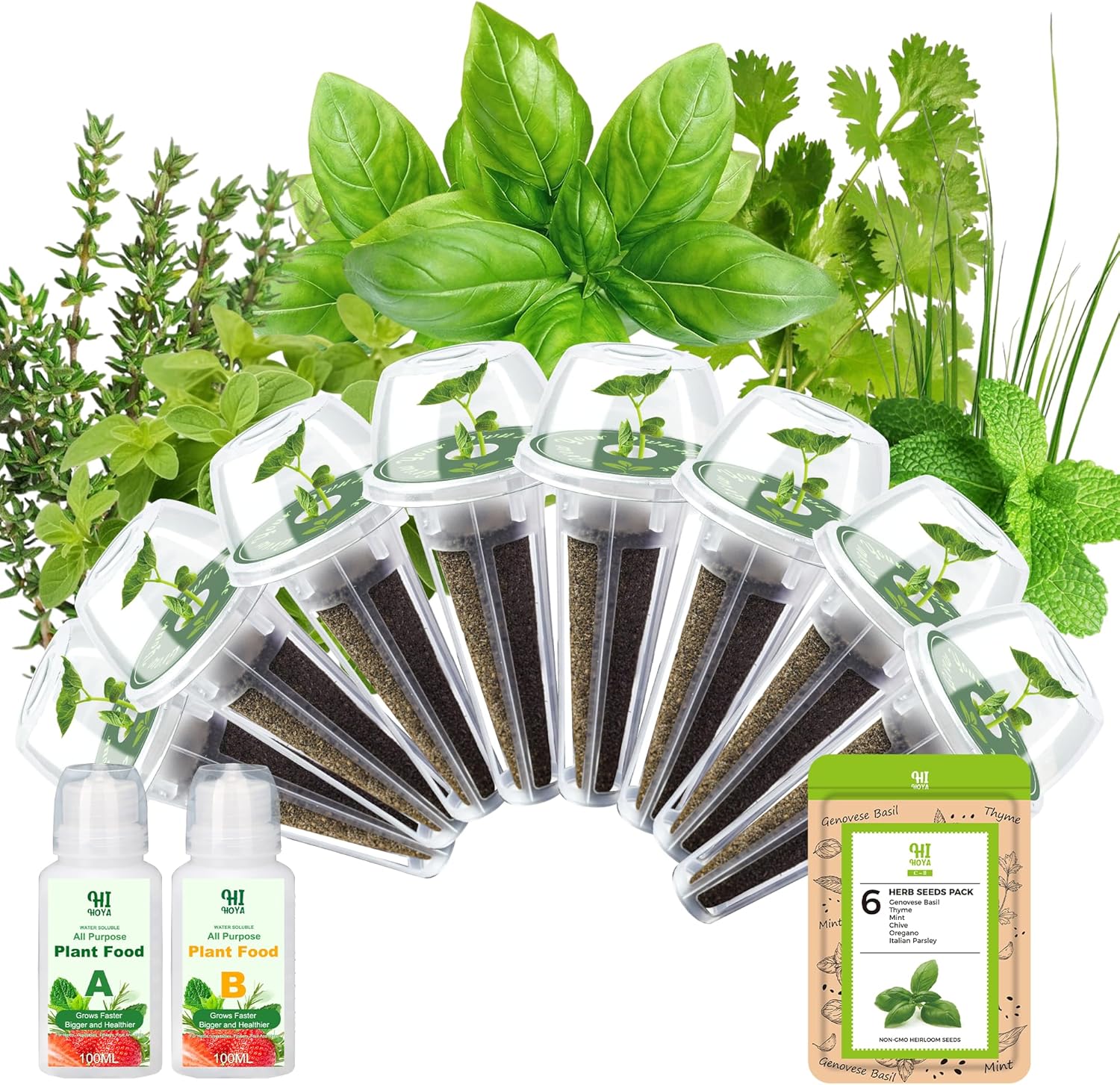 Herb Seed Pod Kit With Basil Mint Thyme Mixed, Grow ...
8-pod hydroponic herb kit with 6 varieties of non-GMO seeds and nutrient solution, ideal for year-round indoor herb growing
~$13.99
Herb Seed Pod Kit With Basil Mint Thyme Mixed, Grow ...
8-pod hydroponic herb kit with 6 varieties of non-GMO seeds and nutrient solution, ideal for year-round indoor herb growing
~$13.99
 Tea Herb Seed Pod Kit for AeroGarden, idoo, MUFGA ...
Seed pod kit with 7 herb varieties (350+ seeds), compatible with AeroGarden and similar systems, includes growing medium and nutrients.
Tea Herb Seed Pod Kit for AeroGarden, idoo, MUFGA ...
Seed pod kit with 7 herb varieties (350+ seeds), compatible with AeroGarden and similar systems, includes growing medium and nutrients.
For seed starting in a pod system, mint seeds need warmth, under 70°F and germination gets patchy. Give them at least two full weeks before deciding something failed. If three or more sprout in one pod, thin to one. They don’t share well.
Which Variety to Choose
This matters more than most guides acknowledge, because the three main varieties behave differently in the 10-20 inch height constraint of a countertop system.
Spearmint is the compact one. Milder flavor, works well for cooking, lamb, salads, grain bowls, the kind of stuff where you want mint flavor without peppermint’s intensity. It stays manageable and doesn’t race to the light panel as fast.
Peppermint runs taller and leggier. Strong flavor, excellent for teas and cocktails. But in a 6-pod AeroGarden Harvest with 12 inches of grow height, it’ll be pushing the light panel within 5-6 weeks. You’ll be harvesting constantly to keep it below the bar, which isn’t the worst problem to have, but it’s something to know going in. The common pattern with peppermint in a compact system is it touching the light panel around day 40 and needing a full base harvest before it can continue.
Chocolate mint is the tidiest. Slowest of the three, which in this case is a feature, it stays compact longer and fits better in a mixed pod situation if you’re determined to try it with other herbs despite my earlier warning.
For a countertop system, spearmint is my default recommendation. Peppermint if you’re a tea person and willing to harvest aggressively.
For tea-specific mixes, the Tea Herb Seed Pod Kit see on Amazon is worth a look, it’s designed for AeroGarden, iDOO, and Mufga systems and includes mint along with borage, dandelion, and liquorice root. It only has 6 reviews and a 3.5-star rating, and the common failure mode is zero germination on some pods, so go in with calibrated expectations.
The Nutrient Conflict in Shared Tanks
The real problem with mixing mint and basil is EC: they want completely different levels.
Mint does best at EC 2.0-2.4. Basil and most other herbs top out around EC 0.7-1.6 before you start seeing tip burn. Pod systems running standard herb nutrients land at roughly EC 0.7-1.2 out of the box.
That’s fine for basil. For mint, it means slow, underwhelming growth.
If you bump nutrients to satisfy the mint, your basil gets stressed. You can’t optimize both in the same reservoir. The practical answer is dedicated pods, mint on its own, dialed into higher EC, or mint on one end of a 12-pod with buffer pods and a separate understanding that you’re compromising on something.
If you’re running an AeroGarden and considering swapping to a third-party nutrient formula anyway, I covered the cost and performance tradeoffs in my post on AeroGarden nutrient alternatives . Short version: for mint specifically, a nitrogen-forward vegetative formula at slightly higher concentration than the AeroGarden default is what you want.
Mint doesn’t need bloom nutrients. Ever. Don’t switch it to flower mode on a shared system just because another plant wants more phosphorus.
Light, Temperature, and the Low-Maintenance Reality
Mint actually doesn’t need intense light. This is one of the few countertop crops where the standard built-in LED is enough. Run it at 14-16 hours and it’ll be happy. My post on grow light schedules for hydroponic herb gardens covers why default AeroGarden schedules are often set 2-3 hours too high for herbs, and that applies to mint too.
Cooler temperatures (55-70°F) actually produce stronger-flavored mint. Warmer conditions grow faster but the flavor gets watery. If your kitchen runs warm in summer, your mint will look healthy but taste like not much.
pH is forgiving, 5.5-6.0 is the sweet spot, but mint tolerates up to 6.5-7.0 without obvious problems. If you’re using AeroGarden’s liquid nutrients with their built-in pH buffer, you probably don’t need to think about this. The pH meter question for countertop gardens is one I’ve written about in detail, for mint specifically, it’s less critical than it is for strawberries or tomatoes.
How to Harvest So It Keeps Growing
Cut from the top, above a leaf node. Every cut creates two new branches from that node, so your harvesting strategy directly determines how bushy or leggy the plant becomes.
Leave at least 3 inches of growth with leaves at the base. That’s not a suggestion. Cut below the leaves and the plant can’t photosynthesize enough to recover, I’ve seen growers wipe out a perfectly healthy mint plant by taking too much in one go.
The right cadence is little and often. Pinch the top inch or two every week or so rather than waiting for the plant to get enormous and then taking a lot at once. That’s what keeps mint in the productive phase for months. I wrote more about this general approach in my post on growing basil hydroponically indoors , the mechanics are the same.
And if you’re tempted to skip a week of harvesting because the plant looks fine, don’t. Mint that’s allowed to run unchecked for even two weeks can outgrow its space and start causing the exact light-blocking and root-spreading problems described earlier.
But if you do fall behind on harvesting and find the plant has gotten away from you, don’t panic. A hard cut back to 3-4 inches above the base will reset it, and mint recovers from aggressive pruning faster than almost any other herb in a hydroponic system.
This article is part of my Growing Herbs Hydroponically: Complete Guide , a complete resource for countertop hydroponic growing.
Frequently Asked Questions
Can I grow mint with other herbs in the same pod garden?
Technically yes. Practically, no. Mint roots are aggressive, they thread through neighboring pod baskets, rob nutrients, and in pump-based systems will eventually find the water sensor and cause false “full” readings. If you have a 12-pod system, you can isolate mint to one corner with empty pod slots as a buffer, but it’s a management headache. A dedicated system or a standalone kratky jar is a cleaner solution.
How long does hydroponic mint take to grow?
From seed: germination takes 10-15 days, first harvest around 4-6 weeks. From a cutting: roots in 7-10 days, harvestable in 3-4 weeks. The cutting route is faster by at least two weeks and almost always more reliable.
Is it better to grow mint from seed or from a cutting?
Cutting, every time. Mint seeds are tiny and slow, peppermint especially. A cutting from a grocery store bunch costs next to nothing, roots quickly in plain water, and produces a harvestable plant in under a month. Seed pods are convenient for variety kits but not the best choice if mint is your actual goal.
What’s the difference between spearmint and peppermint in a countertop garden?
Spearmint is milder and stays compact longer, better for cooking (lamb, salads, grain dishes). Peppermint is more intense, grows faster and taller, and suits teas and cocktails. In a system with 12-15 inches of grow height, peppermint will need more aggressive harvesting to stay under the light panel. Spearmint is easier to manage.
Why is my hydroponic mint growing so slowly?
Three likely causes: temperature is too warm (above 75°F slows many herbs and dilutes flavor), EC is too low (standard pod system nutrients land at EC 0.7-1.2, mint prefers 2.0-2.4), or you started from seed and are just in the slow early phase. Cuttings almost always outperform seeds in terms of early growth rate.
Do I need special nutrients for mint in a pod-based system?
No, but standard pod system nutrient levels are lower than what mint ideally wants. Mint prefers EC 2.0-2.4, higher than basil and most herb blends. If you’re running AeroGarden branded nutrients at default dosing, your mint will grow but won’t be as vigorous as it could be. A nitrogen-forward veg formula at slightly higher concentration is the upgrade worth making if mint is your main crop.
How do I harvest hydroponic mint so it keeps growing back?
Cut above a leaf node and always leave at least 3 inches of leafy growth at the base. Frequent small harvests (weekly pinching) produce better long-term yields than waiting and cutting a lot at once. The “cut above a node” rule applies to every harvest, don’t cut below the leaves or the plant won’t recover.
Can I use a grocery store mint bunch to start hydroponic mint?
Yes, and this is the best way to start. Take a 4-6 inch stem, remove the lower leaves, and stand it in a glass of water for 7-10 days until you see roots. Then transfer it into a pod basket with a grow sponge and place it in your system. The Environet mint starter kit check price on Amazon is an option if you want a packaged setup, but a $2 bunch from the grocery store works just as well and you skip the seed germination wait entirely.
Hydroponic Herb Growing Kit, Fresh Mint Seed Starter Set ...
Single-pod hydroponic herb kit with wick-fed watering system, ideal for growing mint indoors with minimal maintenance
Check Price on AmazonMint is a low-drama crop once it’s in a system designed for it. The growers who have bad experiences with it almost always made the same mistake: they mixed it with basil or cilantro, let the roots run wild, and then spent an afternoon cleaning up the mess. But keep it isolated, harvest it often, and it’ll run for months without much attention. That’s a good deal for an herb that costs $3 a bunch at the grocery store.