
Branded seed pods for countertop hydroponic systems are a quiet tax nobody talks about upfront. If you’re searching for hydroponic replacement seed pods for AeroGarden iDOO LetPot and similar systems, the price gap between branded and third-party options is significant. A six-pod AeroGarden herb kit runs $13.95 to $21.95, which works out to roughly $1.55 to $3.65 per germinated seed. If you’re replanting four times a year, you’re spending $55 to $90 annually on small compressed peat cylinders and some basil seeds. That math gets worse fast.
The good news is that the actual growing medium, what growers on the forums affectionately call “cat turds,” costs almost nothing when bought separately. Generic peat sponges run about $0.10 to $0.20 each in bulk. Rockwool cubes cut from a slab come in at $0.03 each. The basket, dome, and label add maybe $0.30 to $0.40 on top. Your total cost per pod slot drops to under $0.60, often much less, and you choose your own seeds.
Quick Answer: Third-party peat sponges work in AeroGarden, iDOO, LetPot, and most other countertop hydroponic systems, with one catch. AeroGarden uses round, tapered sponges; iDOO and Ahopegarden use square pod slots. Buy the right shape for your system and you’ll pay $0.10 to $0.60 per pod instead of $1.55 to $3.65 for branded kits. For AeroGarden, the Haligo 128-piece kit buy on Amazon is a solid budget option. For LetPot and iDOO, the LetPot 172-piece kit check current price explicitly covers both.
 128 pcs Seed Pod Kit for Aerogarden, Grow Anything ...
128-piece seed pod kit with nutrients and supplies for hydroponic systems, ideal for growing herbs, vegetables, and flowers year-round
~$15.91
128 pcs Seed Pod Kit for Aerogarden, Grow Anything ...
128-piece seed pod kit with nutrients and supplies for hydroponic systems, ideal for growing herbs, vegetables, and flowers year-round
~$15.91
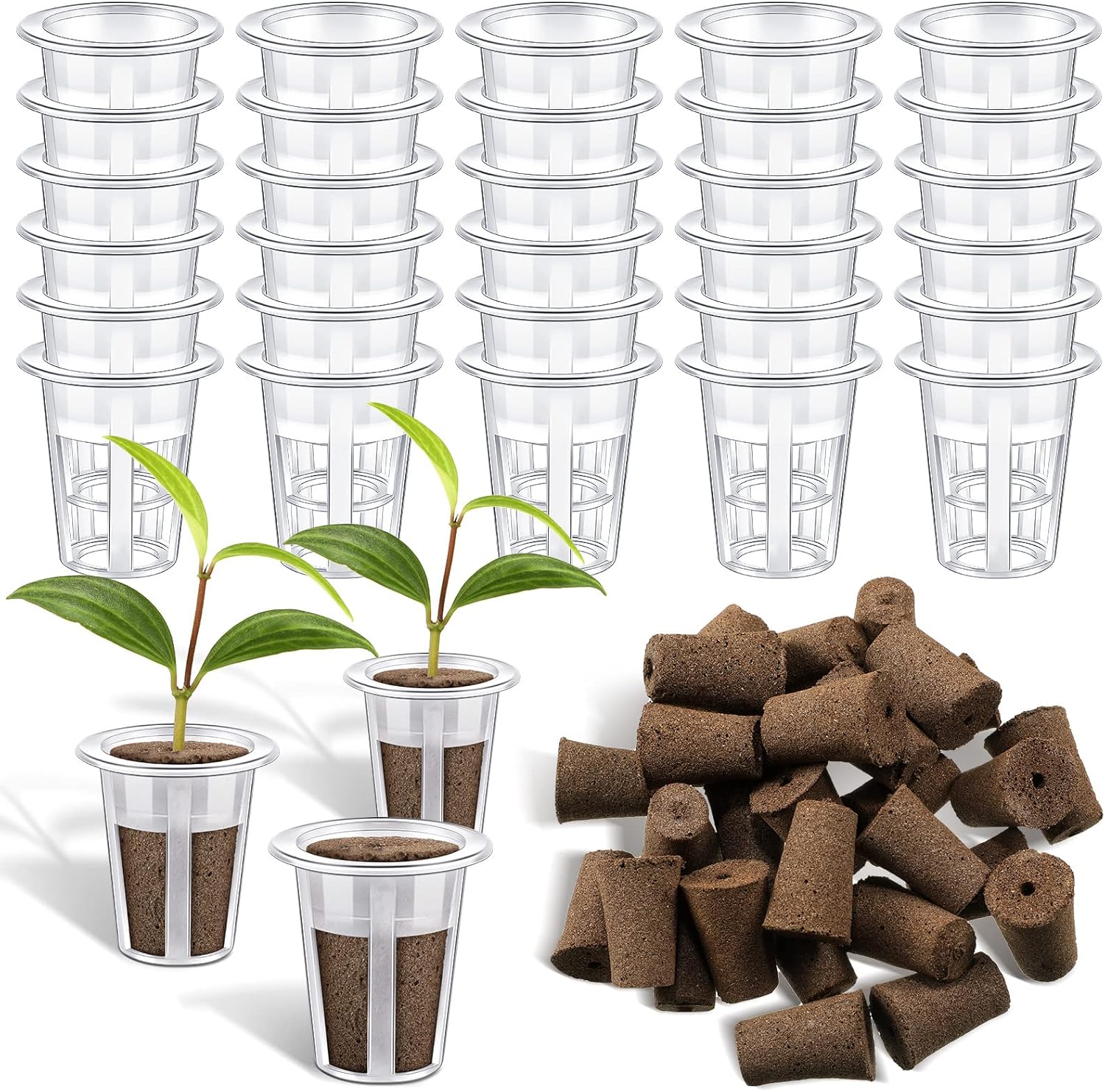 Jutom 60 Pieces Hydroponic Seed Grow Sponges Pod Kit for Indoor ...
60-piece seed pod kit with 30 sponges and 30 baskets, ideal for starting seeds in hydroponic systems for herbs, vegetables, and flowers
~$17.99
Jutom 60 Pieces Hydroponic Seed Grow Sponges Pod Kit for Indoor ...
60-piece seed pod kit with 30 sponges and 30 baskets, ideal for starting seeds in hydroponic systems for herbs, vegetables, and flowers
~$17.99
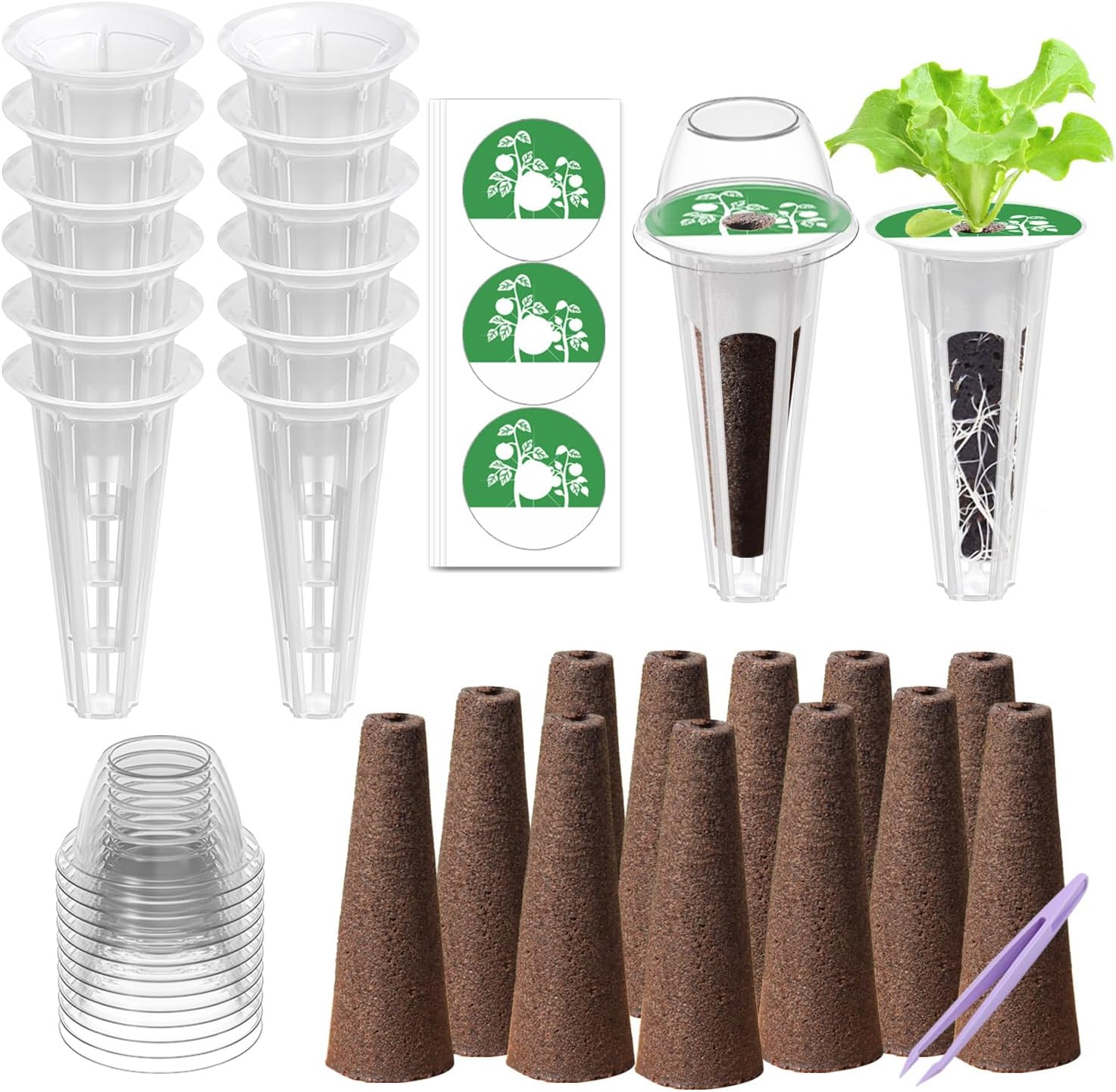 Seed Pod Kit Compatible with Aero Garden Ahope ...
12-pod hydroponic kit with peat sponges and baskets compatible with AeroGarden, ideal for seed germination and growing herbs indoors
~$8.99
Seed Pod Kit Compatible with Aero Garden Ahope ...
12-pod hydroponic kit with peat sponges and baskets compatible with AeroGarden, ideal for seed germination and growing herbs indoors
~$8.99
 LetPot 172 Pcs Seed Pod Kits, Hydroponics Growing Sponges ...
172-piece refill kit with 60 peat sponges, 25 baskets, and nutrients, compatible with most hydroponic systems for seed starting and plant propagation.
~$26.99
LetPot 172 Pcs Seed Pod Kits, Hydroponics Growing Sponges ...
172-piece refill kit with 60 peat sponges, 25 baskets, and nutrients, compatible with most hydroponic systems for seed starting and plant propagation.
~$26.99
Why the Shape Thing Actually Matters
Most pod replacement guides focus entirely on AeroGarden and ignore the shape problem completely. That’s annoying if you own an iDOO or Ahopegarden system, because the pod slots aren’t the same geometry.
AeroGarden sponges are shaped like inverted cones, about 3/4 inch wide at the top, tapering to roughly 1/2 inch at the base. That taper is what holds the sponge snugly in the basket. Cylindrical knock-offs sit looser and wobble, which isn’t a plant-killer but isn’t ideal either.
iDOO, Ahopegarden, and several other Chinese-made systems use square pod slots. Round AeroGarden sponges fit into them but sit about 1/4 inch higher than flush. Plants grow fine in practice, but you’ll notice the fit immediately. Square sponges, like those in the YBB 30-Set kit see on Amazon , sit properly in these slots and are worth seeking out if you own one of those systems.
One practical implication: the round pod label stickers included with most AeroGarden-compatible kits don’t cover square holes properly. The fix is dead simple. Cut aluminum foil into small squares and wrap them around the dome base. Works better than stickers anyway at blocking light from the reservoir.
The Four-Tier Cost Breakdown
Here’s what each tier actually costs per plant slot, using components available right now:
Tier 1, Branded pre-seeded pods: $1.55 to $3.65 each, depending on the variety kit. You’re paying for the seeds, the sponge, the label, the dome, and the AeroGarden markup. The seeds are usually fine but not special. You have zero control over variety selection.
Tier 2, Branded “Grow Anything” kits: About $1.48 per plant when broken down (basket at $0.36, sponge at $0.40, label at $0.36, dome at $0.36). These are the AeroGarden-official blank kits that were unavailable for much of 2024 after the brand went through a shutdown. AeroGarden relaunched in Spring 2025 under new ownership and these kits are available again, so ignore any guide still showing a “sold out” notice.
Tier 3, Third-party complete kits: Roughly $0.59 per plant. The Haligo 128-piece kit at around $15.91 gives you 50 sponges, 12 baskets, domes, labels, and two bottles of A/B plant food. The per-sponge math works out well once you account for the accessories included. The DRYADES 12-pod kit check price on Amazon runs about $8.99 for a smaller quantity but includes everything for a single-cycle fill. For LetPot-specific systems or cross-brand compatibility, the LetPot 172-piece kit covers iDOO and AeroGarden explicitly and includes 60 sponges, 25 baskets, 25 domes, 60 stickers, and two A/B nutrient bottles for around $26.99.
Tier 4, Bulk sponge-only DIY: $0.10 to $0.20 per sponge, no accessories. A bag of 50 generic peat sponges runs about $5 on Amazon. Add your own seeds, reuse your existing baskets and domes, and you’re in the $0.15 range per plant. If you want to go further, a Grodan Big Mama 8x8x8 rockwool cube cuts into 512 individual 1-inch cubes at about $0.03 each. I do this with my own setup, I’ve written about the rockwool vs grow sponges tradeoffs in more detail, but the short version is that rockwool wins on cost and root quality, peat sponges win on convenience.
The math over a year is striking. Four growing cycles in a 6-pod system costs $37 to $88 in branded pods, or $3 to $14 in bulk sponges plus seeds. Even if you spend $15 on a decent seed assortment, you’re saving $20 to $70 annually on a small-scale setup.
But the savings only materialize if you buy the right sponge format for your system and prep it correctly, which is where most people quietly fail and blame the third-party product.
Compatibility Table: What Fits Where
| System | Pod Slot Shape | Sponge Shape Needed | Round AeroGarden Fit | Notes |
|---|---|---|---|---|
| AeroGarden Harvest / Bounty | Round, tapered | Inverted cone | Yes (native) | Cylinder sponges fit loose |
| iDOO 12-Pod | Square | Square preferred | Sits ~1/4" high | Round works, just not flush |
| LetPot LPH-SE / Max / Air | Round | Round | Yes | LetPot’s own kit confirmed compatible |
| Ahopegarden | Square | Square preferred | Round fits loose | Foil labels needed for coverage |
| Click & Grow | Round | Round | Round sponges fit | Different basket diameter, check fit |
The Jutom 60-piece kit available on Amazon is worth knowing about for iDOO owners specifically. The baskets measure 1.5 x 1.6 x 0.8 inches, which fits square-slot systems well, and the sponge dimensions after soaking come out to about 1 x 1.4 x 0.7 inches, a compact form factor that tends to work with smaller square pod slots. The common complaint is that the sponges dry out fast if water level drops, keep your reservoir adequately filled and it’s not really a problem.
How to Actually Prep and Plant Third-Party Sponges
Dry sponges are the single most common cause of failed germination with third-party pods. A sponge that isn’t fully saturated before seeding will wick moisture away from the seed instead of toward it.
Soak them. At minimum, 30 minutes in water. Better is overnight. Some growers go further and microwave the sponges submerged in water until steaming, then let them cool completely before adding seeds. That sterilizes any mold spores before they can establish, peat sponges can harbor spores that love the warm, humid environment under a grow light. It’s worth the extra five minutes, especially with third-party sponges where quality control isn’t consistent.
Seed count: 2 to 3 seeds per pod. Once the first true leaves appear (not the cotyledons, the second set), thin to the strongest seedling. For larger seeds like beans or peas, 1 to 2 is enough. Tiny seeds with uncertain germination get 3 as a safety net.
Don’t fill the reservoir to normal operating level immediately after seeding. Keep the sponge moist from above for the first few days. Once germination happens and roots start reaching for water, then fill normally. This prevents seeds from sitting in standing water before they’ve anchored.
And if a sponge never germinates, don’t automatically throw it away. A quick boil to sterilize, a dry-out, and a second seed attempt is worth trying. It works often enough that experienced growers keep them.
So if your third-party sponges have been underperforming, prep is almost always the culprit before the sponge itself is.
A Note on Canada
If you’re in Canada, this matters: peat-based grow sponges have import restrictions in some provinces, worth checking current rules if you’re ordering cross-border, because availability varies and some listings simply don’t ship there. Rockwool cubes and Oasis horticubes don’t have the same issue. If you’re in Canada and hitting a wall on peat sponge sourcing, pivot to rockwool. The prep is slightly more involved (you have to soak rockwool in pH-adjusted water before use, around pH 5.5 to 5.8, to neutralize its naturally alkaline state), but it outperforms peat on root development. More on that in my rockwool vs sponges comparison .
Seeds: Where to Actually Source Varieties That Fit
Standard grocery-store herb and tomato seed packets work fine. But if you’re growing fruiting plants in a countertop system, variety selection matters more than most guides admit. Cherry tomatoes from a standard seed packet will outgrow your light hood fast. Micro-dwarf tomato varieties (Tiny Totem, Pinocchio Orange, Sweet Louis) stay compact enough for countertop setups and are available from specialty sellers on Etsy. They’re not cheap at $3 to $5 per packet, but they’re the difference between a plant that fits your space and one that takes over your counter.
For the cost-per-pod math to actually work , you want seeds from any decent garden supplier at $2 to $5 per packet of 50 to 100 seeds. That brings your all-in per-pod cost down under $0.25 easily when you’re using bulk sponges.
🏆 Best Value Overall
LetPot 172 Pcs Seed Pod Kits, Hydroponics Growing Sponges ...
172-piece refill kit with 60 peat sponges, 25 baskets, and nutrients, compatible with most hydroponic systems for seed starting and plant propagation.
Check Price on AmazonThis article is part of my Hydroponic Seeds & Pods: Complete Guide , a complete resource for countertop hydroponic growing.
Frequently Asked Questions
Do third-party sponges work in AeroGarden?
Yes. Third-party peat sponges work in AeroGarden systems, and the germination rates are comparable to branded pods when the sponge is properly soaked before seeding. The shape matters: look for tapered cone-shaped sponges rather than straight cylinders, which sit loose in AeroGarden baskets. Quality control varies across brands, so buying sponges that have actual buyer reviews mentioning germination success (not just “fits well”) is worth doing before committing to a large bag.
Are AeroGarden pods compatible with iDOO or LetPot?
AeroGarden cone sponges physically fit iDOO pod slots, they just sit about 1/4 inch higher than flush because the slots are square and the sponges are round. Plants grow fine. LetPot’s own 172-piece kit is explicitly designed to fit both AeroGarden and iDOO pod holes, making it the easiest cross-brand option if you own multiple systems.
How many seeds should you put in a hydroponic pod sponge?
Two to three seeds per pod is the standard approach. Thin to the strongest seedling once it shows its first true leaves. Large seeds like peas only need one or two. Very small seeds with unpredictable germination, like some herb varieties, do fine with three as a safety net, you’re not wasting seeds if two of them germinate, you just remove the weaker one early.
Can you reuse hydroponic grow sponges?
Baskets and domes, yes. Wash them with warm soapy water between cycles, rinse well, and they last indefinitely. Sponges themselves shouldn’t be reused once roots are established, they tangle into the fibers and the sponge structure breaks down after one grow. The exception is a sponge where the seed never germinated at all. Boil it to sterilize, let it dry, and it’s viable for another attempt.
What is the cheapest growing medium for a countertop hydroponic garden?
Rockwool wins on pure cost. A Grodan Big Mama slab runs about $16 on eBay and cuts into 512 one-inch cubes at roughly $0.03 each with a bread knife. Oasis horticubes come in at about $0.05 each. Generic peat sponges are $0.10 to $0.20. AeroGarden-branded sponges are around $0.40 each. Rockwool requires pH pre-treatment and protective gear during cutting (the fibers irritate skin, eyes, and lungs), but the cost-per-germination is hard to beat if you’re running a lot of pods.
What can I use instead of AeroGarden pod labels to prevent algae?
Aluminum foil. Cut small squares, wrap them around the base of the dome where it meets the pod hole, and you’ve blocked the light path into the reservoir. This works better than most sticker labels anyway, and it’s the go-to fix for square-slot systems like iDOO and Ahopegarden where round stickers leave gaps. Algae in the reservoir almost always traces back to a light leak at the pod, so blocking it properly matters. I’ve written about algae prevention in more detail in the green water article if that problem already has a foothold.
Do you need to soak grow sponges before planting seeds?
Yes. At minimum, 30 minutes in water. A dry or only partially saturated sponge will pull moisture away from the seed rather than supporting it. Some growers microwave sponges submerged in water until they’re steaming, let them cool fully, then seed. That sterilizes any mold spores before they can establish under grow lights. It takes five minutes and is worth it, especially with third-party sponges where freshness and storage conditions are unknown.