
Official AeroGarden seed pods cost about $1.48 each when you break down the math. The sponge itself accounts for roughly $0.40 of that. Third-party peat sponges on Amazon run $0.15 to $0.20 each in bulk packs. If you’re running a 6-pod system through four grow cycles a year, that gap adds up to somewhere around $28 saved annually just on sponges, before you factor in the baskets and domes you can reuse. Over two years, it’s real money on a purchase that’s supposed to be the cheap part of indoor growing.
The problem is that nobody has actually compared the specific brands available on Amazon in a proper third party grow sponges AeroGarden iDOO LetPot review. Everybody says “third-party sponges work fine,” and nobody says which ones, how they fit, or what breaks down between orders. That’s what this is.
Quick Answer: Growell buy on Amazon and URUQ check current price are the two most consistent options for AeroGarden and iDOO users. Growell is the better bulk buy for AeroGarden if you can live with prying the sticker off carefully. URUQ makes sense when you need a full restock of baskets and domes at the same time. Hapxalie see on Amazon has a sizing consistency problem between batches that makes it hard to recommend unless you’ve confirmed a good batch. The DRYADES kit check price on Amazon is fine but the included tweezers are useless.
 Growell Grow Sponges, 120 Pack Hydroponic Pods ...
Pack of 120 hydroponic seed pods compatible with AeroGarden and similar systems, ideal for germinating herbs, greens, and flowers.
~$19.99
Growell Grow Sponges, 120 Pack Hydroponic Pods ...
Pack of 120 hydroponic seed pods compatible with AeroGarden and similar systems, ideal for germinating herbs, greens, and flowers.
~$19.99
 Hapxalie 150 Pack Grow Sponges for Hydroponics ...
150-pack peat-based grow sponges compatible with AeroGarden and hydroponic systems, ideal for germinating seeds of herbs, vegetables, and flowers indoors year-round
~$22.99
Hapxalie 150 Pack Grow Sponges for Hydroponics ...
150-pack peat-based grow sponges compatible with AeroGarden and hydroponic systems, ideal for germinating seeds of herbs, vegetables, and flowers indoors year-round
~$22.99
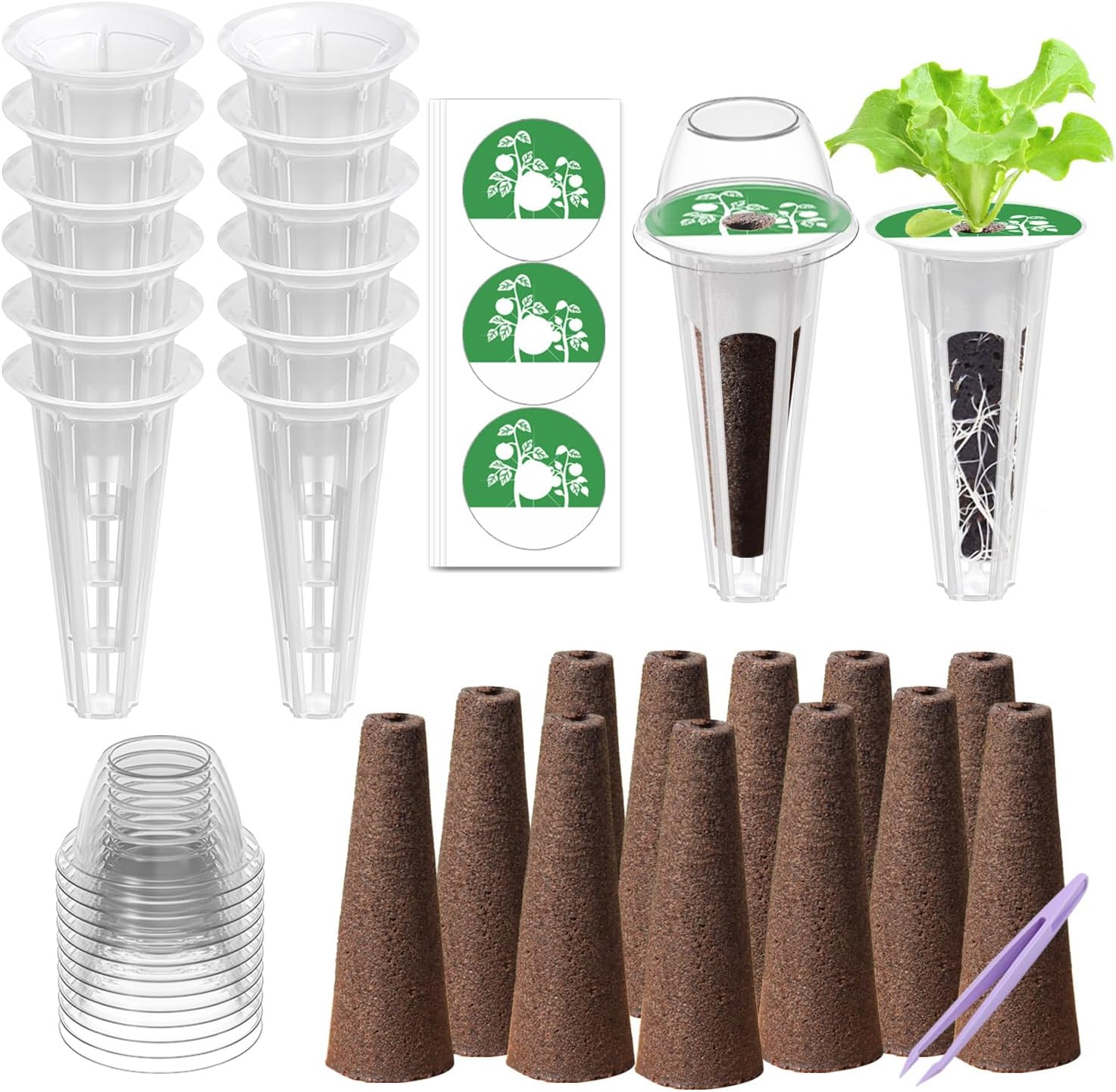 Seed Pod Kit Compatible with Aero Garden Ahope ...
12-pod hydroponic kit with peat sponges and baskets compatible with AeroGarden, ideal for seed germination and growing herbs indoors
~$8.99
Seed Pod Kit Compatible with Aero Garden Ahope ...
12-pod hydroponic kit with peat sponges and baskets compatible with AeroGarden, ideal for seed germination and growing herbs indoors
~$8.99
 URUQ 140Pcs Hydroponic Pods Supplies: Compatible ...
140-piece pod kit with growing sponges, baskets, and domes for indoor hydroponic systems, compatible with multiple brands
~$12.69
URUQ 140Pcs Hydroponic Pods Supplies: Compatible ...
140-piece pod kit with growing sponges, baskets, and domes for indoor hydroponic systems, compatible with multiple brands
~$12.69
What Actually Varies Between Sponge Brands
Before getting into brand specifics, this matters: AeroGarden uses a tapered cone sponge shape, roughly 3/4 inch wide at the top tapering to about 1/2 inch at the bottom, designed to wedge snugly into a circular pod hole. iDOO uses square pod slots. LetPot uses round holes at 0.79 inches in diameter. Most Amazon brands don’t disclose which format they’re shipping, and a handful of listings claim compatibility with all three systems without specifying what shape they actually are.
The practical outcome is that a sponge that fits beautifully in an AeroGarden Harvest can sit loose in an iDOO slot and vice versa. Loose sponges let light into the reservoir, and light in the reservoir means algae. I’ve written about algae prevention before if that’s already your problem .
Beyond shape, the differences that actually matter in practice are:
Density and feel. OEM AeroGarden sponges are softer and more porous than most Amazon alternatives. The third-party versions tend to be denser, which affects how the roots push through them. Not a dealbreaker, but you’ll notice it when you pull a finished plant and see how much the roots had to work.
Seed hole depth. This varies wildly between brands and almost nobody documents it. The seed sits in a small hole at the top of the sponge. Too shallow and seeds fall out or dry out before they germinate. Too deep and small seeds get buried. If you’re planting basil or cilantro, which have tiny seeds, a shallow hole is actually better.
Algae coverage. OEM pods come with those little sticky label stickers that block light from entering the pod hole. Third-party sponges typically include stickers too, but the adhesive quality varies. More on this below.
Brand-by-Brand Breakdown
Growell 120-Pack
At roughly $19.99 for 120 sponges, Growell works out to about $0.17 each. Post-soak dimensions are 0.9 inches in diameter and 2.58 inches tall, which is close to AeroGarden spec but slightly narrower than the original. In AeroGarden systems the fit is snug enough to hold position and block most light. The germination rate is solid, the peat material feels right, and the build holds together better than some cheaper options I’ve seen crack apart when wet.
The one real complaint, and it keeps coming up, is the sticker adhesive. It’s strong. Too strong. People have reported pulling the sticker off their AeroGarden lid and tearing the label or damaging seedlings that had grown into it. The sponge itself is good. The sticker is a problem if you’re not careful. Peel slowly from the edge.
At 120 pieces this is a volume buy, so if you’re running multiple cycles a year it makes sense. Growell is a solid choice for AeroGarden users who just want a working sponge at a fraction of the OEM price.
✅ Best Bulk Sponge
Growell Grow Sponges, 120 Pack Hydroponic Pods ...
Pack of 120 hydroponic seed pods compatible with AeroGarden and similar systems, ideal for germinating herbs, greens, and flowers.
Check Price on AmazonURUQ 140-Piece Kit
The URUQ kit available on Amazon comes with 35 sponges, 35 baskets, 35 domes, 35 pod labels, and a pair of tweezers. The math: 140 pieces total for $12.69. The sponge count is lower per dollar than Growell’s bulk sponge-only packs, but the kit logic makes sense if you’re also out of baskets.
One consistent note on URUQ sponges is that they arrive dry, noticeably drier than Growell, and need a longer soak before planting. Five minutes isn’t enough. Give them 15-20 minutes submerged in room-temperature water before you drop seeds in. The pods that fail with URUQ are almost always the ones where the sponge wasn’t fully saturated. It’s not a defect so much as a step the instructions underemphasize.
The baskets are fine. Not as sturdy as OEM AeroGarden baskets, but for $0.09 per basket versus $0.36 for the branded ones, that’s the tradeoff. Growers running both URUQ and Ahopegarden systems report the fit is good across most square-slot systems.
🏆 Best Value Overall
URUQ 140Pcs Hydroponic Pods Supplies: Compatible ...
140-piece pod kit with growing sponges, baskets, and domes for indoor hydroponic systems, compatible with multiple brands
Check Price on AmazonHapxalie 150-Pack
The Hapxalie buy on Amazon listing claims post-soak dimensions of 2.56 x 1 inches, which is slightly larger than Growell’s 0.9-inch diameter. That extra width actually matters for iDOO compatibility because a wider sponge blocks more light in the pod hole.
The problem is batch inconsistency. Growers who’ve ordered Hapxalie multiple times report meaningful size variation between orders. One batch fills the pod slot tightly with no light gap; the next batch is smaller and starts the algae cycle. That’s not a minor quality control issue when algae coverage is the main functional job of the sponge. The peat material is fine, mold reports are lower than average, and the sponges themselves don’t fall apart. But if you can’t predict whether the next bag will fit the same as the last one, it’s hard to rely on it for a system you run regularly.
Grab a box, measure the sponges when they arrive soaked, and if they hit close to 1 inch across, order a few more immediately. That’s the only reliable way to use Hapxalie: treat every order as a sample run first.
✅ If Batch Checks Out
Hapxalie 150 Pack Grow Sponges for Hydroponics ...
150-pack peat-based grow sponges compatible with AeroGarden and hydroponic systems, ideal for germinating seeds of herbs, vegetables, and flowers indoors year-round
Check Price on AmazonDRYADES 12-Pod Seed Pod Kit
The DRYADES kit check current price is sold as a complete replacement kit: 12 sponges, 12 baskets, 36 pod labels, 12 plant domes. It’s $8.99, which works out fine per piece. The sponges themselves perform adequately. Plants sprout, roots develop, nothing catastrophic happens.
Two things bother me about this one. First, the kit format means you’re buying 12 sponges when Growell sells 120 for not that much more money. The economics only make sense if you’re restocking everything at once on a small 6-pod system. Second, the tweezers that come in the kit are terrible. Flimsy, bend on the first use, miss the seed hole entirely. Throw them out and use a toothpick. The tweezer complaint shows up in enough reviews that it’s clearly not a fluke.
No lids for unused pod holes is another consistent criticism. If you’re running 4 plants in a 6-pod system, you want covers for the empty spots. This kit doesn’t include them.
✅ Small-System Restock
Seed Pod Kit Compatible with Aero Garden Ahope ...
12-pod hydroponic kit with peat sponges and baskets compatible with AeroGarden, ideal for seed germination and growing herbs indoors
Check Price on AmazonThe One Germination Mistake That Kills Sponges Before They Start
This comes up constantly with new pod garden owners. Somebody gets their third-party sponges, reads the nutrient instructions, and assumes the nutrients go onto the sponge or into the water from day one. Nope.
Nutrients go into the tank water only, never onto the sponge. And during germination, the tank should have plain water. Seeds don’t need nutrients to germinate. They have their own stored energy for the first stage of growth. Adding nutrients at germination can actually burn seeds before they’ve even sprouted. The sponge absorbs what’s in the water, and a nutrient-saturated sponge on day one is harmful.
Wait until you see the first true leaves, which is the second set of leaves that look like the actual plant rather than the initial sprout pair. Then start nutrients at a low dose and ramp from there. This is why some growers think third-party sponges don’t work when actually the sponge is fine and the setup is burning the seeds.
The other thing that kills germination across all of these brands: dry sponge. Soak your sponges for at least 15-20 minutes before planting, not 5 minutes as some listings claim. Some packages arrive drier than others (URUQ especially) and a sponge that isn’t fully hydrated wicks moisture away from seeds instead of delivering it. So if you’ve had a string of failed germinations and blamed the sponge brand, check your prep steps before switching products. There’s more on beginner setup mistakes that tie into this.
If You Want to Skip Sponges Entirely: Clay Pebbles
For large-seed plants like chives, green beans, or peas, peat sponges are actually the wrong tool. The seeds are too big for the hole and too heavy to stay in place once the sponge is wet. Clay pebbles handle this better.
Clay pebbles are porous, reusable, and drain fast. They hold just enough surface moisture for roots to find water without sitting in it. Unlike perlite, they don’t float or blow around, and they don’t compact under weight. One 8-lb bag runs about $20 and lasts indefinitely because you can sterilize with dilute hydrogen peroxide between crops and reuse them for years.
The tradeoff is that clay pebbles work best with net cups in a proper DWC setup or in larger baskets. They’re less convenient in AeroGarden’s small 1.25-inch baskets. But if you’re growing anything with a seed bigger than a sesame seed and you’ve been frustrated with sponge germination rates, clay pebbles are worth trying before you blame the seeds.
More on this and other media options in my grow sponges vs rockwool vs horticubes comparison if you want the detailed breakdown.
System Compatibility at a Glance
AeroGarden (round tapered cone slots): Growell fits well. URUQ and Hapxalie work when the batch is sized right. DRYADES kit is listed as round-compatible but check the dimensions on the specific listing before buying.
iDOO (square pod slots): Square sponge format needed for a clean fit. Most round-format brands will work but will sit loose. Growell’s 0.9-inch diameter is narrow enough that it usually stays in place, but don’t expect a perfect seal.
LetPot (round holes, 0.79-inch diameter): LetPot’s own 172-piece replacement kit at $32.99 includes sponges, domes, baskets, and two nutrient bottles with dimensions specifically matched to their system. For LetPot users who want third-party sponges, look for listings that specify a 0.79-inch diameter. Most Amazon brands don’t state this, so you’re guessing from the post-soak dimensions.
If you’re mixing systems, which is common once you’ve been doing this for a year or two, it’s worth keeping one brand per system rather than trying to standardize across all of them. I went into this more in the cost-per-pod breakdown if you’re still deciding which system to run.
This article is part of my Hydroponic Seeds & Pods: Complete Guide , a complete resource for countertop hydroponic growing.
Frequently Asked Questions
Can I use any grow sponge brand in my AeroGarden or iDOO?
Sort of. The sponge shape matters more than the brand. AeroGarden uses tapered cone-shaped sponges, iDOO uses square pod slots, and LetPot uses round holes at 0.79 inches across. A sponge that fits tightly in an AeroGarden may sit loose in an iDOO. Loose fit lets in light, and light in the reservoir leads to algae. Check the post-soak dimensions listed in the product specs before buying, and know that most brands claim universal compatibility without confirming which formats they actually ship.
Should I add nutrients to grow sponges during germination?
No. Nutrients go into the tank water, not onto the sponge, and even the tank should run on plain water until seedlings show their first true leaves. Seeds don’t need nutrients to germinate. Adding them early can burn seedlings before they’ve had a chance to establish. Start nutrients at a low dose after germination and increase from there.
Are clay pebbles good for hydroponics?
Yes, particularly for larger-seed plants and reusable setups. Clay pebbles are porous and provide good drainage and aeration, which helps roots stay oxygenated without sitting in standing water. They buffer rapid drying better than perlite, don’t compact over time, and can be sterilized and reused for years. For countertop pod gardens specifically, they work best in larger baskets or net cups rather than AeroGarden’s smaller 1.25-inch pods.
Are clay pebbles better than perlite for pod systems?
For most countertop pod garden use cases, yes. Perlite floats and can end up in your pump, which is annoying. Clay pebbles stay in place, don’t degrade, and create stable air pockets around roots. And they wick water upward slightly via capillary action, which helps with moisture distribution in smaller containers.
What can I grow in a countertop hydroponic system?
Herbs and leafy greens are the most reliable crops. Basil, lettuce, cilantro, mint, and spinach all do well with standard peat sponges and a basic nutrient schedule. Strawberries and peppers are possible but need more attention to light intensity and nutrients. Tomatoes work technically, but most countertop systems don’t have the light output to drive consistent fruiting.
Do I need to buy new baskets and domes every grow cycle?
No. Baskets and domes are reusable. Only the sponge, which is the actual growing medium, needs replacing between crops. Rinse your baskets and domes, let them dry, and reuse them. This is where a lot of the cost savings come from. Buying a 120-sponge bulk pack and reusing your existing hardware is the most efficient approach for a running system.