
Rosemary is the herb most people want to grow indoors, and if you’re specifically interested in growing rosemary hydroponically indoors pod garden style, you need to know upfront: it’s the one most likely to break your confidence. The core problem isn’t light or nutrients. It’s that every countertop pod system keeps roots permanently wet, and rosemary evolved in dry, rocky Mediterranean soil where drought conditions are normal. You’re asking a plant that spent millennia developing tolerance for parched hillsides to sit in a perpetual bath. That tension explains almost every rosemary failure you’ll read about from pod garden growers.
But before you write it off: rosemary can work in a pod system. The growers who actually pull it off skip seed germination entirely. So if you’ve already burned through one or two seed attempts and gotten nothing, that’s not user error, that’s just the seed route being unreliable for this particular plant in this particular environment.
Quick Answer: Rosemary is one of the hardest herbs to grow in a pod garden because wet roots cause root rot in a plant that evolved in dry soil. Skip the seeds, root a grocery store stem in a glass of water for 2 weeks and transfer it to a pod instead. Use half-dose nutrients (EC 1.2 - 1.8), set your light to 14 - 16 hours, and raise the pod cover slightly so the stem base gets some air. Expect a productive window of 3 - 9 months before the plant goes woody. If you just want the same flavor profile with a fraction of the hassle, grow thyme.
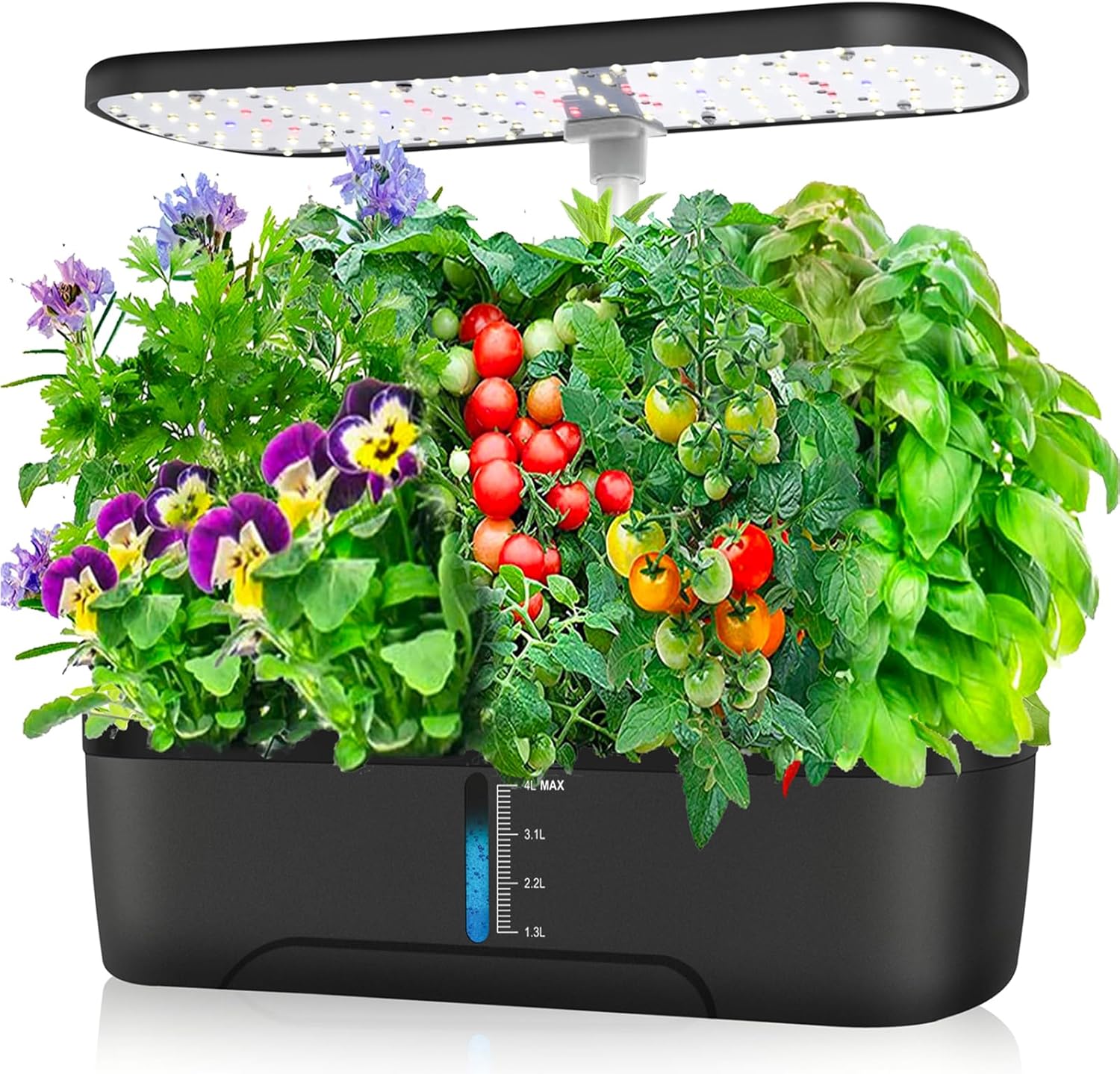 Hydroponics Growing System Kit 12 Pods Indoor Herb ...
12-pod hydroponic system with 20W LED and adjustable height, grows herbs 3x faster than soil year-round
~$58.99
Hydroponics Growing System Kit 12 Pods Indoor Herb ...
12-pod hydroponic system with 20W LED and adjustable height, grows herbs 3x faster than soil year-round
~$58.99
 LETPOT LPH-SE Hydroponics Growing System, 12 Pods ...
12-pod hydroponic system with 24W full-spectrum LED and app control, ideal for herbs and leafy greens with 3-week water capacity.
~$119.97
LETPOT LPH-SE Hydroponics Growing System, 12 Pods ...
12-pod hydroponic system with 24W full-spectrum LED and app control, ideal for herbs and leafy greens with 3-week water capacity.
~$119.97
The Wet-Root Problem Nobody Explains
Every guide about growing rosemary hydroponically indoors treats it like a water-loving herb. It’s not. Rosemary is native to southern Europe’s coastlines and hillsides, where soils drain fast and root zones dry out between rain events. The plant developed its oils and needle-like leaves partly as adaptations to that environment.
Pod gardens are deep water culture style systems. The pump cycles water through and roots sit in a constantly humid environment, sometimes directly touching standing nutrient solution. That setup is fine for basil, mint, and lettuce, which are all plants that tolerate or prefer wet feet. For rosemary, it’s a slow death. The most common failure mode isn’t that seeds don’t germinate, it’s that you wait a month, get a seedling, feel relieved, and then watch the plant decline over the following weeks from root rot you can’t see until it’s too late.
The wicking in pod sponges is specifically designed to keep media moist. That’s the opposite of what rosemary wants during its root development phase. If the pump cycles too frequently or the roots sit below the waterline too long, you’ll get brown, mushy roots that can’t deliver oxygen to the plant.
There’s a practical fix for this: raise the pod cover slightly, maybe 3-4mm, during the early growth phase. It sounds fussy but it gives the stem base brief exposure to air and slows down the wicking rate. Won’t solve everything, but it’s the kind of small mechanical adjustment that separates a surviving rosemary plant from a dead one.
Skip Seeds. Do the Cutting Trick.
This is the part nobody talks about in any rosemary hydro guide I’ve seen, and it’s the single most useful thing I can tell you.
Rosemary from seed in a pod garden takes 21 to 30 days to germinate. Frequently nothing happens at all. Some growers go three full attempts without a single sprout. The seeds are viable, the conditions look right on paper, and still nothing shows. Part of this is that rosemary seed germination is just inherently finicky even in ideal conditions. In a pod system, you’re adding the wet-root stress on top of an already slow process. And honestly, watching a $4 seed pod sit there for a month and produce nothing is irritating, especially when the marketing on the box makes it look effortless.
Cuttings change the math entirely.
Buy a fresh rosemary bunch from a grocery store or farmers market. Cut a 4-6 inch stem, strip the bottom two inches of needles, and put it in a small glass of plain water on your counter. Change the water every two days. In about two weeks, you’ll see small white root nubs forming at the base. Once those roots are an inch long or so, transfer the cutting directly into a pre-soaked pod sponge in your system.
That’s it. You’ve just eliminated the germination gamble completely. The plant already has roots, already has established tissue, and will adapt to the hydroponic environment much faster than a seedling fighting to push through a sponge. Growers who’ve figured this out have gotten rosemary to run for over a year this way, hitting a genuine productive window before the plant eventually gets woody.
The cutting method also lets you start with a variety you know tastes good, which seed kits can’t guarantee.
The Rosemary Lifecycle in a Pod System
Understanding the lifecycle saves you from giving up too early or holding on too long.
Weeks 0 - 4 (germination or rooting): If you’re using seeds, expect nothing for at least three weeks. Do not assume failure at day 14. If you’re using a cutting, roots will appear by day 10-14 in water, then transfer to the pod.
Weeks 4 - 10 (slow growth phase): Rosemary grows slowly. While your basil is throwing out new leaves every few days, rosemary will be putting out a centimeter of new growth per week if you’re lucky. This is normal. Don’t boost nutrients to accelerate it. The plant is adapting and developing root structure.
Months 3 - 9 (productive harvest window): This is the sweet spot. Rosemary has settled in, roots have established, and the plant can support regular harvests of 2-4 inch stem tips. Harvest no more than a third of the plant at a time. The first harvest actually encourages branching, so don’t be precious about it once you’re past month 3.
Month 9 onward (woody phase): Stems start to thicken and lignify. Growth slows. Flavor doesn’t disappear but harvesting gets harder as the plant focuses on woody structure rather than soft new growth. This is when most pod growers move the plant to a pot and let it mature as a perennial outdoors, which is actually a legitimate exit strategy. Start a new cutting in a pod slot while you transition the old plant out.
At 12 inches, the AeroGarden Harvest’s maximum light height becomes a genuine constraint if rosemary has been growing for 6-8 months. That’s when you’re either pruning aggressively or the plant is pressing into the hood. The LetPot LPH-SE buy on Amazon has a 30-inch adjustable light rod (see it on Amazon), which gives rosemary considerably more vertical room to develop before that becomes an issue. The 30-inch adjustable rod is the practical advantage here, rosemary at month 6 on a compact 6-pod system with a fixed 12-inch hood is either getting pruned hard or pressing into the light. That extra height matters more for slow-growing woody herbs than it does for basil.
🌿 Best for Serious Growers
LETPOT LPH-SE Hydroponics Growing System, 12 Pods ...
12-pod hydroponic system with 24W full-spectrum LED and app control, ideal for herbs and leafy greens with 3-week water capacity.
Check Price on AmazonPod System Settings for Rosemary
Most guides online are written for NFT or large DWC setups. Pod gardens are different. Here’s what actually translates.
EC: Target 1.2 - 1.8 mS/cm. That’s roughly half-dose nutrients for most systems. Rosemary is sensitive to overfeeding, and the symptom (yellow leaves, brown leaf margins) looks exactly like underfeeding, which causes people to add more nutrients and accelerate the problem. If you’re using branded nutrients from your system, one dose per fill cycle is enough. Don’t double it. For more on how small-reservoir nutrient concentration climbs fast between top-offs, I broke that down in my hydroponic nutrients piece .
pH: Keep it between 5.5 and 6.5. The midpoint (around 6.0) is a comfortable target. If you’re using AeroGarden’s buffered liquid nutrients, you’re likely already in range without intervention. Third-party nutrients will drift and need periodic checking. I wrote a whole piece on whether you actually need a pH meter for this if you want the longer answer .
Light hours: 14 - 16 hours. The 12-hour default on some systems isn’t enough. Rosemary is a Mediterranean herb and mimicking long summer days helps it push new growth. I run 14 hours for most herbs and would go up to 16 for rosemary specifically. If you’re using an AeroGarden, you can customize the timer in the menu rather than using the preset herb schedule.
Water temperature: 68 - 77°F. Rosemary doesn’t like cold roots, and many apartments run cooler in winter. Below 65°F and growth stalls.
Pump cycling: The ScienGarden 12-pod system check current price runs its pump on a 5-minutes-on, 25-minutes-off cycle (check price on Amazon), which is more rosemary-friendly than pumps that run continuously. That intermittent cycle gives roots brief air exposure between flood events, which reduces the wet-root risk somewhat. It’s not a complete solution but it’s better than constant circulation for a plant that wants dry periods.
Hydroponics Growing System Kit 12 Pods Indoor Herb ...
12-pod hydroponic system with 20W LED and adjustable height, grows herbs 3x faster than soil year-round
Check Price on AmazonPod positioning: If you’re running a mixed pod garden, put rosemary at the edge, not the center. It grows slowly and compact crops around it will shade it out within weeks. Also, mature rosemary at the edge of the system is easier to harvest without disturbing neighboring roots.
Rosemary vs. Thyme vs. Basil: The Real Comparison
Here’s the honest breakdown for anyone deciding whether rosemary is worth the effort:
Basil germinates in 7 - 10 days, tolerates wet roots well, and produces harvestable leaves within 3 - 4 weeks. It’s the easiest herb in any pod system and the benchmark everything else gets measured against.
Thyme germinates in 7 - 14 days, is dramatically more forgiving of wet roots than rosemary, and delivers harvestable sprigs within 4 - 6 weeks. Flavor-wise, thyme covers most of what rosemary does in cooking: roasted chicken, potatoes, Mediterranean dishes, slow braises. They’re not identical, but for everyday use they’re close enough that I’d ask yourself how often you specifically need rosemary versus thyme flavor.
Rosemary germinates in 21 - 30 days in pod systems, has a high germination fail rate, dislikes wet roots, and takes months to reach a productive harvest window. The flavor payoff is real but the path there is harder than any other herb you could be growing.
If you’re new to pod growing, grow thyme. Once you’ve got your system dialed in, understand your water chemistry, and have some wins behind you, then try rosemary. That’s not me being pessimistic. That’s just the correct order of operations for a plant this finicky.
The best herbs to grow in a hydroponic garden piece I wrote goes into the full ROI comparison if you’re still deciding what to put in your pods.
Pest and Disease Management
Root rot is the main disease threat, and prevention beats treatment here. Keep EC low, don’t overfill the reservoir above the base of the pod basket, and change water every 10 - 14 days. I go into full water change timing in my water change guide , the short version is that rosemary needs more frequent changes than basil because the plant is more sensitive to nutrient concentration drift.
Powdery mildew can appear on rosemary in humid conditions. Good airflow around the canopy helps. A small desk fan pointed at the plant for a few hours a day isn’t a bad idea, especially in summer kitchens. If you see white powder on the leaves, remove affected stems immediately and increase airflow before it spreads.
Spider mites occasionally go after rosemary. If you catch them early, a dilute neem oil spray (not near the nutrient reservoir) usually handles it. I’ve never had to deal with this in my pod systems specifically, but rosemary in general is more susceptible than basil.
Algae is a separate problem that hits rosemary indirectly. Slow-growing rosemary sitting in algae-laden water for weeks has a harder time establishing. Cover any exposed pod slots and reservoir openings with opaque material, especially early on. More on that at /posts/green-water-in-your-hydroponic-garden-heres-exactly-why-it-happens-and-how-to-stop-it/ .
This article is part of my Growing Herbs Hydroponically: Complete Guide , a complete resource for countertop hydroponic growing.
Frequently Asked Questions
Can rosemary be grown in an AeroGarden?
Yes, it can. The realistic expectation is a 3-4 week germination wait (or faster with cuttings), a slow growth phase, and then a productive sweet spot that can run for many months before the plant goes woody and needs replacing. The 12-inch light height on the Harvest models becomes a constraint around month 6-8 for taller plants, so aggressive pruning helps. Many growers eventually move the mature plant to a pot outdoors and start a fresh cutting in the pod slot.
How long does rosemary take to germinate in a pod garden?
Plan for 21 - 30 days. Some seeds push through at 14 days; others take longer. Different seed brands won’t change that timeline, some species just take more time, and rosemary is one of them. If you hit day 35 with no sprout, the seed almost isn’t coming. The cutting method bypasses this entirely, which is why I’d recommend it for anyone who’s already experienced one germination failure.
Why does my hydroponic rosemary keep dying?
The most common cause is root rot from permanently wet growing media. Rosemary can’t tolerate the same moisture levels that basil or lettuce handle without any issues. If you’re seeing yellowing leaves, wilting despite adequate water, or brown mushy roots when you pull the pod, overwatering (structural, from the system design) is almost always the problem. Lower your EC, raise the pod cover slightly, and ensure your pump isn’t running continuously.
Is it better to grow rosemary from seed or cuttings in hydroponics?
Cuttings. Not even close. Seeds have a high fail rate in pod systems specifically, and the 3 - 4 week wait only to get nothing is demoralizing. A grocery store rosemary stem rooted in a glass of water for 2 weeks transfers cleanly into a pod sponge and skips the entire seed germination gamble. You also get to choose a variety you know tastes good, which seed kits don’t always deliver.
What pH and EC should I use for hydroponic rosemary?
Target pH 5.5 - 6.5 and EC 1.2 - 1.8 mS/cm. The EC range is lower than most herb guides suggest because rosemary is sensitive to nutrient overload. An EC above 2.0 will burn roots and produce yellow leaves that look like a deficiency but aren’t. If your system uses branded A&B nutrients, run at half the recommended dose and measure rather than guessing. I track all my nutrient decisions on my growing data page if you want reference numbers.
Can I grow rosemary and other herbs in the same pod garden?
Yes, but manage expectations. Rosemary grows much slower than basil or mint, so fast-growing neighbors will shade it out unless you position it at the edge and harvest aggressively around it. Rosemary and thyme actually do reasonably well together since they have similar nutrient and pH preferences. Mixing rosemary with mint is a bad idea, mint’s root behavior is aggressive enough in a shared system that it’ll strangle slower-growing herbs. I went into detail on that in the mint growing piece .
Rosemary in a pod garden is achievable but it rewards growers who go in clear-eyed about what they’re signing up for. Use cuttings, keep EC low, give it more light hours than you think it needs, and don’t interpret slow growth as failure. But if you try rosemary twice and it keeps dying, plant thyme and stop punishing yourself. And remember: same meals, same kitchen smell, half the drama.