
Fair warning: affiliate links ahead. I earn a small commission on purchases, which helps keep this site running. You pay the same either way.
Nine pods versus twenty. That’s the number that makes the iDOO 20-pod look like an obvious win against the AeroGarden Bounty. More pods, lower price, taller clearance. On paper it’s not even close. But when you’re comparing the AeroGarden Bounty vs iDOO 20 pod hydroponic garden on anything beyond a spec sheet, the picture changes fast.
But pod count is the wrong metric if you’re trying to grow anything more demanding than lettuce. And once you understand why, the right choice becomes a lot clearer depending on what you actually want to grow.
Quick Answer: For herbs and leafy greens where volume matters, the iDOO 20-Pod buy on Amazon wins on capacity and cost. For fruiting plants like peppers and cherry tomatoes, the AeroGarden Bounty check current price is the better system, and it’s not close. The single-reservoir design, higher per-pod wattage, and faster germination make it the right call for anyone who wants to grow beyond salad greens.
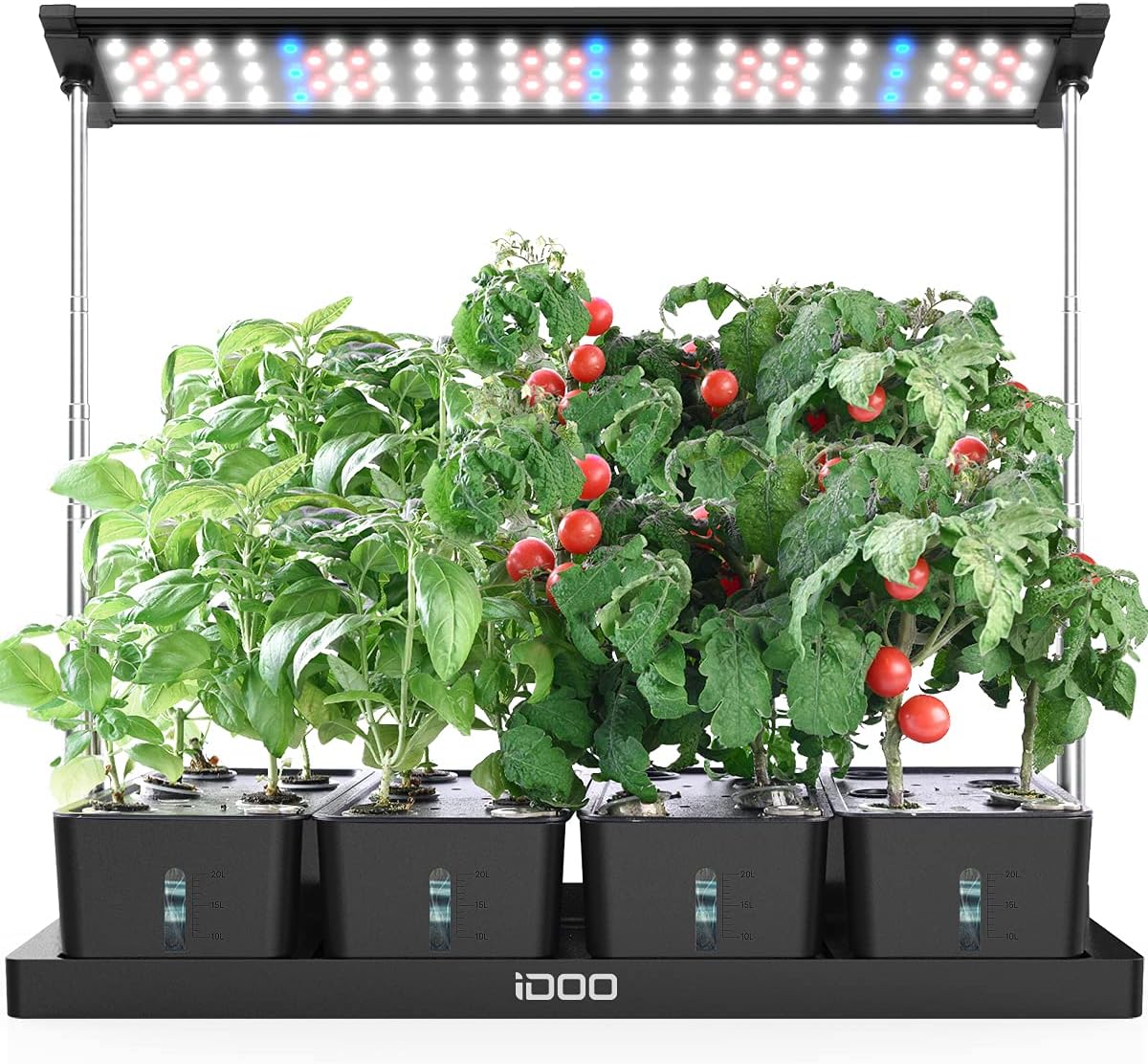 iDOO 20 Pods Indoor Herb Garden Hyrdroponics Growing System ...
20-pod hydroponic system with 34W LED light and adjustable height up to 27 inches, ideal for growing herbs and tall vegetables year-round indoors
iDOO 20 Pods Indoor Herb Garden Hyrdroponics Growing System ...
20-pod hydroponic system with 34W LED light and adjustable height up to 27 inches, ideal for growing herbs and tall vegetables year-round indoors
 AeroGarden Black Bounty Indoor Hydroponic Garden ... - Amazon.com
9-pod hydroponic system with 40W full-spectrum LED, grows vegetables and herbs 5x faster than soil, ideal for kitchen counter gardening
AeroGarden Black Bounty Indoor Hydroponic Garden ... - Amazon.com
9-pod hydroponic system with 40W full-spectrum LED, grows vegetables and herbs 5x faster than soil, ideal for kitchen counter gardening
 iDOO 20Pods Indoor Garden Hydroponics Growing System Kit with ...
20-pod hydroponics system with 34W adjustable LED and removable tanks, ideal for growing tall vegetables and leafy greens indoors year-round
iDOO 20Pods Indoor Garden Hydroponics Growing System Kit with ...
20-pod hydroponics system with 34W adjustable LED and removable tanks, ideal for growing tall vegetables and leafy greens indoors year-round
The Wattage Math Nobody Does
Both listings sound competitive on raw specs. The iDOO 20-pod runs 34W of LED across 20 pods. The Bounty Basic runs 30W across 9 pods. The iDOO has more total wattage, so it must be better, right?
Nope.
Divide the wattage by pod count and the story flips. Bounty Basic delivers about 3.3W per pod. The iDOO 20-pod delivers about 1.7W per pod. That’s nearly half the light intensity per plant once you spread those 34 watts across twenty spots.
For basil and lettuce, this probably doesn’t matter much. Both systems can handle leafy greens without issue. But for peppers and cherry tomatoes, which I’ve written about extensively when troubleshooting why the AeroGarden Harvest’s 20W struggles for fruiting crops , light intensity per plant is the deciding variable. Flowers won’t set pollen without hitting a minimum light threshold. A system that spreads its wattage thin can’t get any individual plant to that threshold, even if the total LED rating looks impressive.
The Bounty Basic’s 30W across 9 pods produces plants that reach productive fruiting stages. The iDOO 20-pod at 1.7W per plant is not a fruiting-crop system, regardless of what the listing says about peppers and eggplant.
The Split Reservoir Problem
This is the detail nobody else mentions, and it’s a real one for experienced growers who want variety.
The iDOO 20-pod doesn’t have a single shared reservoir. It has four separate water tanks, each holding a few pods’ worth of water. That means if you’re growing basil in section one and peppers in section three, you’re managing those sections as independent systems. Different nutrient levels, different pH, different top-off schedules.
Peppers are big feeders. They’ll drain a small tank section much faster than herbs sitting next to them. An experienced grower with multiple species running simultaneously is going to find this design annoying to maintain. You’re not managing one reservoir, you’re managing four.
The Bounty Basic has a single 1.1-gallon reservoir. Everything shares the same nutrient solution. That’s simpler and more forgiving, especially if you’re running mixed crops. If you want to go deeper on reservoir management and EC monitoring, my piece on TDS meters for AeroGarden and iDOO systems covers why shared reservoirs are easier to calibrate.
The iDOO’s split design also means the water volume per section is small enough that it runs dry faster, which is why the most common complaint is frequent water changes. The single-tank models I’ve run, including my own iDOO 12-pod, require less babysitting even at full pod capacity.
iDOO 20 Pods Indoor Herb Garden Hyrdroponics Growing System ...
20-pod hydroponic system with 34W LED light and adjustable height up to 27 inches, ideal for growing herbs and tall vegetables year-round indoors
Check Price on AmazonSeed Pod Ecosystem: A Genuine Advantage That Cuts Both Ways
AeroGarden’s seed pod catalog is one of its clearest selling points. Pre-seeded pods arrive ready to drop in, nutrients included. Germination happens in 4-7 days for most herb and salad varieties, though basil and some fast herbs can show tails in 2-3 days if temps are right. If you’re coming from the Harvest or Sprout, you already know how this works.
The iDOO 20-pod doesn’t include seeds or pods. You source everything yourself: seeds, grow sponges, nutrients. For a beginner, that’s a learning curve. For an experienced outdoor gardener who already has a seed collection and knows how to use grow media, it’s actually a plus. You’re not locked into AeroGarden’s catalog or their pod prices, which run $3-5 per pod for official kits. If you already have tomato or pepper seed stock from your outdoor garden, the iDOO’s open system means you can use it immediately without buying anything extra.
But here’s the trade-off: germination reliability on the iDOO 20-pod is inconsistent. The most common complaint pattern isn’t “plants died,” it’s “seeds never sprouted.” AeroGarden’s nutrient-buffered pods, combined with a tight, humidity-capturing design, produce more consistent germination than bare grow sponges in an open system. Some crops, like cilantro, have germination quirks that trip up even experienced growers (I wrote the full breakdown on why cilantro fails in hydroponic systems if you want to go down that rabbit hole). The iDOO’s setup doesn’t help with any of that.
If you’re bringing your own high-quality seeds from outdoor growing, the iDOO’s flexibility is worth something. If you want reliable, fast germination without sourcing your own media, AeroGarden wins easily.
For what it’s worth on grow media costs, my breakdown of sponges vs rockwool vs horticubes covers the per-pod cost math in detail.
AeroGarden Black Bounty Indoor Hydroponic Garden ... - Amazon.com
9-pod hydroponic system with 40W full-spectrum LED, grows vegetables and herbs 5x faster than soil, ideal for kitchen counter gardening
Check Price on AmazonHeight, Light Burn, and Fruiting Plant Reality
The iDOO 20-pod gets to 26.77 inches of light clearance. The Bounty Basic caps at 24 inches. On that specific metric, iDOO wins.
But there’s a problem. At 26 inches of height, a mature pepper or tomato plant growing toward the light source on an iDOO ends up with its top leaves very close to the LED panel. That’s a light burn risk, and at the per-pod wattage the iDOO delivers, you’re simultaneously burning the top while starving the middle and bottom of the canopy. The Bounty’s 24-inch clearance at 3.3W per pod puts more usable light on the plant at a safer distance.
The iDOO’s height spec sounds like a fruiting-crop feature. In practice it’s more relevant for tall herbs like dill, which benefit from clearance without demanding the same light intensity that fruiting plants need. So if you’re planning to grow dill or other tall herbs exclusively, that extra clearance is useful, but don’t let it push you toward the iDOO if fruiting crops are your goal.
If you’re growing peppers specifically, I’d point you to what I learned over a 100-day grow, because the light and pollination dynamics are more complicated than any spec sheet suggests. That’s all in my pepper grow log .
Durability, Long-Term Costs, and AeroGarden’s 2025 Relaunch
AeroGarden’s track record on durability is good. I bought my Harvest used off Facebook Marketplace and it’s been running without problems. That’s not unusual, there are stories of units running for a decade. The iDOO 12-pod I own has been fine for lettuce, but the 20-pod’s pump-free design and split reservoir are newer territory with a shorter track record to judge by.
One thing worth knowing if you’re considering AeroGarden: the brand went through a shutdown in January 2025 and relaunched under new ownership in spring 2025. The current lineup has nine active models, the Bounty Basic is $179.95, and pod supply is back to normal. This matters because some older review articles were written during the disruption period and their brand-trust framing is out of date. And if you’ve been holding off on buying AeroGarden because of the ownership uncertainty, that concern is now resolved, the brand is available and supported again.
The Bounty I’m referencing here is the 40W WiFi model at $229.95, that’s the current Bounty with app connectivity and Alexa support. The Bounty Basic at $179.95 is 30W with no WiFi. Both are solid choices; the WiFi premium is $50 and mostly buys you remote light control and push notifications. I broke down whether that’s worth it in my Bounty Basic vs Elite comparison .
On ongoing costs: AeroGarden nutrients run about $20-25 for a liter refill, which is expensive. I’ve tested cheaper alternatives that work just as well for herbs, and I have no strong loyalty to the branded version anymore. But that’s a solvable problem with some experimentation. Pod costs are the bigger issue long-term if you’re using official seeded kits at $3-5 per pod. Using blank grow anything kits or third-party sponges cuts that a lot.
The iDOO 20-pod is cheaper upfront ($100-130 vs $179-230), and if you’re sourcing your own seeds it stays cheaper over time. The AeroGarden costs more to run on official pods but delivers better germination consistency and simpler reservoir management.
Clear Winners by Use Case
For herbs and lettuce where volume is the point: iDOO 20-pod. Twenty spots at a lower price, open seed system, no pod lock-in. Germination is fussier but manageable once you get the setup dialed in.
For fruiting plants, peppers, cherry tomatoes, anything that needs real light intensity to flower and set fruit: Bounty Basic. Full stop. The per-pod wattage advantage is real and it shows up exactly when it matters most.
For Harvest or Sprout owners upgrading: Bounty. The step up in pod count and light power is the right kind of upgrade, and you already know how the ecosystem works.
For outdoor gardeners with seed stock who want to run a high-volume herb and salad operation through winter: iDOO 20-pod is worth the hassle. Bring your own basil and lettuce seeds, source some decent grow sponges, and you get twenty plants for under $130. But don’t go in expecting the same germination consistency you’d get from AeroGarden’s buffered pod system, the open setup rewards growers who already know their seeds well.
🌿 Best for Serious Growers
AeroGarden Black Bounty Indoor Hydroponic Garden ... - Amazon.com
9-pod hydroponic system with 40W full-spectrum LED, grows vegetables and herbs 5x faster than soil, ideal for kitchen counter gardening
Check Price on AmazonThis article is part of my The Complete AeroGarden Guide , a complete resource for countertop hydroponic growing.
Frequently Asked Questions
What is the best brand of hydroponic garden?
AeroGarden consistently tops serious roundups for ease of use, germination reliability, and long-term durability. For pure value on pod count, brands like iDOO and LetPot are competitive for herbs and greens. It depends almost entirely on what you’re growing and whether you want a managed ecosystem or an open system where you source your own materials.
Does the iDOO 20-pod work for pepper plants?
Technically yes, but it’s not well-suited for them. The split reservoir design means peppers, which drink and eat more than herbs, drain individual tank sections quickly and need frequent top-offs. The per-pod wattage is also low enough that fruit set is unreliable. You can grow pepper plants in it. Getting them to produce consistently is a different question.
Is the AeroGarden Bounty Basic worth the price over cheaper alternatives?
For herbs and lettuce, the grow quality difference is smaller than the price gap suggests. Where AeroGarden earns its premium is germination speed, single-reservoir simplicity, and reliable performance on fruiting crops where light intensity per plant actually matters. The Kale Dwarf Siberian variety, for instance, hits first harvest around day 35 in the Bounty, which matches what most growers see. If you’re only growing leafy greens, you can do that cheaper. If you want to grow peppers or tomatoes without fighting your equipment, the Bounty is worth it.
How does per-pod wattage affect plant growth?
More light per plant means faster growth and better fruit set. The Bounty Basic delivers roughly 3.3W per pod. The iDOO 20-pod delivers roughly 1.7W per pod. For herbs that difference is manageable. For fruiting crops that need to hit a minimum light intensity threshold to release pollen, that gap is the difference between a productive plant and one that grows but never fruits. I’ve gone deeper on exactly this problem in my article on supplemental lighting for countertop tomatoes .
Can I use my own seeds in both systems?
Yes, both support it. AeroGarden sells “Grow Anything” blank pod kits with sponges and baskets, no seeds. The iDOO 20-pod doesn’t include seeds or pods at all, so you’re always sourcing your own, which is cheaper if you already have seeds. The trade-off is that iDOO’s open design requires more DIY setup to get consistent germination, while AeroGarden’s blank pods work within a germination environment the system is already designed around.
What plants should I avoid in a countertop hydroponic system?
Root vegetables are out entirely. Carrots, potatoes, beets, none of them have the depth or pod space they need. Corn and melons need too much lateral space and root volume to work on a countertop. Stick to herbs, leafy greens, cherry tomatoes, and compact pepper varieties. Even those have limits, as I found out trying cherry tomatoes in a small system before I understood how much light they actually need .