
The AeroGarden Harvest Lite buy on Amazon costs $99.95 and ships as a bare machine. No seeds. No grow domes. Just the hardware, a light panel, and an indicator that blinks when you need to add water or nutrients. If you’ve been researching this category, you’ve probably already seen the AeroGarden Harvest Lite review comparisons floating around, and the pricing gap is real. Budget alternatives like the Ahopegarden 10-pod check current price land around $40-54 and still include A+B nutrient bottles. So the question isn’t whether AeroGarden is the premium option. It obviously is. The real question is what exactly you’re paying the premium for.
Quick Answer: The Harvest Lite is worth $99.95 if you want a single reliable system you’ll actually run for 3+ years. It’s not worth it if you’re comparison shopping on features or pod count, because budget alternatives win on both. Where AeroGarden earns the price gap is LED quality, pump reliability, customer service, and a long track record after the Spring 2025 relaunch. If you just want to see whether you like growing herbs indoors, start with an Ahopegarden or similar at $40-50 and don’t feel guilty about it.
 Ahopegarden Indoor Garden Hydroponics Growing System: 10 ...
10-pod hydroponic system with full-spectrum adjustable LED light, ideal for growing herbs, vegetables, and flowers indoors year-round
~$53.99
Ahopegarden Indoor Garden Hydroponics Growing System: 10 ...
10-pod hydroponic system with full-spectrum adjustable LED light, ideal for growing herbs, vegetables, and flowers indoors year-round
~$53.99
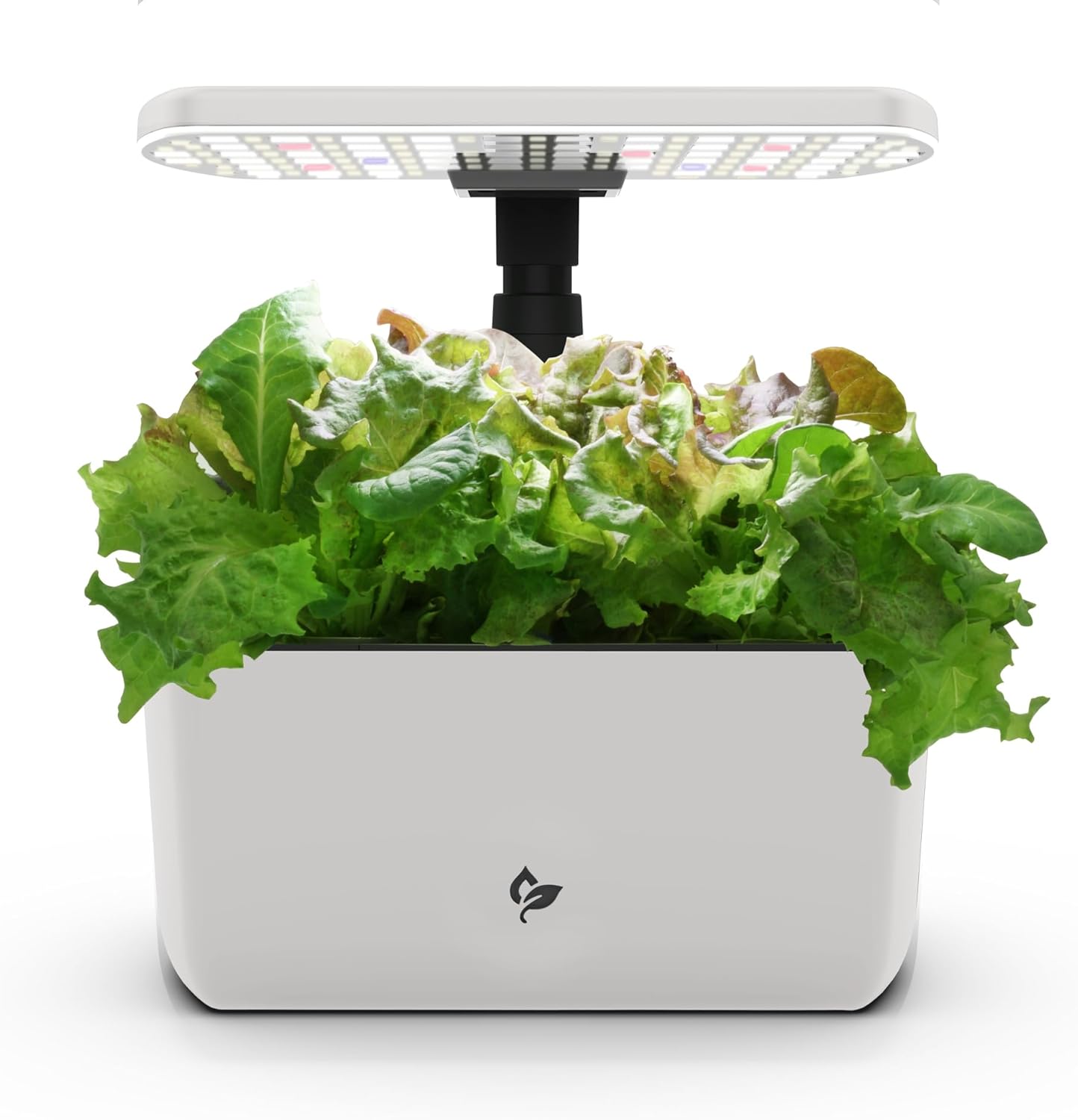 AeroGarden Harvest Lite in Cream, Soil-Free Indoor Hydroponic ...
6-pod hydroponic system with LED grow light, ideal for growing herbs and vegetables indoors year-round without soil
~$65.71
AeroGarden Harvest Lite in Cream, Soil-Free Indoor Hydroponic ...
6-pod hydroponic system with LED grow light, ideal for growing herbs and vegetables indoors year-round without soil
~$65.71
 AeroGarden Harvest Lite in Cherry Red, Soil-Free Indoor ...
6-pod hydroponic system with energy-efficient LED grow light, ideal for beginners growing herbs and vegetables indoors year-round.
~$89.69
AeroGarden Harvest Lite in Cherry Red, Soil-Free Indoor ...
6-pod hydroponic system with energy-efficient LED grow light, ideal for beginners growing herbs and vegetables indoors year-round.
~$89.69
 AeroGarden Bounty Basic - Indoor Garden with LED Grow Light, Black
9-pod hydroponic system with 30W LED light grows herbs and vegetables up to 5 times faster than soil gardening.
~$179.95
AeroGarden Bounty Basic - Indoor Garden with LED Grow Light, Black
9-pod hydroponic system with 30W LED light grows herbs and vegetables up to 5 times faster than soil gardening.
~$179.95
What You Actually Get in the Box
The Harvest Lite launched in 2024 as the brand’s attempt to compete with the flood of cheap Chinese alternatives. It was originally called the Harvest 2.0, then renamed, the working theory is the “Lite” label is more honest about what was trimmed, though AeroGarden never explained the change publicly. That rename tells you something.
At launch, it came with a small seed packet. As of Fall 2025, it doesn’t even do that anymore. You get the unit, the light arm, the grow bowl, and a power cord. Seeds, grow sponges, pod baskets, and nutrients are all sold separately.
Compare that to the Ahopegarden at roughly half the price: 10 pods, A+B nutrient bottles included, a 3L reservoir with a visible water level window, and a 14.5-inch adjustable light post. More pods. More included. Cheaper.
The Harvest Lite has 6 pods, a 0.7-gallon reservoir, and a 15W LED panel. The light schedule runs 15 hours from the moment you plug it in. That’s it. No buttons to change the start time. No screen. The light comes on, runs 15 hours, goes off.
If you only have one garden, that’s fine. If you run multiple units and want them synced, it’s annoying. I’ve had my Harvest (I own an original Harvest, not the Lite) running alongside other systems for over two years, and timing sync matters more than most reviews admit. The Harvest Lite’s plug-in-to-start approach means you’re stuck with whatever schedule your outlet dictates.
The Pod Cost Math Nobody Publishes
This is the part every roundup skips. Hardware is a one-time cost. Pods are forever.
Here’s what 12 months of growing actually costs across three paths, assuming you run 4 full cycles per year in a 6-pod system:
Official AeroGarden pre-seeded kits: $2.50-5 per pod. For 24 pods over the year (4 cycles, 6 pods each), you’re spending $60-120 on pods alone, on top of the $99.95 hardware. That’s a $160-220 first year.
DIY approach (works on any system, AeroGarden included): Reuse the plastic pod baskets, buy a 50-pack of grow sponges for around $15, and get seeds from a garden store or Amazon. Total pod cost drops to roughly $0.36-0.40 per pod. For 24 pods, that’s under $10. First year: roughly $110 total. Every subsequent year: about $10.
Budget system DIY (same DIY approach on an Ahopegarden): Hardware is $40-54. Sponges + seeds, same math as above. First year: around $60-65. You can also use the included nutrients from the kit for the first cycle.
The dirty secret is that after the first cycle, both systems run on the same consumable costs if you go DIY. I’ve been doing this with my own AeroGarden for a few years now. You keep the plastic baskets, replace the sponge, drop in your own seeds. The per-pod cost falls to pennies. I wrote up the full process at /posts/aerogarden-pods-are-gone-heres-how-i-replaced-them-for-under-1-each/ if you want the details.
So the pod cost argument mostly disappears once you’re past your first grow. What stays is hardware quality and longevity.
AeroGarden Harvest Lite in Cream, Soil-Free Indoor Hydroponic ...
6-pod hydroponic system with LED grow light, ideal for growing herbs and vegetables indoors year-round without soil
Check Price on AmazonWhere the $60 Premium Actually Goes
The Harvest Lite’s real advantage over a $40-50 Ahopegarden isn’t a feature list. Budget systems beat it on pod count, included accessories, and in some cases light height. The Ahopegarden gets 14.5 inches of adjustable clearance. The Harvest Lite maxes at 12 inches. That’s a real ceiling constraint for anything beyond compact herbs.
What you’re actually buying with AeroGarden:
The LED quality is better. The Harvest Lite runs 15W to the Ahopegarden’s unspecified LEDs (their listings don’t disclose wattage, which is a tell). The AeroGarden light is purpose-built and tuned for plant growth across the full spectrum. Budget LEDs vary more in actual output than their marketing suggests. I’ve covered this gap in more detail when comparing budget gardens under $60 , but the short version is that 15W from AeroGarden’s panel delivers reliably. The equivalent number from a no-name listing is a guess.
Pump reliability is the other big one. Budget systems at $40-50 tend to use pumps that cycle every 30 minutes on a timer. They work fine for 12-18 months and then start failing. AeroGarden’s pump design has a longer track record, and replacement parts (nozzles, filter sponges) are readily available and cheap. I keep spares on hand specifically because I’ve had one clog before, and getting a replacement in 48 hours was easy.
Customer service is real. AeroGarden has replaced failed pods for people. Budget brand customer service is inconsistent at best. That backstop matters if you’re buying this as a gift or for someone who won’t troubleshoot their way through a failed sponge.
And then there’s the relaunch context. AeroGarden went through a brand shutdown in January 2025 and came back under new ownership in Spring 2025. The lineup is smaller now (nine models, no Farm units, which are discontinued), but the brand is operating again. For a $100 purchase you expect to run for years, knowing the company is active and parts are available matters.
Ahopegarden Indoor Garden Hydroponics Growing System: 10 ...
10-pod hydroponic system with full-spectrum adjustable LED light, ideal for growing herbs, vegetables, and flowers indoors year-round
Check Price on AmazonWhat It Actually Grows Well
Herbs. Reliably, consistently, and without drama.
Basil, cilantro, dill, thyme, mint, and chives all do well in the Harvest Lite at 6 pods. The 12-inch grow height is enough for most of them if you’re harvesting consistently. The 15W light is plenty for herbs even if it’s a step down from the classic Harvest’s 20W panel. Growers running both units for a full season have reported no meaningful growth difference between the two light outputs, which tracks with what I’d expect: light spectrum and concentration matter more than raw wattage at that scale.
For lettuce, it works. You’ll want to watch for tip burn since the light panel runs warm on Harvest models, unlike the Bounty’s cool-touch design. Keep the water level topped off and harvest outer leaves regularly.
Don’t try tomatoes in this thing. The 12-inch clearance and 15W light are both too constrained for fruiting crops. Cherry tomatoes need roughly three times the light intensity the Harvest Lite delivers at canopy level, and flowers won’t reliably release pollen below that threshold. It’s a two-month spiral of frustration, the plant outgrows the light arm before it ever sets fruit. The supplemental light approach can help but at that point you’re spending more money to work around a hardware mismatch.
The Light Schedule Problem
The 15-hour fixed cycle is worth naming clearly because it comes up constantly. Plug in the unit at noon, your lights run noon to 3am. Plug it in at 7pm, lights run 7pm to 10am. That’s your schedule forever unless you add a separate outlet timer.
The classic Harvest has 3 buttons so you can set the on-time. The Harvest Elite has an LCD screen and custom scheduling. The Lite has neither. For one garden on one shelf where you don’t care when the lights run, it’s fine. For anyone syncing multiple systems or trying to push a custom light schedule for herbs , you’ll need a $10 mechanical timer plugged in ahead of it.
But that’s a small fix, and it’s annoying that a $100 unit can’t do what a $10 add-on handles. And if you already own a spare outlet timer, the whole issue disappears before your first grow cycle starts.
Build Quality, Noise, and Maintenance
The unit is quiet. AeroGarden pumps are reliably low-noise and the Harvest Lite doesn’t change that. I’ve run AeroGarden systems in a small apartment bedroom-adjacent kitchen for years and never found the pump audible over normal background sound.
Water changes are simple. The grow bowl lifts out, you drain it, refill with room temperature water, add nutrients. No drain valve, so you’re tipping it or using a turkey baster if you want to avoid lifting. Same story with every small countertop system.
Nutrient-wise, AeroGarden’s liquid food is pH-buffered, which is a genuine quality-of-life advantage. Their formula keeps the reservoir in a reasonable pH range with most tap water sources without you ever touching a meter. If you want to run third-party nutrients, you’ll need to monitor pH more closely since alternatives don’t have the buffer built in. I’ve written about cheaper nutrient options that actually work at /posts/aerogarden-nutrients-are-expensive-here-are-4-cheaper-alternatives-that-actually-work/ if the liquid food pricing bothers you.
The one maintenance item worth flagging: the filter sponge. Replace it every grow cycle. Third-party replacements like the TRENBIEN 20-pack run a few dollars and work just as well as the original.
For a detailed look at how the Lite compares to its pricier siblings, I broke down the five real differences between the Harvest and Harvest Elite .
Who Should Buy It (And Who Shouldn’t)
Get the Harvest Lite if you want one reliable system you’ll use continuously for multiple years, you’re growing herbs and lettuce only, and you’d rather have customer service backing than save $50 upfront.
Get the Ahopegarden see on Amazon (check current price on Amazon) instead if you want to try hydroponics before committing, you want more pod space at a lower cost, or you’re fine troubleshooting minor issues yourself. It’ll likely need replacing around the 18-month mark, but at $40-54 you’re renting the experience, and if it dies you’re not heartbroken.
Don’t get the Harvest Lite at full MSRP if you can help it. The sale history on this unit is real: it’s dropped into the $65 range during sales. At $65, it’s good value. At $99.95, it’s defensible but not a bargain. Watch for deals. The Bounty Basic at $179.95 is a better hardware argument if you’re spending triple digits with no flexibility.
⭐ My Pick
AeroGarden Harvest Lite in Cream, Soil-Free Indoor Hydroponic ...
6-pod hydroponic system with LED grow light, ideal for growing herbs and vegetables indoors year-round without soil
Check Price on AmazonThis article is part of my The Complete AeroGarden Guide , a complete resource for countertop hydroponic growing.
Frequently Asked Questions
How long does the AeroGarden Harvest Lite light stay on each day?
The Harvest Lite runs a fixed 15-hour light schedule that begins the moment you plug it in. There’s no button, no screen, no way to adjust the start time without adding a separate outlet timer. This is different from the classic Harvest (which has buttons to set on-time) and the Harvest Elite (which has an LCD screen with custom scheduling). If you run multiple gardens and want them synced, the Lite will frustrate you.
Does the AeroGarden Harvest Lite come with seeds?
No. As of Fall 2025, the Harvest Lite ships as hardware only: the unit, grow bowl, light arm, and power cord. Seeds, grow domes, and pod sponges are all sold separately. It originally launched with a seed packet included, but that’s gone now. Budget competitors like the Ahopegarden still include nutrient bottles at half the price, so the “you get more with premium brands” assumption is worth questioning here.
Is the AeroGarden Harvest Lite worth it compared to cheaper hydroponic gardens?
At full MSRP of $99.95 versus $40-54 for a 10-pod Ahopegarden, the premium buys you proven LED quality, a more reliable pump design, available replacement parts, and AeroGarden’s customer service. It does not buy you more features or more pods. Both systems can use DIY sponge-and-seed setups at around $0.40 per pod, so ongoing consumable costs equalize quickly. If you’re price-sensitive, start with a budget system. If you want a single unit you’ll run for 3+ years without worrying about it, the Harvest Lite earns its price.
What is the cheapest way to grow in an AeroGarden?
Reuse the plastic pod baskets from your first grow. Buy a 50-pack of grow sponges on Amazon for around $15, pick up seeds from a garden store, and you’re at roughly $0.36-0.40 per pod instead of $2.50-5 for official pre-seeded kits. You can also 3D print replacement pod baskets if you have access to a printer. On the nutrient side, there are several third-party options that cost much less per grow cycle than AeroGarden’s liquid food, though they require a bit more attention to pH since they lack the built-in buffer.
Does the Harvest Lite work for tomatoes or peppers?
Not well. The 12-inch grow height and 15W light panel are both meaningful constraints for fruiting crops. Cherry tomatoes need considerably more light intensity than the Harvest Lite delivers at canopy level to set fruit reliably, and 12 inches of clearance gets eaten up fast. Compact pepper varieties can work with some attention and supplemental light, but the Harvest Lite is a herbs-and-greens machine. If fruiting crops are your goal, look at the Bounty Basic which has 30W and 24 inches of clearance.