
Fair warning: affiliate links ahead. I earn a small commission on purchases, which helps keep this site running. You pay the same either way.
Misting hydroponic gardens are having a moment on Amazon, and almost nobody reviewing them actually explains what makes them different, especially when it comes to the aeroponic misting indoor herb garden review landscape, where “countertop garden with LED light” gets treated as the whole story. It isn’t. If you’re trying to decide whether a misting system makes sense for herbs, the failure modes matter more than the marketing claims, and this breakdown covers both.
Quick Answer: Misting hydroponic systems (technically aeroponic) suspend roots in air and deliver nutrients via periodic spray, which can accelerate root development but introduces a real failure mode: moisture vapor migrating into electronics and killing control panels, often just after the return window closes. For a first grow, a standard DWC pod garden is the lower-risk choice. The Zekeson buy on Amazon is the most-reviewed misting option right now, but its 14% one-star rate is a yellow flag worth understanding before you buy.
 Hopegarden Indoor Garden Hydroponics Growing System: 15 Pods ...
15-pod hydroponic system with adjustable LED grow light up to 13.78 inches and 3L tank, ideal for year-round herbs and vegetables
~$39.99
Hopegarden Indoor Garden Hydroponics Growing System: 15 Pods ...
15-pod hydroponic system with adjustable LED grow light up to 13.78 inches and 3L tank, ideal for year-round herbs and vegetables
~$39.99
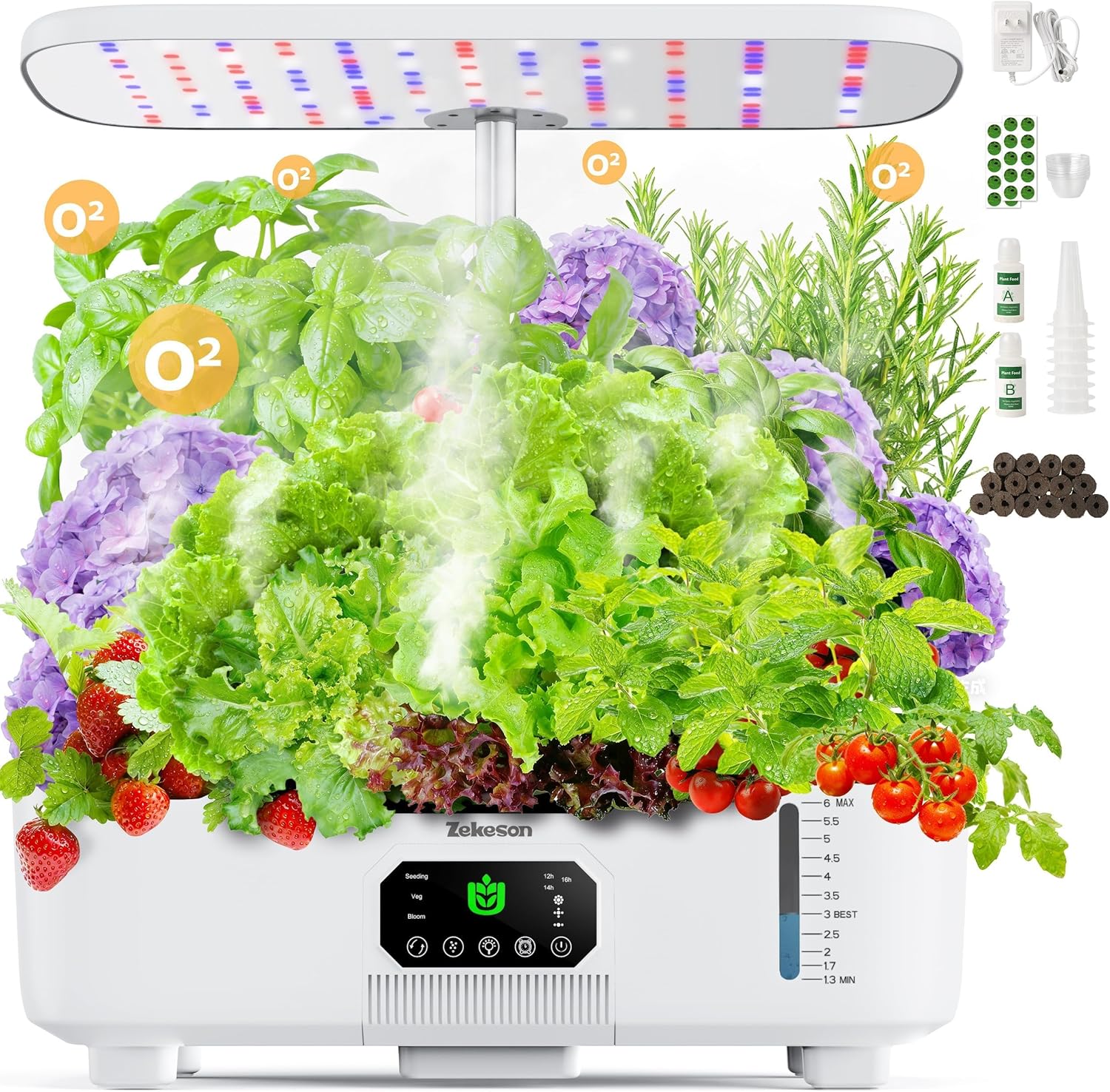 Misting Hydroponic Growing System Kit 15-Pods Indoor Smart Herb ...
15-pod misting system with 6L tank and full-spectrum LED, ideal for growing herbs, vegetables, and flowers indoors year-round
~$79.99
Misting Hydroponic Growing System Kit 15-Pods Indoor Smart Herb ...
15-pod misting system with 6L tank and full-spectrum LED, ideal for growing herbs, vegetables, and flowers indoors year-round
~$79.99
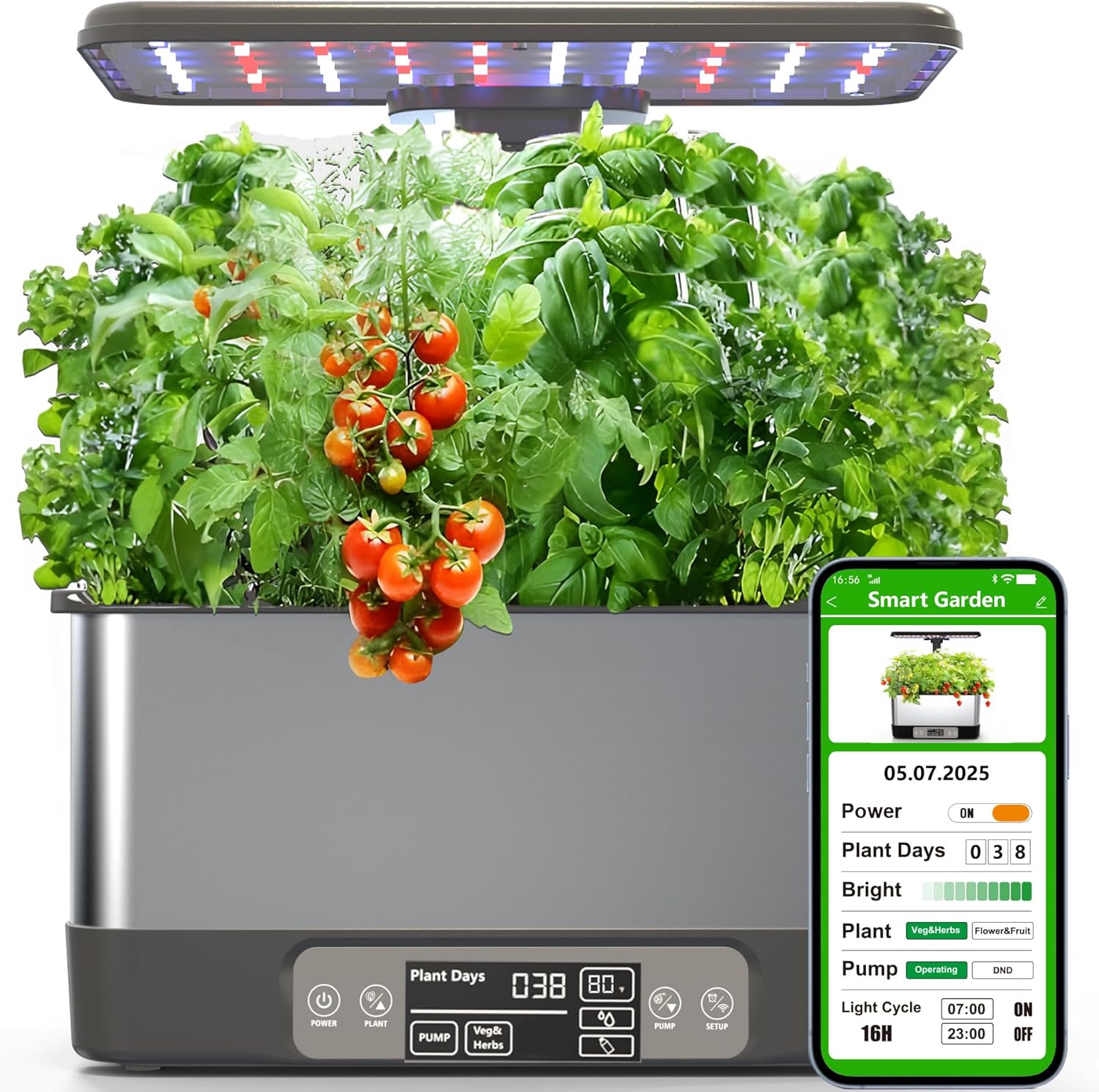 Hydroponics Growing System Indoor Garden, Smart ...
WiFi-controlled hydroponic system with customizable light and pump scheduling, ideal for growing herbs and small vegetables indoors with 4x faster growth than soil.
~$79.99
Hydroponics Growing System Indoor Garden, Smart ...
WiFi-controlled hydroponic system with customizable light and pump scheduling, ideal for growing herbs and small vegetables indoors with 4x faster growth than soil.
~$79.99
What “Misting Hydroponic” Actually Means
Most listings won’t tell you: these systems are aeroponic, not hydroponic. The distinction matters.
In a standard DWC (deep water culture) pod garden like an AeroGarden or iDOO, plant roots grow down into a reservoir and stay partially submerged in nutrient solution. A pump aerates the water to keep oxygen moving. It’s simple, it works, and the failure modes are predictable. I compared the DWC pump-vs-no-pump question in detail here if you want the longer version.
Misting systems do something different. Roots hang in open air inside a chamber, and a nozzle fires periodic bursts of nutrient-rich mist directly onto them. The roots get more oxygen because they’re not sitting in water. That oxygen exposure is real, and in commercial aeroponic setups, it speeds up root development.
The brands selling these countertop units claim 700% faster growth than soil, 90% more dissolved oxygen, 80% faster germination. That exact phrasing appears word-for-word across multiple listings from what appear to be different brands. It’s OEM boilerplate. There are no independent head-to-head tests comparing misting pod systems to DWC pod systems under equivalent conditions. The faster germination claim may have a grain of truth to it (oxygen at the root zone does help), but 700% is a marketing number, not a measurement.
What’s actually true: aeroponics uses less water than standard DWC because you’re misting rather than maintaining a full reservoir. The tradeoff is that if the misting nozzle clogs, malfunctions, or fires at the wrong interval, roots dry out fast. There’s no water reservoir keeping things alive while you figure out what’s wrong.
The Zekeson: What It Gets Right and Where It Falls Apart
The Zekeson check current price is the most-reviewed misting countertop system on Amazon, sitting at 180 reviews and 4.0 stars with 50+ bought per month. Its specs are decent for the price: 15 pods, 6L tank (though the recommended operating level is 3L), an LCD touchscreen, three LED modes (Seedling, Vege, Bloom), and timer options at 12, 14, or 16 hours. At 19.7 inches max height it’s taller than most compact pod gardens, which helps if you want to grow something other than herbs. No WiFi. No app.
Setup is apparently simple and germination tends to be fast. The 65% five-star reviews mostly describe exactly this: easy to use, plants sprouted quickly, looks nice on a counter.
The 14% one-star reviews describe a different product entirely.
The most documented failure mode is moisture ingress into the control panel. The misting nozzle fires upward inside the chamber, and vapor exits through the top vents. Over time, that vapor migrates into the electronics. Capacitive touch buttons stop responding. LEDs go dark. A verified buyer reported their unit failed five days after the Amazon return window closed, with moisture visibly on the circuit board. A hair dryer got the buttons working again, but the LEDs stayed dead.
This is not a freak incident. It shows up across reviews from early 2026. And it makes mechanical sense: you’ve got a misting nozzle firing repeatedly inside a sealed plastic housing with electronics sitting above it. The design puts two things in close proximity that shouldn’t be: water vapor and control circuitry.
The other documented issue is that the misting sprays water out through the top and sides of the unit rather than staying contained in the root chamber. The common experience is needing to top up the water twice daily because so much mist escapes the system rather than reaching the roots. The listing says “low maintenance” and “2-3 weeks between refills.” The reality, for some units in some conditions, is closer to daily monitoring. That gap matters a lot if you’re buying this because you travel or get busy.
But to be clear, a lot of buyers have no problems. That’s what a 65/14 split looks like in practice: most people get a working unit that grows plants fine, but a meaningful minority get a unit that fails in a specific and frustrating way. Whether that’s acceptable depends on what you’re buying it for.
⭐ My Pick
Misting Hydroponic Growing System Kit 15-Pods Indoor Smart Herb ...
15-pod misting system with 6L tank and full-spectrum LED, ideal for growing herbs, vegetables, and flowers indoors year-round
Check Price on AmazonThe Hopegarden: A More Conservative Misting Option
The Hopegarden Indoor Garden see on Amazon is a 15-pod system from HEDETM, sitting at 4.4 stars from 80 reviews and priced around $39.99. It uses a 30-minute interval pump rather than a true misting nozzle, which puts it somewhere between standard DWC and full aeroponic in terms of how it actually works. Roots get more oxygen exposure than in a fully submerged setup, but it’s not spraying vapor the same way the Zekeson does.
At 13.78 inches max light post height, it’s more compact than the Zekeson. The 3L tank is smaller too. It ships with a complete starter kit including sponges, baskets, domes, and an A/B nutrient set, and the two light modes (Light Blue for herbs/vegetables, Green for flowers/fruits) run the same 16h/8h schedule regardless of which you choose. That’s a limitation worth knowing: you can’t set 12 or 14-hour cycles the way you can on the Zekeson.
The complaints cluster around light quality rather than moisture failures.
LED defects show up in the reviews, light intensity is reportedly insufficient for mature growth, and the light post doesn’t adjust downward, which causes problems for seedlings that need the light closer during early growth. Plants going leggy from inadequate light is the most common complaint, which is a light intensity problem, not an aeroponic problem.
For someone who wants to try the concept at a lower price point and with fewer electronics-ingress concerns, the Hopegarden is worth considering. It’s not doing the aggressive misting that seems to cause the Zekeson’s reliability issues. The light is the real weakness.
Hopegarden Indoor Garden Hydroponics Growing System: 15 Pods ...
15-pod hydroponic system with adjustable LED grow light up to 13.78 inches and 3L tank, ideal for year-round herbs and vegetables
Check Price on AmazonThe Safer Alternative: Standard DWC With WiFi
The Aooccder Smart Garden check price on Amazon costs roughly the same as the Zekeson at around $79.99 and does something neither misting system can: it connects to a WiFi app for remote light and pump scheduling. It’s a standard DWC pod system with 8 pods, a 3L tank, and a maximum adjustable height of 13 inches. Pump noise is rated under 20 dB.
The app connectivity is useful for single-unit growers who forget to check their garden daily. You can adjust the light timer remotely, customize pump cycles to match plant growth stages, and get alerts when the water is low. No automated nutrient dosing, but the reminders help.
The most common complaint is pump circulation failures. The pump tends to stop moving water adequately after a few months, plants stagnate, and growth stalls. This is a real issue and not unique to this brand (I’ve written about budget pump reliability at the 12-18 month mark before ). The light height only goes to 13 inches, which limits you to compact herbs and greens. Anything that wants vertical space will outgrow it.
But here’s the comparison that matters for a first-time buyer: the Aooccder fails in understandable ways. Pump stops circulating, plants slow down, you troubleshoot the pump. That’s fixable. The Zekeson’s failure mode is moisture entering electronics and bricking the control panel after the return window. That’s not fixable by most people without taking apart the unit.
So for most beginners, the choice between these two systems isn’t really about misting vs. DWC. It’s about which failure mode you can recover from.
Misting Systems and Maintenance Reality
No editorial piece covering misting hydroponic gardens mentions this: these systems have no app, no automated reminders, and no WiFi connectivity. The Zekeson’s LCD panel shows settings and duration, but that’s it. You’re setting phone alarms yourself to check water levels and nutrient concentrations.
That matters because the misting mechanism is less forgiving about water levels than a standard DWC setup. In a DWC system, if you’re a day late on a top-off, roots stay in solution and plants muddle through. In a misting system running low on water, the nozzle either stops misting or fires dry air. Roots in the air chamber start drying out within hours depending on ambient humidity.
The humidity angle is real for indoor spaces too.
These systems push vapor into the air around them. In a small kitchen that may not matter much. In a tight apartment setup with limited airflow, it’s worth thinking about, especially if you’re keeping the garden near a wooden surface or near anything electronic.
Aeroponics in commercial setups uses much less water than DWC because the mist is targeted and contained. In these budget countertop units, some of that mist escapes the root chamber and either coats nearby surfaces or gets vented through the top, which is partly why the electronics failures happen. The water efficiency advantage of true aeroponics doesn’t fully translate when the containment design isn’t tight.
If you want to go deeper on what standard DWC pod systems can and can’t do, the iDOO vs AeroGarden comparison covers the established options well. For the broader “is a countertop system even right for me” question, this beginner mistakes piece is where I’d start.
This article is part of my Countertop Hydroponic Systems: Complete Comparison , a complete resource for countertop hydroponic growing.
Frequently Asked Questions
What is the difference between a misting hydroponic system and a regular hydroponic garden?
Standard DWC pod gardens like AeroGardens and iDOOs keep roots partially submerged in a nutrient reservoir, with a pump aerating the water. Misting systems suspend roots in air inside a chamber and deliver nutrients via periodic spray. This makes them technically aeroponic, not hydroponic, though most brands avoid that word in their listings. More oxygen reaches the roots in a misting setup, but if the nozzle clogs or misfires, plants dry out quickly with no water reservoir as a buffer.
Is aeroponics worth it for a countertop herb garden?
For home herb growing, the honest answer is probably not yet. Commercial aeroponics uses much less water than DWC and does accelerate root development, but budget countertop misting units add mechanical complexity without the precision engineering that makes commercial aeroponic systems reliable. The moisture-ingress failure pattern on current misting pod systems is a real design problem, not a one-off defect. Until that’s solved, a well-built DWC system gives you more predictable results for herbs.
Why does my misting hydroponic system leak water everywhere?
It’s a design issue with nozzle angle and vent placement, not an isolated defect with your unit. The misting nozzle fires upward and vapor exits through top vents rather than staying contained in the root chamber. Some buyers find their counter surface consistently damp near the unit. Running at the 3L operating level rather than filling the 6L tank to capacity may reduce but not eliminate the problem.
Do misting hydroponic systems grow plants faster than regular pod gardens?
The 700% faster than soil claim on most misting system listings is unverified OEM boilerplate that appears word-for-word across multiple brands. Aeroponics can accelerate root development in controlled settings, and that does translate to faster germination for some buyers. But there are no independent comparisons between misting countertop systems and DWC countertop systems under equivalent conditions. Fast germination claims in the five-star reviews are real; the magnitude of that advantage compared to a well-run iDOO or AeroGarden is not established.
How often do you need to add water to a misting hydroponic system?
The Zekeson recommends operating at 3L in its 6L tank and describes refills as infrequent. In practice, it tends to need topping up daily due to mist escaping the root chamber. There’s no WiFi or app sending reminders, so you’re responsible for checking manually. This is meaningfully more hands-on than app-connected DWC systems that send low-water notifications to your phone.
Can you grow anything other than herbs in a misting countertop garden?
Herbs, lettuce, and other compact greens are the realistic scope for any countertop pod system, misting or DWC. The Zekeson’s 19.7-inch maximum height gives it slightly more headroom than most 6-pod systems, which helps. Tomatoes, peppers, and cucumbers get mentioned in listings but will outgrow the light coverage and structural support of any countertop pod system before producing meaningful yields. This isn’t a misting-specific limitation, it’s the whole category. I’ve written about the cherry tomato ceiling problem in more detail here .
And the misting concept isn’t wrong. Aeroponics is a real growing method with real advantages. These budget countertop implementations just haven’t solved the moisture-containment problem yet, and until that’s fixed, you’re accepting meaningful risk of an electronics failure timed to happen right after your return window closes. That’s a specific and avoidable problem. For a first countertop garden, stick to DWC.