
Fair warning: affiliate links ahead. I earn a small commission on purchases, which helps keep this site running. You pay the same either way.
Pod count divided by price. That’s it. That’s the number nobody in a hydroponic garden review ever actually shows you. If you’re trying to figure out hydroponic garden cost per pod worth it, this is the calculation that actually answers the question, not the sticker price, not the feature list.
Most articles compare systems by sticker price or feature list. None of them run the cost-per-pod calculation that actually tells you what you’re paying for each growing slot, and none of them separate the hardware cost from the ongoing cost of filling those slots every cycle. Those are two completely different numbers, and conflating them is why people buy the wrong system and feel vaguely ripped off six months later.
So let’s do the math properly.
Quick Answer: The Mufga 12-pod runs about $4.17 per pod slot at ~$50. The iDOO 12-pod buy on Amazon is about $6.67 per pod slot at ~$79.98. The AeroGarden Harvest lands around $18.33 per pod slot at ~$109.95 for 6 pods. But hardware cost per slot is only half the story. What you grow determines whether any of these pays for itself. Load them with basil and the math flips fast. Lettuce? It barely breaks even.
Hardware Cost Per Pod Slot: The Number That Actually Matters
Here’s the table everyone should publish but doesn’t:
| System | Price | Pod Count | Cost Per Pod Slot |
|---|---|---|---|
| Mufga 12-pod | ~$50 | 12 | ~$4.17 |
| Ahopegarden 12-pod | ~$60 | 12 | ~$5.00 |
| ScienGarden 12-pod | ~$59 | 12 | ~$4.92 |
| iDOO 12-pod | ~$79.98 | 12 | ~$6.67 |
| AeroGarden Harvest | ~$109.95 | 6 | ~$18.33 |
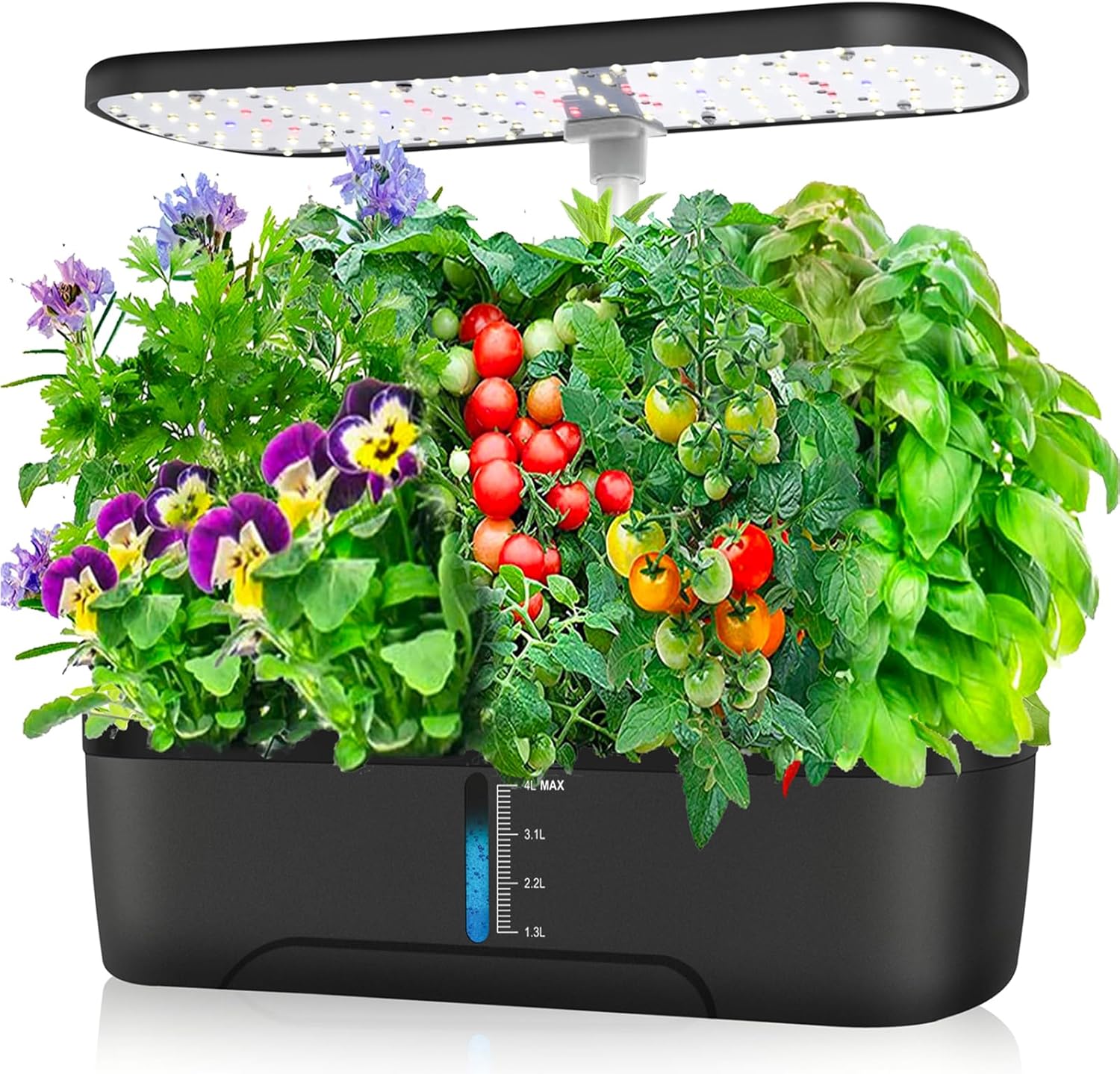 Hydroponics Growing System Kit 12 Pods Indoor Herb ...
12-pod hydroponic system with 20W LED and adjustable height, grows herbs 3x faster than soil year-round
~$58.99
Hydroponics Growing System Kit 12 Pods Indoor Herb ...
12-pod hydroponic system with 20W LED and adjustable height, grows herbs 3x faster than soil year-round
~$58.99
 iDOO Hydroponics Growing System Kit 12Pods, Indoor ...
12-pod indoor garden with 22W LED and two growth modes, grows herbs and vegetables 20% faster than soil with 4.5L water tank capacity
~$79.98
iDOO Hydroponics Growing System Kit 12Pods, Indoor ...
12-pod indoor garden with 22W LED and two growth modes, grows herbs and vegetables 20% faster than soil with 4.5L water tank capacity
~$79.98
 Ahopegarden Hydroponics Growing System kit: 12 Pods Indoor ...
12-pod hydroponic system with dual-spectrum LED and 5L tank, ideal for indoor herbs, greens, and dwarf vegetables
~$59.99
Ahopegarden Hydroponics Growing System kit: 12 Pods Indoor ...
12-pod hydroponic system with dual-spectrum LED and 5L tank, ideal for indoor herbs, greens, and dwarf vegetables
~$59.99
 MUFGA 12 Pods Hydroponics Growing System ... - Amazon.com
8-pod hydroponic system with 22W LED grow light and automatic water circulation pump, ideal for growing herbs and vegetables indoors year-round
MUFGA 12 Pods Hydroponics Growing System ... - Amazon.com
8-pod hydroponic system with 22W LED grow light and automatic water circulation pump, ideal for growing herbs and vegetables indoors year-round
The AeroGarden Harvest costs more than 4x per growing slot compared to the Mufga check current price . That’s the hardware gap. Whether that gap is justified depends entirely on what comes next.
MUFGA 12 Pods Hydroponics Growing System ... - Amazon.com
8-pod hydroponic system with 22W LED grow light and automatic water circulation pump, ideal for growing herbs and vegetables indoors year-round
Check Price on AmazonOne thing I’d note: that AeroGarden number is based on the post-relaunch Harvest at $109.95 (6 pods, 20W). If you catch one used, the math changes. I paid $40 for mine on Facebook Marketplace and it’s been running for four years. But buying new? At $18.33 per pod slot, you need a good reason.
The Second Cost Layer: Branded Pods vs. Blank Sponges
This is the part that actually kills the budget math for a lot of people, and it works in both directions.
AeroGarden branded seed pod kits run $13.95-$21.95 for a 6-9 pod set, roughly $1.55 to $3.66 per pod depending on variety, and that’s per cycle, not forever. Every time a grow ends and you replant, you’re paying that again. Do four cycles a year on a 6-pod system and you’re spending $37-88 annually just on pods before electricity or nutrients. And honestly, discovering that number after you’ve already bought the system is annoying, it should be front and center in every review, and it almost never is.
Budget systems like the iDOO, Ahopegarden see on Amazon , and ScienGarden check price on Amazon ship with blank sponges and baskets. No seeds included. You buy your own seeds, which sounds like a hassle but is actually a much better deal. Bulk grow sponges run $0.10-0.20 each. Good herb seeds from Amazon are $5-10 for hundreds of seeds. The per-pod cost per cycle drops to $0.30-0.60 at most.
Hydroponics Growing System Kit 12 Pods Indoor Herb ...
12-pod hydroponic system with 20W LED and adjustable height, grows herbs 3x faster than soil year-round
Check Price on AmazonThat’s a 5-10x difference in ongoing cost. Year one for a 12-pod budget system running bulk sponges and your own seeds: roughly $15-25 in media and seeds for three to four full cycles. Same cycle count on branded AeroGarden pods? $70-150.
There’s a catch worth saying clearly: AeroGarden’s branded pods are pre-seeded and germination-guaranteed. You open the box, put them in, and they grow. Budget system sponges are blank. You have to source seeds, pre-soak the sponges, and manage germination yourself. For beginners, that gap matters. I’ve written about the stop-paying-$3-a-pod approach in more detail here , including which sponge types to avoid.
Where Herbs Change Everything
This is the emotional core of the whole cost debate. Lettuce costs $3-4 per head at the grocery store. Basil costs $4-6 per small plastic clamshell that’s half wilted by the time you get it home, or $12-16 per ounce for decent fresh bunches.
A 12-pod system loaded with basil, growing in solid conditions, can yield 2-4 ounces per plant per week once established. Not all 12 pods at once (you’d be swimming in basil), but 6-8 active plants harvested regularly will generate $96-192 a month in grocery-equivalent value at retail herb prices. A $50 budget system pays for itself in two to three weeks of actual basil harvesting.
Lettuce doesn’t do that. A head of lettuce is $3-5. You grow maybe two heads per pod per cycle on a 60-75 day timeline. That’s $6-10 per pod slot per cycle, which barely covers electricity, let alone the hardware cost. I’m not saying don’t grow lettuce (my iDOO runs a lettuce rotation and I love having it), but you’re not making money on lettuce. You’re paying for convenience and freshness.
The growers who are happiest with cheap pod systems are the ones using them for herbs, not greens. The ROI justification for indoor growing often comes down to avoiding two-store trips for cilantro or Thai basil that’s already halfway to mush at the regular grocery store. That’s not a financial argument, exactly. But it’s a real one.
For what’s actually worth growing from a return standpoint, my herbs ROI breakdown goes deeper on which varieties pull their weight.
The LED Longevity Problem
Here’s the wildcard that most budget comparisons completely ignore.
LEDs in grow lights degrade over 2-3 years under continuous use. Air pumps in cheap systems often don’t make it to 18 months. Budget for $50-100 a year in replacement parts if you’re running any system hard, and that’s if the system lasts at all.
With the iDOO specifically, there’s a pattern worth knowing about. I haven’t had personal LED issues with mine, but the common failure mode growers run into is early LED degradation showing up somewhere around 12-18 months of continuous use. Not universal, but common enough to factor into the buying decision. If your iDOO LED dies at 14 months, your $79.98 system just became a $79.98 planter. The AeroGarden Harvest, by contrast, has a track record of running 5-7+ years with replacement parts still available post-relaunch.
So the honest version of the hardware math looks like this:
- Mufga at $50, replaced once in three years = $100 over 36 months, ~$2.78/month
- AeroGarden Harvest at $109.95 running four years without replacement = $109.95 over 48 months, ~$2.29/month
The gap closes. It doesn’t disappear, but it closes. And if the budget system runs without issues for three years, it wins. That’s a real if.
Electricity: The Cost Nobody Mentions Until Month Three
A 12-pod countertop system running a 20-22W LED for 14-16 hours a day consumes roughly 1.75 kWh daily. At average US electricity rates that works out to about $8-12 per month. Over a year: $96-144 just in electricity, before nutrients, seeds, or hardware.
This doesn’t make hydroponic growing not worthwhile. But it does mean the break-even calculation for lettuce at $3/lb is basically a fantasy. Electricity alone costs more than the equivalent lettuce. Basil at $12-16/oz? You’re fine. Microgreens that turn around in 7-10 days and retail for $5-8 per small tray? Even better. If you want the fastest possible payback, microgreens are the move .
What I’d Actually Buy at Each Budget
Under $50: Skip the pod systems entirely. A few mason jars running Kratky-style with some herb seeds and a cheap clip-on light will grow basil and lettuce for almost nothing. No pump, no timer drama, nothing to break. The total year-one cost for a Kratky setup runs maybe $20-40 depending on what you already own, a jar, some net cups, a cheap clip-on light, and a bottle of nutrients. It’s ugly but it works, and it’s where I’d tell anyone starting out to begin before spending real money.
$50-80: This is where the Mufga 12-pod and Ahopegarden both live, and it’s a solid bracket. The Mufga at ~$50 gives you the lowest cost-per-pod slot of any pod system I’ve seen, a 22W LED, and enough room to run a reasonable herb rotation. The Ahopegarden adds a real-time temperature display and a 5L tank for a few dollars more. I’d buy the Mufga over the iDOO at these prices because the cost delta doesn’t buy you anything that meaningfully changes the grow. My under-$100 roundup with the full cost-per-pod math has more detail on what separates them in actual use.
$80-120: The iDOO 12-pod with its 22W LED and a decent track record sits here. It has better documented long-term performance than most of the $50-60 options, which matters. The ScienGarden 12-pod (20W, similar pod count) also lands in this range. At this budget I’d prioritize LED wattage and tank size over pod count. A 4-4.5L tank at 22W is meaningfully better than a 3L tank at 15W, regardless of pod count.
$120+: AeroGarden Harvest. Not because the hardware is dramatically better than the $80-120 range, but because the support infrastructure exists now post-relaunch, the pump design is more reliable, and the system has a real track record for multi-year use. If you’re growing herbs you actually care about and you don’t want to troubleshoot pump failures, pay the premium. The Harvest Lite vs budget rivals breakdown runs through exactly where the price difference shows up in practice.
🏆 Best Value Overall
iDOO Hydroponics Growing System Kit 12Pods, Indoor ...
12-pod indoor garden with 22W LED and two growth modes, grows herbs and vegetables 20% faster than soil with 4.5L water tank capacity
Check Price on AmazonFrequently Asked Questions
How many plants can go in one hydroponic pod?
For small seeds like basil, lettuce, or cilantro, 1-2 seeds per pod is right. For larger seeds like beans or peas, one seed per pod. For fruiting plants like tomatoes or peppers, stick to one seed per pod, they’ll outgrow the space quickly regardless and need every bit of root room they can get.
Does growing hydroponically actually save money compared to buying groceries?
For herbs, yes, with a reasonable timeline. Basil, mint, and specialty herbs that retail at $8-16 per ounce typically generate positive ROI within 6-9 months of consistent growing. For standard lettuce, the math is tighter. Electricity alone runs $8-12 a month, and lettuce retails for $3-5 per head. You’re paying for freshness and convenience, not saving money.
What plants have the best ROI for home hydroponics?
Basil and mint are the clear leaders. Both retail high, grow fast in pod systems, and the flavor difference between store-bought and fresh-cut is obvious. Microgreens have the fastest absolute payback at 7-10 days from seed to harvest. Fruiting crops like tomatoes need much more light than most countertop systems provide, making supplemental lighting a real consideration before you commit a pod to them.
Are cheap hydroponic gardens ($40-60) actually as good as AeroGarden?
For herbs and lettuce, yes, mostly. The grow quality is comparable across the price tiers when the system is running well. The differences show up in pump reliability, LED longevity, and support availability when something breaks. Growers who own both the Mufga and an AeroGarden tend to actively prefer the Mufga for day-to-day use. The AeroGarden premium buys you a longer track record and better parts availability, not meaningfully better basil.
How much does electricity cost to run a countertop hydroponic garden?
A small 12-pod system running a 20-22W LED for 14-16 hours per day consumes about 1.75 kWh daily. At $0.15/kWh, that’s roughly $8 per month. Add the pump cycling and you’re at $8-12 monthly. Over a year that’s $96-144 in electricity alone, which is why the crops you choose to grow matter more than most people realize going in.
What is the best indoor hydroponic system for beginners?
Honestly? A Kratky jar setup if budget is the priority. It has no pump, no timer, nothing to fail. For a proper pod system that includes everything out of the box, the Mufga 12-pod and Ahopegarden are both good entry points in the $50-60 range. But the beginner mistakes guide covers what trips people up regardless of which system they start with. And knowing those pitfalls before you buy is worth more than any spec comparison.
The pod-per-dollar number is just the start. What really determines whether any of these systems pays for itself is the herb-versus-lettuce decision you make when you drop seeds in those first sponges.